Cattle Handling Equipment Maintenance Checklist
Improve safety and reduce downtime with this practical cattle handling equipment maintenance checklist for ranchers and livestock operations.
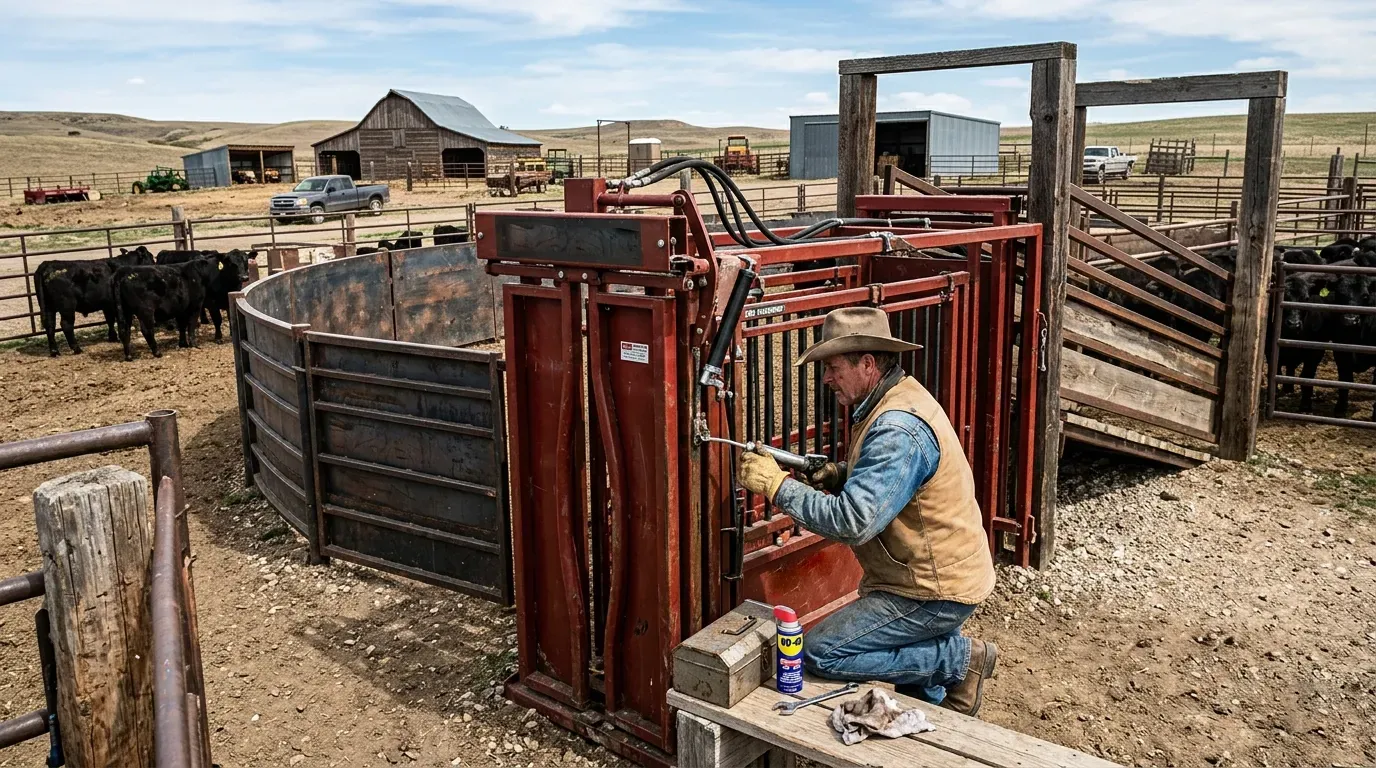
This article mentions products or services from partners. Links to them are marked as sponsored.
Cattle handling equipment works hard. Day after day. Season after season.
From squeeze chutes and sorting gates to crowding tubs and loading alleys, every component takes a beating from weather, livestock pressure, dirt, moisture, and constant use. That’s why cattle handling equipment maintenance should never be treated as an afterthought.
Many ranchers focus heavily on herd health, pasture management, and nutrition. All important. However, neglected equipment can create costly problems that affect every aspect of an operation. A broken latch during processing, a hydraulic failure during vaccination day, or a damaged panel that injures livestock can quickly turn an ordinary workday into an expensive one.
The good news is that most equipment failures are preventable.
With a consistent maintenance routine, ranchers can improve safety, reduce downtime, extend equipment life, and create a smoother working environment for both cattle and employees. This cattle handling equipment maintenance checklist provides a practical approach that can be implemented on ranches of nearly any size.
Why Cattle Handling Equipment Maintenance Matters
Equipment maintenance isn’t just about avoiding repairs.
It’s about protecting your entire operation.
Preventing Expensive Breakdowns
Every rancher has experienced equipment problems at the worst possible time.
A gate refuses to latch.
A hydraulic cylinder leaks.
A hinge breaks when cattle are moving through a chute.
These issues rarely happen when equipment is sitting idle. They happen when it’s needed most.
Routine inspections help identify wear before it develops into major failures. Replacing a worn pin today is significantly less expensive than replacing an entire gate assembly later.
Improving Worker Safety
Livestock handling already carries inherent risks.
Faulty equipment increases those risks dramatically.
Loose panels, damaged gates, malfunctioning head catches, and unstable platforms can create dangerous situations for workers. Proper cattle handling equipment maintenance helps ensure that equipment performs as intended when safety depends on it.
Reducing Stress on Livestock
Cattle respond to their environment.
Equipment that rattles excessively, sticks during operation, or contains sharp edges can increase stress levels and create handling difficulties.
Well-maintained facilities encourage smoother cattle movement. Animals remain calmer. Processing becomes more efficient.
Everyone benefits.
Extending Equipment Lifespan
High-quality cattle handling systems represent a substantial investment.
Proper maintenance helps protect that investment.
Many well-maintained handling systems remain productive for decades. Neglected equipment often requires premature replacement long before its expected service life.
Equipment That Requires Regular Maintenance
Virtually every component of a handling facility deserves attention.
Some areas require more frequent inspections than others.
Squeeze Chutes
Squeeze chutes contain numerous moving parts that experience constant wear.
Maintenance priorities include:
- Hinges
- Head gates
- Side squeeze mechanisms
- Bearings
- Hydraulic components
- Safety latches
Working Alleys
Working alleys may appear simple, but they experience considerable stress.
Inspect for:
- Bent rails
- Loose fasteners
- Damaged supports
- Sharp edges
- Floor deterioration
Crowd Pens and Tubs
Crowding systems help direct cattle efficiently.
However, moving gates and high animal pressure create ongoing wear that requires monitoring.
Loading Chutes
Loading facilities experience repeated impacts and environmental exposure.
Pay close attention to:
- Flooring
- Structural supports
- Gates
- Ramps
- Handrails
Livestock Panels
Panels often receive less attention than major equipment.
That’s a mistake.
Bent panels, weakened welds, and loose connectors can create safety hazards throughout a facility.
Daily Cattle Handling Equipment Maintenance Checklist
Daily inspections don’t need to take long.
In many cases, ten to fifteen minutes is enough to identify developing problems.
Perform a Visual Walk-Through
Start every processing day with a facility inspection.
Look for:
- Bent components
- Broken welds
- Missing hardware
- Damaged gates
- Excessive wear
Small issues are easiest to correct when discovered early.
Check Gates and Latches
Open and close every frequently used gate.
Pay attention to:
- Smooth operation
- Latch engagement
- Alignment issues
- Excessive resistance
If something feels different, investigate it immediately.
Remove Debris
Dirt accumulates.
Mud accumulates.
Manure accumulates.
Over time, debris interferes with moving components and accelerates wear.
Daily cleaning helps prevent unnecessary damage.
Test Safety Mechanisms
Emergency release systems should never be assumed to work properly.
Test them regularly.
The few seconds required for inspection could prove invaluable during an emergency.
Observe Equipment During Operation
One of the best maintenance tools available is observation.
Listen carefully.
Watch closely.
Unusual sounds often provide early warning signs of mechanical issues.
Common indicators include:
- Grinding noises
- Squeaking hinges
- Excessive vibration
- Sticking components
Addressing these issues promptly often prevents larger repairs later.
Weekly Maintenance Tasks
Weekly maintenance goes beyond basic inspections.
This is where preventive care begins to produce meaningful results.
Lubricate Moving Components
Friction is one of the greatest enemies of equipment longevity.
Lubrication should be applied to:
- Hinges
- Bearings
- Pivot points
- Rollers
- Chains
Follow manufacturer recommendations whenever possible.
Over-lubrication can sometimes create problems by attracting excessive dust and debris.
Tighten Hardware
Vibration causes fasteners to loosen over time.
Inspect:
- Bolts
- Nuts
- Brackets
- Mounting hardware
Loose hardware places additional stress on structural components and can eventually lead to failures.
Inspect Structural Welds
Weld failures rarely occur without warning.
Look closely for:
- Hairline cracks
- Rust streaks
- Metal fatigue
- Separation at stress points
Early repairs are usually straightforward and affordable.
Waiting often increases both repair complexity and cost.
Examine Flooring Conditions
Safe footing matters.
For cattle.
For workers.
And for equipment.
Inspect walking surfaces for:
- Excessive wear
- Slippery areas
- Loose materials
- Drainage problems
Poor footing increases the risk of slips, falls, and livestock injuries.
Evaluate Hydraulic Systems
Hydraulic failures can quickly bring processing operations to a halt.
Weekly inspections should include:
- Fluid levels
- Hose condition
- Cylinder performance
- Leak detection
- Connection integrity
Even a minor leak deserves immediate attention.
Hydraulic issues rarely improve on their own.
Monthly Cattle Handling Equipment Maintenance Checklist
Monthly inspections provide an opportunity to take a broader view of facility health.
Instead of focusing solely on obvious wear, evaluate the system as a whole.
Conduct a Comprehensive Structural Inspection
Walk through the entire facility slowly.
Examine:
- Support posts
- Framework
- Bracing systems
- Anchoring points
- Gate mounts
Look for signs of movement, settling, or structural stress.
These problems often develop gradually and can be overlooked during routine daily inspections.
Identify Corrosion Before It Spreads
Rust is persistent.
Left unchecked, it can shorten equipment lifespan dramatically.
Inspect areas where moisture tends to collect, including:
- Gate hinges
- Floor supports
- Weld joints
- Hydraulic mounts
- Panel connectors
Surface rust can often be addressed quickly before significant damage occurs.
Inspect Protective Coatings
Paint serves more than a cosmetic purpose.
It helps protect metal surfaces from corrosion and environmental exposure.
Look for:
- Chipping
- Peeling
- Scratches
- Bare metal exposure
Touch-up work performed early is significantly easier than major refinishing projects later.
Examine Electrical Components
Many modern handling systems include electrical controls that support hydraulic equipment, automated gates, lighting, or scale systems.
Electrical problems often start small.
A loose wire. A corroded connection. A damaged switch.
Over time, those seemingly minor issues can create downtime and expensive troubleshooting.
During monthly inspections, check:
- Wiring connections
- Switches and controls
- Electrical boxes
- Battery systems
- Grounding connections
Keep electrical components clean and protected from moisture whenever possible.
Review Overall Equipment Performance
Maintenance isn’t only about individual parts.
It’s also about system performance.
Ask yourself:
- Are cattle moving smoothly through the facility?
- Are gates operating consistently?
- Have employees reported recurring issues?
- Is any equipment becoming noticeably harder to operate?
Sometimes performance changes reveal maintenance needs long before visible damage appears.
Seasonal Maintenance Tasks
Weather affects every ranch.
The changing seasons create different challenges that should be addressed proactively.
Spring Maintenance
Winter can be tough on handling equipment.
Snow, ice, moisture, and freezing temperatures often leave behind hidden problems.
Spring is the perfect time for a thorough inspection.
Focus on:
- Cleaning accumulated debris
- Checking for rust development
- Inspecting structural damage
- Replacing worn components
- Repainting exposed metal surfaces
Think of spring maintenance as resetting your facility for the busy months ahead.
Summer Maintenance
High temperatures create unique stresses.
Hydraulic systems can become more vulnerable to overheating, while dust accumulation may increase wear on moving parts.
Summer maintenance priorities include:
- Monitoring hydraulic performance
- Cleaning ventilation areas
- Checking lubrication levels
- Inspecting hoses for heat damage
A few extra minutes spent inspecting equipment during hot weather can prevent costly failures.
Fall Maintenance
Fall preparation helps reduce winter-related problems.
Before cold weather arrives:
- Repair damaged coatings
- Improve drainage around facilities
- Inspect roofed working areas
- Replace worn weather seals
- Address minor rust issues
Small repairs completed in fall often prevent major repairs in spring.
Winter Maintenance
Cold temperatures affect metal, hydraulics, and moving parts.
Winter inspections should focus on:
- Freeze protection
- Hydraulic fluid condition
- Ice accumulation
- Gate operation
- Moisture control
Equipment that moves freely in summer may behave very differently during freezing weather.
Hydraulic Equipment Maintenance Best Practices
Hydraulic systems are often the most expensive and complex components within modern handling facilities.
When neglected, repair costs can escalate quickly.
Monitor Hydraulic Fluid Levels
Low fluid levels reduce performance and increase wear.
Check fluid regularly and investigate unexplained losses immediately.
Fluid doesn’t simply disappear.
If levels are dropping, there’s usually a leak somewhere in the system.
Inspect Hydraulic Hoses
Hoses deserve close attention.
Look for:
- Cracks
- Abrasion
- Bulging
- Dry rot
- Leaks
Replacing a questionable hose is far less expensive than dealing with a sudden failure during processing.
Check Hydraulic Cylinders
Inspect cylinders for:
- Bent rods
- Seal leaks
- Corrosion
- Damage from impacts
Even small cylinder problems can affect equipment performance.
Watch for Warning Signs
Hydraulic systems often provide clues before failure occurs.
Pay attention to:
- Slow movement
- Jerky operation
- Unusual noises
- Reduced pressure
- Fluid leaks
The earlier problems are identified, the easier they are to resolve.
Rust Prevention and Corrosion Control
Few things shorten equipment life faster than corrosion.
The challenge is that rust develops gradually.
Many ranchers don’t notice it until significant damage has already occurred.
Why Rust Is Such a Serious Problem
Rust weakens structural components.
It damages welds.
It accelerates wear.
And it increases maintenance costs.
Eventually, it compromises safety.
That’s why corrosion prevention should be a core part of every cattle handling equipment maintenance program.
Improve Cleaning Practices
Clean equipment lasts longer.
Regular cleaning removes:
- Manure
- Mud
- Fertilizer residue
- Moisture-holding debris
These materials trap moisture and accelerate corrosion.
Maintain Protective Coatings
Protective coatings act as the first line of defense.
Whenever bare metal becomes visible:
- Remove rust
- Clean the area
- Apply primer
- Repaint promptly
Waiting only allows corrosion to spread.
Store Portable Equipment Properly
Portable panels and equipment often deteriorate because of improper storage.
Whenever possible:
- Store on elevated surfaces
- Protect from standing water
- Cover sensitive components
- Ensure proper drainage
Simple storage improvements can add years to equipment life.
Signs Your Equipment Needs Immediate Attention
Not every issue can wait for the next scheduled inspection.
Some problems require immediate action.
Excessive Noise
Equipment should not suddenly become louder.
Grinding, banging, squealing, or popping sounds often indicate mechanical problems.
Investigate unusual noises immediately.
Sticking Gates
A gate that sticks today may fail tomorrow.
Resistance during operation often points to alignment problems, wear, or damaged hardware.
Visible Structural Damage
Never ignore:
- Bent supports
- Broken welds
- Cracked frames
- Twisted panels
Structural failures can create serious safety hazards.
Hydraulic Leaks
Even small leaks deserve attention.
Hydraulic fluid loss reduces performance and can eventually lead to complete system failure.
Equipment Misalignment
Misaligned components place additional stress on the entire system.
Watch for gates that no longer close properly or moving parts that appear uneven.
Changes in Cattle Behavior
This one surprises many ranchers.
Cattle often recognize equipment problems before humans do.
If livestock suddenly become hesitant to enter a chute or alley, investigate the area carefully.
Excessive noise, sharp edges, or equipment malfunctions may be contributing factors.
Facilities designed to efficiently corral cattle depend on smooth, predictable equipment operation.
Creating a Preventive Maintenance Schedule
Consistency is what separates reactive maintenance from preventive maintenance.
Without a schedule, inspections are often forgotten.
Build a Maintenance Calendar
Assign maintenance tasks according to frequency.
| Task | Daily | Weekly | Monthly | Seasonal |
| Visual Inspection | ✓ | |||
| Gate Checks | ✓ | |||
| Lubrication | ✓ | |||
| Structural Inspection | ✓ | |||
| Hydraulic Inspection | ✓ | ✓ | ||
| Rust Prevention | ✓ | |||
| Deep Cleaning | ✓ |
A written schedule improves accountability and consistency.
Assign Responsibilities
If multiple employees use the facility, define responsibilities clearly.
Everyone should understand:
- Inspection procedures
- Reporting requirements
- Repair processes
- Safety expectations
Track Repairs
Maintenance records provide valuable insights.
Keep track of:
- Inspection dates
- Repairs performed
- Parts replaced
- Service costs
- Recurring issues
Over time, these records help identify trends and improve budgeting decisions.
Common Maintenance Mistakes Ranchers Should Avoid
Even experienced operators occasionally overlook important maintenance practices.
Waiting Until Something Breaks
Reactive maintenance almost always costs more.
Equipment failures tend to occur during critical work periods when downtime is most disruptive.
Skipping Lubrication
Lubrication is inexpensive.
Replacing worn components isn’t.
Never underestimate the value of proper lubrication.
Ignoring Small Cracks
Small cracks rarely stay small.
Address structural concerns while repairs remain manageable.
Using Incorrect Parts
Not all replacement parts are equal.
Using incorrect components can create additional wear and compromise safety.
Neglecting Documentation
Maintenance records support better decision-making.
Without documentation, recurring issues often go unnoticed.
Failing to Train Employees
The best maintenance program in the world won’t work if users don’t recognize developing problems.
Employee training plays a crucial role in facility longevity.
When Repair Is No Longer Enough
Every piece of equipment eventually reaches the end of its useful life.
The challenge is recognizing when continued repairs no longer make financial sense.
Signs Replacement May Be Necessary
Consider replacement when equipment experiences:
- Frequent breakdowns
- Extensive corrosion
- Structural fatigue
- Escalating repair costs
- Safety concerns
Compare Repair Costs to Replacement Costs
A useful guideline is to evaluate annual repair expenses.
When repair costs begin approaching a significant percentage of replacement value, upgrading equipment may become the better long-term investment.
Prioritize Safety
No amount of cost savings justifies unsafe equipment.
If aging equipment creates safety concerns for workers or livestock, replacement should be seriously considered.
Plan Future Upgrades
The best time to plan equipment replacement is before a failure occurs.
Developing a long-term upgrade strategy helps ranchers budget effectively and avoid emergency purchases.
Final Thoughts
A strong cattle handling facility doesn’t stay reliable by accident.
It stays reliable because someone pays attention to the details.
Daily inspections. Weekly lubrication. Monthly structural reviews. Seasonal preparation. These simple habits work together to prevent breakdowns, improve safety, and protect valuable investments.
The reality is that cattle handling equipment maintenance is far less expensive than emergency repairs, lost productivity, or livestock injuries. A consistent maintenance program helps ranchers extend equipment lifespan, improve cattle flow, reduce downtime, and create a safer work environment for everyone involved.
The most successful operations understand this principle. They don’t wait for equipment to fail. They identify problems early and address them before they become expensive.
In the end, effective cattle handling equipment maintenance isn’t just about preserving steel, hydraulics, and hardware. It’s about protecting the efficiency, safety, and profitability of the entire ranch.