The Complete Guide to Wholesale Plant Sourcing
Learn how wholesale plant sourcing improves quality, logistics, and project success with expert strategies for commercial buyers.
This is a partner article from our archive. It is kept online for reference; outbound links are sponsored.
Successful landscape projects rarely begin at the job site.
Instead, they start months earlier with strategic planning, supplier coordination, and careful procurement decisions. That is exactly where wholesale plant sourcing becomes essential. Whether you’re a landscape contractor, commercial developer, municipality, property manager, or garden center owner, the ability to secure healthy, high-quality plants on schedule can determine whether a project succeeds or struggles.
Plants are living products. Unlike many construction materials, they change with the seasons, react to environmental conditions, and have limited availability windows. Consequently, finding the right inventory at the right time requires expertise, relationships, and logistical coordination.
The good news? When approached correctly, wholesale plant sourcing can streamline operations, reduce project delays, improve quality outcomes, and ultimately protect profitability.
In this guide, we’ll explore how professional plant procurement works, the challenges buyers face, and the strategies that help projects stay on track.
Understanding Wholesale Plant Sourcing
What Is Wholesale Plant Sourcing?
At its core, wholesale plant sourcing involves identifying, securing, and delivering plant material directly from growers and wholesale suppliers for commercial or large-scale projects.
Rather than purchasing individual plants from retail garden centers, buyers work with wholesale suppliers capable of providing larger quantities, specialized plant varieties, and project-specific inventory.
Common wholesale buyers include:
- Landscape contractors
- Commercial developers
- Municipal agencies
- Property management companies
- Retail garden centers
- Homeowners associations
- Landscape architects
Because commercial projects often involve hundreds or even thousands of plants, sourcing becomes a highly strategic process rather than a simple transaction.
How the Wholesale Plant Supply Chain Works
Many buyers only see the final delivery. However, numerous steps occur behind the scenes.
The wholesale supply chain generally includes:
| Supply Chain Participant | Primary Role |
|---|---|
| Growers | Cultivate plant material |
| Contract Growers | Produce plants for future demand |
| Wholesale Nurseries | Consolidate inventory and fulfill orders |
| Plant Brokers | Locate hard-to-find material |
| Logistics Providers | Handle transportation and delivery |
| Buyers | Install or resell plant material |
Each participant contributes to moving plant material from production fields to the final destination.
When this process operates efficiently, projects experience fewer delays and better outcomes.
Why Professional Plant Sourcing Matters
Many projects underestimate the complexity involved in securing plant inventory.
Unfortunately, waiting until installation week often creates unnecessary challenges.
Professional sourcing provides several advantages:
- Improved plant quality
- Better inventory availability
- Reduced procurement risk
- More predictable project schedules
- Lower transportation costs
- Access to specialized plant material
Most importantly, experienced sourcing partners identify potential problems before they become expensive emergencies.
The Wholesale Plant Sourcing Process
Step 1: Defining Project Requirements
Every successful procurement effort begins with clarity.
Before contacting suppliers, project teams should establish:
- Complete plant schedules
- Required quantities
- Container sizes
- Caliper measurements
- Installation timelines
- Delivery requirements
- Budget parameters
The more detailed the project specifications, the easier it becomes to identify suitable inventory.
In contrast, vague requirements frequently result in substitutions, delays, or budget overruns.
Step 2: Identifying Qualified Growers and Suppliers
Not every nursery specializes in the same products.
Some growers focus exclusively on trees. Others concentrate on shrubs, perennials, or native species.
As a result, professional sourcing often involves building a network of suppliers rather than relying on a single vendor.
Factors to evaluate include:
- Inventory depth
- Product quality
- Geographic location
- Production capacity
- Delivery capabilities
- Industry reputation
Strong supplier relationships often provide access to inventory unavailable through standard channels.
Step 3: Evaluating Plant Quality
Plant quality directly affects project success.
Unfortunately, many buyers focus primarily on price while overlooking health and structure.
When inspecting plant material, pay attention to:
Root Health
Healthy roots provide the foundation for long-term success.
Look for:
- Well-developed root systems
- Proper root distribution
- No circling roots
- Adequate moisture levels
Structural Integrity
Trees and shrubs should demonstrate:
- Strong branching structure
- Balanced growth habits
- Healthy bark
- No major wounds or defects
Foliage Condition
Leaves provide valuable insight into plant health.
Warning signs include:
- Discoloration
- Wilting
- Pest damage
- Disease symptoms
Quality assessments help prevent costly replacements later.
Step 4: Securing Inventory Early
Timing matters.
A lot.
The best inventory rarely remains available indefinitely. High-demand species, specimen trees, and specialty material often sell months before installation begins.
For that reason, many successful contractors reserve inventory early.
Benefits of advance reservations include:
- Greater plant selection
- Reduced substitution risk
- Improved pricing stability
- Better project forecasting
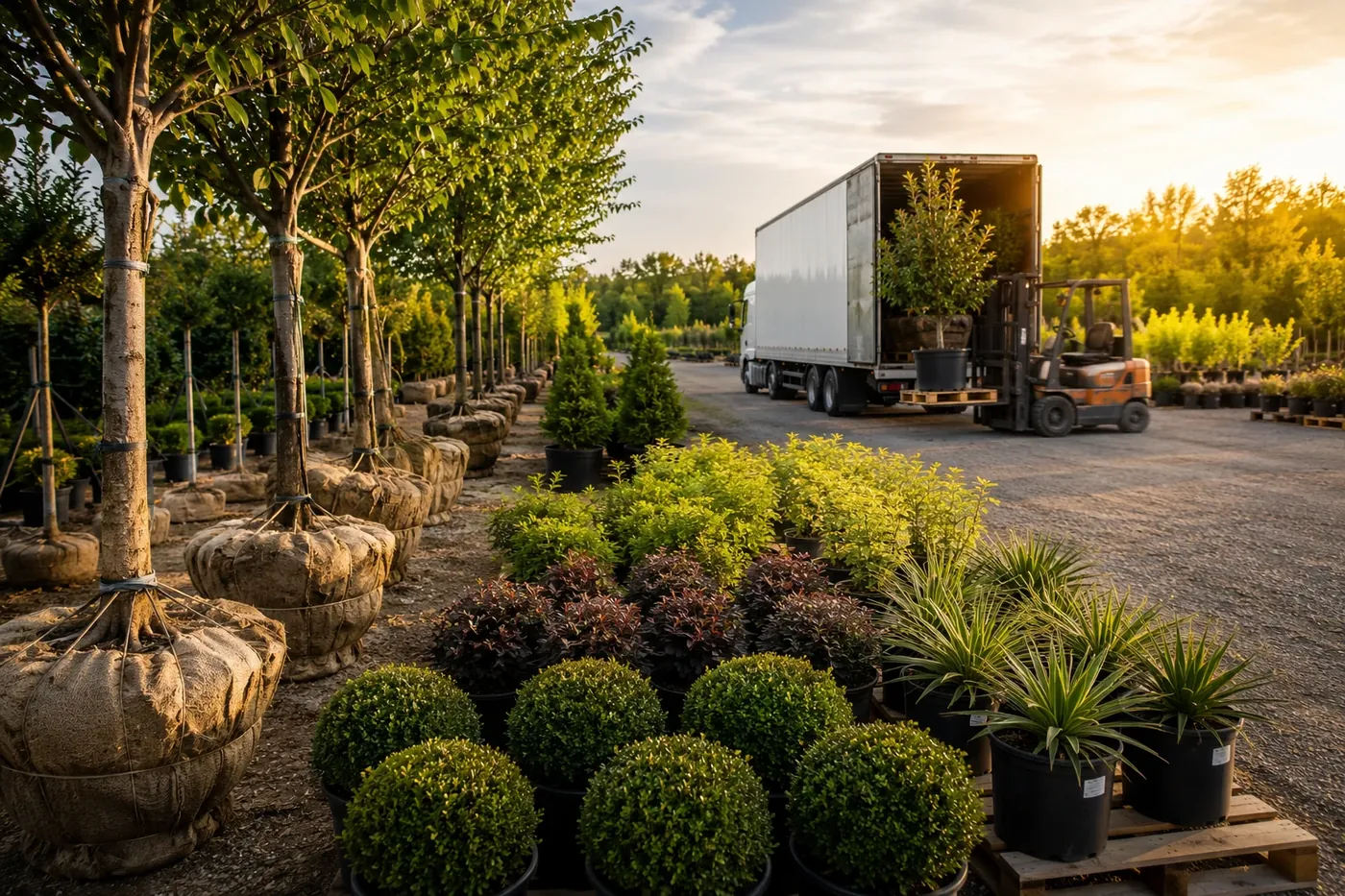
Large commercial developments may secure inventory six months to two years in advance.
Step 5: Coordinating Delivery Logistics
Purchasing plants is only half the challenge.
Getting them to the site safely requires equal attention.
Effective logistics planning considers:
- Delivery timing
- Site access
- Equipment requirements
- Weather conditions
- Storage capabilities
- Installation sequencing
Even the healthiest plants can suffer damage when transportation planning falls short.
Types of Plants Commonly Sourced Through Wholesale Channels
Trees
Trees often represent the largest investment in a landscape project.
Common categories include:
- Shade trees
- Ornamental trees
- Flowering trees
- Specimen trees
- Evergreen trees
Because mature trees require years of production, sourcing often begins well before project completion.
Shrubs
Shrubs provide structure, screening, texture, and visual interest.
Popular options include:
- Boxwoods
- Hollies
- Viburnums
- Loropetalums
- Hydrangeas
Commercial projects frequently require large quantities, making wholesale procurement essential.
Groundcovers and Perennials
These plants help complete the landscape design.
They are commonly used for:
- Erosion control
- Seasonal color
- Mass planting
- Pollinator habitats
- Low-maintenance landscapes
Because availability fluctuates seasonally, early planning remains critical.
Native Plants
Native plant programs continue gaining momentum.
Many municipalities and developers now prioritize native species because they typically require less water, fewer inputs, and greater environmental compatibility.
As sustainability initiatives expand, demand for native inventory continues to increase.
Specialty Plant Material
Some projects require unique specimens.
Examples include:
- Mature olive trees
- Rare palms
- Specialty conifers
- Heritage oaks
- Custom-grown material
Finding these plants often requires extensive supplier networks and experienced sourcing professionals.
Key Challenges in Wholesale Plant Sourcing
Even the most carefully planned projects encounter obstacles.
The difference between success and frustration often comes down to preparation.
Seasonal Availability Constraints
Plants follow natural production cycles.
Unlike manufactured products, inventory cannot simply be created on demand.
A tree that requires five years to reach market size cannot be replaced overnight. Consequently, buyers who wait until the last minute frequently discover that preferred species are unavailable.
To reduce risk:
- Finalize plant lists early
- Reserve key inventory in advance
- Identify acceptable alternatives
- Monitor seasonal availability forecasts
A proactive approach almost always delivers better results.
Weather and Environmental Factors
Weather affects every stage of the supply chain.
Extended droughts, hurricanes, freezes, floods, and heat waves can reduce inventory and disrupt transportation schedules.
Growers may lose crops. Deliveries may be delayed. Plant quality can even vary from year to year.
Because of these variables, flexibility remains one of the most valuable traits in successful plant procurement.
Plant Shortages and Supply Chain Disruptions
Demand often exceeds supply.
This has become increasingly common for native plants, specimen trees, and specialty varieties.
Large commercial developments can consume enormous quantities of material, creating shortages across entire regions.
As a result, experienced professionals involved in wholesale plant sourcing often maintain relationships with multiple growers rather than relying on a single supplier.
Transportation Risks
Plants are living inventory.
They can dry out, overheat, freeze, or suffer physical damage during transit.
Common transportation risks include:
- Broken branches
- Root ball damage
- Moisture loss
- Wind burn
- Heat stress
- Loading damage
Proper logistics planning significantly reduces these concerns.
Quality Consistency Across Suppliers
Projects frequently require material from multiple nurseries.
While this expands availability, it can also create inconsistencies.
Differences may appear in:
- Plant size
- Shape
- Growth habits
- Color
- Container types
For large installations, maintaining consistency often requires careful inspection and coordination before delivery.
How to Overcome Common Sourcing Challenges
Plan Procurement Early
The earlier sourcing begins, the more options become available.
Early planning allows buyers to:
- Secure preferred inventory
- Negotiate better pricing
- Avoid emergency substitutions
- Improve scheduling accuracy
Waiting until installation is imminent often limits choices.
Build Relationships With Trusted Suppliers
Relationships matter.
Suppliers frequently prioritize long-term partners when inventory becomes scarce.
Strong relationships may also provide:
- Early inventory notifications
- Preferred pricing
- Access to specialty material
- Faster problem resolution
Over time, these advantages can create significant competitive benefits.
Utilize Multi-Grower Networks
No single nursery grows everything.
Therefore, diversified sourcing networks create flexibility.
A broad supplier base helps buyers:
- Locate difficult inventory
- Reduce supply interruptions
- Improve pricing options
- Expand geographic reach
This strategy has become increasingly valuable as supply chains grow more complex.
Maintain Flexible Specifications
Sometimes the exact requested plant simply is not available.
Successful project managers often prepare approved alternatives in advance.
Flexibility can help avoid delays while still achieving design objectives.
Partner With Experienced Sourcing Professionals
Experienced sourcing teams bring market knowledge that is difficult to replicate internally.
They understand:
- Current inventory trends
- Grower capabilities
- Regional availability
- Logistics requirements
- Quality standards
As a result, they frequently identify solutions faster than buyers working independently.
The Role of Logistics in Wholesale Plant Sourcing
Why Logistics Matter
Many people focus on finding plants.
However, logistics determines whether those plants arrive in usable condition.
The largest tree inventory in the world has little value if transportation issues compromise plant health before installation.
That is why logistics and wholesale plant sourcing should always be viewed together.
Plant Transportation Best Practices
Successful transportation begins before loading.
Best practices include:
- Watering plants appropriately
- Protecting foliage
- Securing root balls
- Using proper tie-down methods
- Monitoring weather conditions
These measures help preserve plant health throughout the journey.
Minimizing Damage During Transit
Several simple strategies dramatically reduce risk.
For example:
| Transportation Strategy | Benefit |
|---|---|
| Proper plant spacing | Reduces branch breakage |
| Protective coverings | Limits wind damage |
| Secure loading methods | Prevents shifting |
| Temperature monitoring | Protects sensitive species |
| Shorter transport times | Reduces stress |
Small details often make a substantial difference.
Coordinating Multi-Site Deliveries
Large projects may span multiple locations.
Instead of shipping all material simultaneously, deliveries can be phased according to installation schedules.
This approach reduces:
- On-site congestion
- Plant holding times
- Maintenance requirements
- Damage risk
Phased logistics frequently improve overall project efficiency.
Benefits of Working With a Wholesale Plant Sourcing Partner
Many organizations initially attempt to handle procurement internally.
Eventually, however, project complexity often reveals the value of specialized support.
Access to Expanded Inventory
Professional sourcing partners maintain extensive grower networks.
This provides access to inventory that may not appear through traditional searches.
In some cases, they can locate material from the best online tree nursery networks and regional growers simultaneously, dramatically expanding available options.
Reduced Administrative Burden
Plant procurement requires significant coordination.
Tasks may include:
- Inventory verification
- Quote management
- Supplier communication
- Delivery scheduling
- Quality inspections
Outsourcing these responsibilities allows teams to focus on project execution.
Improved Project Efficiency
Centralized sourcing simplifies communication.
Rather than coordinating with numerous suppliers individually, buyers gain a single point of contact.
This often accelerates decision-making and reduces administrative delays.
Better Cost Management
Lower prices do not always equal lower costs.
Professional sourcing focuses on total project value by considering:
- Transportation expenses
- Replacement risks
- Availability concerns
- Installation timing
- Quality outcomes
The result is often a more predictable budget.
Wholesale Plant Sourcing for Different Industries
Landscape Contractors
Contractors depend on reliable deliveries and consistent quality.
Plant delays can disrupt installation schedules and impact profitability.
Commercial Developers
Developers often manage large-scale projects involving extensive plant lists.
Early procurement planning helps protect construction timelines.
Municipalities and Government Projects
Public projects frequently emphasize sustainability, native species, and long-term performance.
Professional sourcing helps meet those requirements efficiently.
Homeowner Associations
HOAs commonly require replacement programs, enhancement projects, and seasonal upgrades.
Reliable sourcing supports ongoing landscape improvements.
Garden Centers and Retail Nurseries
Many retail operations supplement inventory through wholesale plant sourcing, especially during peak demand periods.
Sustainability in Wholesale Plant Sourcing
Sustainability is no longer a niche consideration.
It has become a major procurement priority.
Supporting Native Plant Programs
Native species often require fewer resources while supporting local ecosystems.
Their popularity continues to grow among municipalities and developers alike.
Reducing Transportation Impact
Strategic sourcing can reduce transportation distances and fuel consumption.
Whenever possible, selecting regional suppliers benefits both budgets and environmental goals.
Sourcing Climate-Appropriate Plants
Plants adapted to local conditions typically perform better long-term.
This reduces replacement rates and maintenance requirements.
Working With Responsible Growers
Many buyers now evaluate environmental practices alongside pricing and availability.
Responsible production methods contribute to healthier landscapes and stronger supply chains.
Emerging Trends in Wholesale Plant Sourcing
The industry continues to evolve.
Several trends are shaping the future.
Technology and Inventory Tracking
Digital inventory systems provide faster visibility into available stock.
Buyers can often review availability in real time, improving planning accuracy.
Digital Procurement Platforms
Online sourcing tools streamline communication between buyers and suppliers.
As technology advances, procurement becomes more efficient and transparent.
Contract Growing Programs
Demand for contract growing continues increasing.
These programs allow buyers to secure future inventory years in advance.
Supply Chain Diversification
Organizations increasingly diversify supplier networks to reduce procurement risk and improve resilience.
Greater Focus on Specialized Tree Procurement
As mature trees become more desirable for immediate landscape impact, identifying a dependable tree source has become a strategic priority for many commercial buyers.
How to Choose the Right Wholesale Plant Sourcing Partner
Not all sourcing providers offer the same capabilities.
Before selecting a partner, ask:
- How extensive is the grower network?
- What regions are served?
- Are logistics services available?
- How is quality verified?
- Can specialty material be sourced?
- What experience exists with projects similar to ours?
The strongest partners combine industry expertise, logistics coordination, quality control, and supplier relationships into a seamless service model.
Final Thoughts
Successful landscapes begin long before installation day. Effective wholesale plant sourcing helps secure quality inventory, minimize delays, improve logistics, and support long-term project success. By planning early, leveraging trusted supplier networks, and partnering with experienced sourcing professionals, organizations can create more efficient procurement processes and deliver better landscape outcomes from start to finish.