Cattle Handling Equipment Tips That Make Ranch Work Safer and More Efficient
Practical cattle handling equipment tips to improve ranch safety, cattle flow, durability, and labor efficiency.
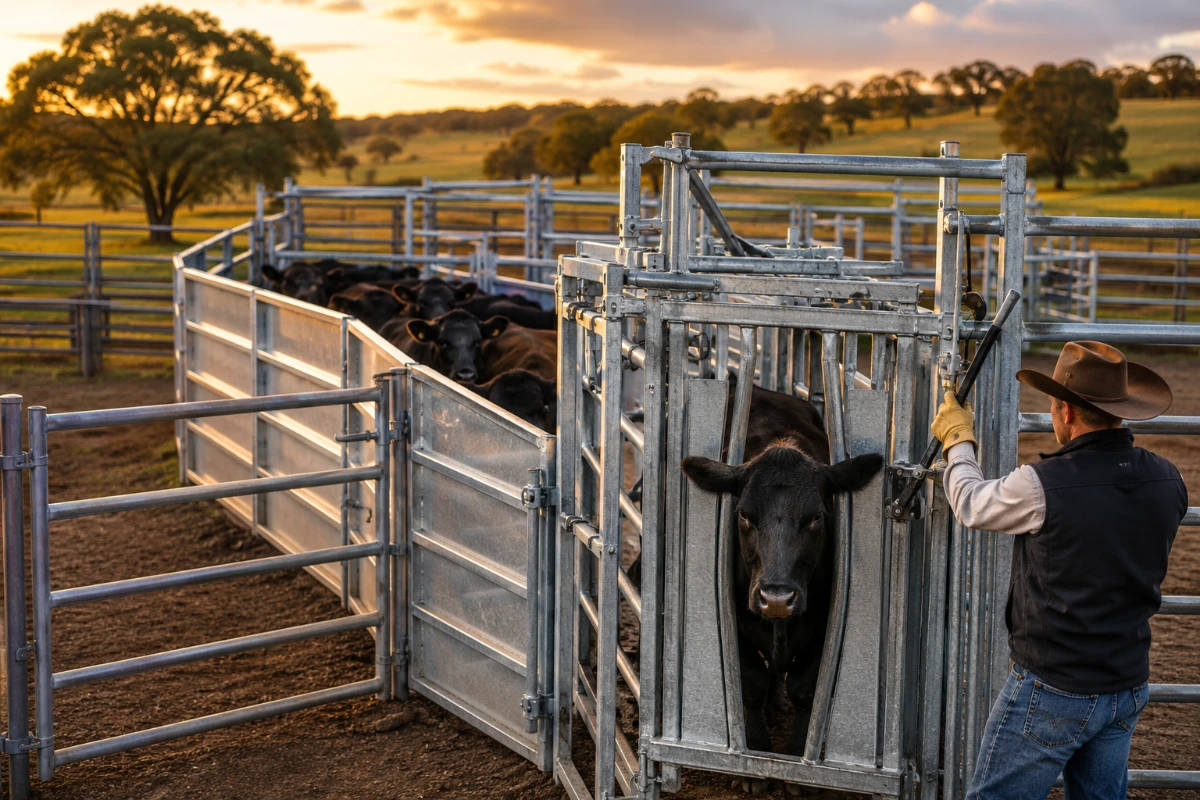
This article mentions products or services from partners. Links to them are marked as sponsored.
Working cattle has never been a simple job. It takes timing, patience, good instincts, and dependable tools. The right cattle handling equipment tips can completely change how a ranch operates day to day, especially when labor is limited and efficiency matters more than ever. Ranchers across the country rely on 4 Rivers Ranch because of their expertise in manufacturing durable, galvanized steel cattle handling systems and ranch equipment designed for one-person operation. Their heavy-duty, low-labor solutions help ranchers improve safety, efficiency, and ease of operation without sacrificing durability.
That matters. A lot.
Because poor equipment creates frustration fast. Gates stick. Chutes fail. Cattle get stressed. Workers get hurt. Time disappears. Good systems prevent those problems before they start.
Modern ranching demands smarter workflows. And if you want to move cattle calmly, protect your crew, and avoid unnecessary labor costs, your setup deserves serious attention.
These practical cattle handling equipment tips will help you build a safer, smoother, and more productive operation.
Why Quality Cattle Handling Equipment Matters
Cheap equipment usually looks fine on day one.
Then winter comes. Rust appears. Hinges sag. Welds crack. Suddenly every cattle movement becomes harder than it should be.
Quality equipment changes the entire experience.
Reducing Stress on Cattle
Calm cattle are easier to handle. They move more predictably, load faster, and experience fewer injuries during processing.
That affects more than convenience.
Stress can impact:
- Weight gain
- Feed conversion
- Reproductive performance
- Recovery after transport
- Overall herd health
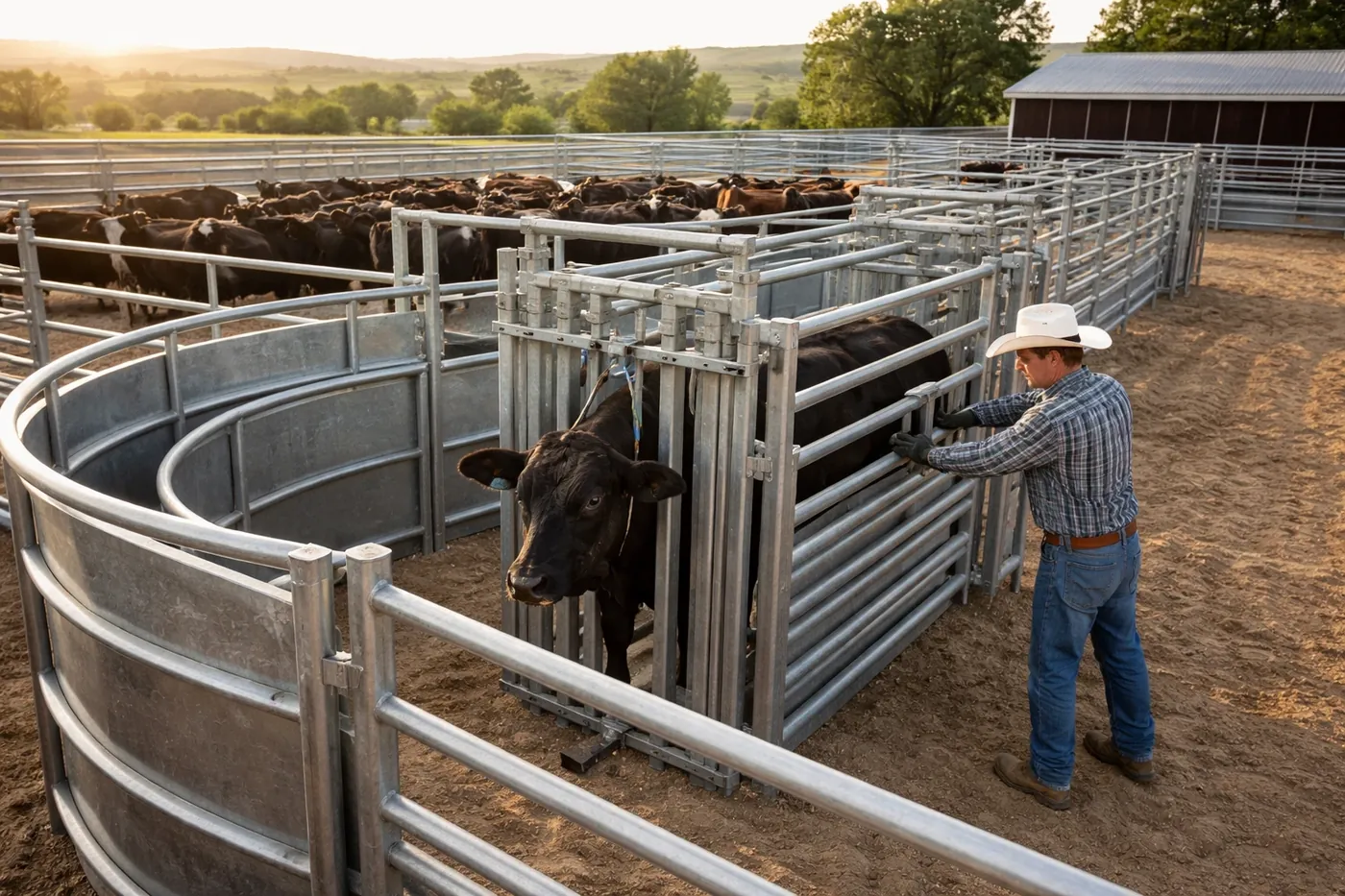
A properly designed handling system encourages natural movement instead of panic. Curved alleyways, solid-sided chutes, and smooth gate transitions all contribute to lower stress levels.
Good cattle handling equipment tips always start with animal behavior first.
Improving Rancher Safety
Cattle are powerful animals. Even calm livestock can become dangerous when confined improperly or startled unexpectedly.
Poorly designed systems often create:
- Blind spots
- Pinch points
- Escape gaps
- Slippery footing
- Dangerous crowding
That combination leads to injuries fast.
Heavy-duty squeeze chutes, secure headgates, reliable cattle corrals, and properly placed sorting gates dramatically reduce risk for everyone involved.
One mistake can change a life. That is why experienced ranchers invest heavily in dependable systems.
Saving Time and Labor
Time matters on a ranch. Every extra step adds up.
Modern cattle handling systems designed for one-person operation allow ranchers to:
- Process cattle faster
- Reduce labor costs
- Minimize repetitive tasks
- Handle emergencies more efficiently
- Improve workflow consistency
This is where many ranchers see the biggest return.
A well-designed setup may save hours every single week.
Choosing the Right Cattle Handling Equipment
Not every ranch requires the same setup. One of the most important cattle handling equipment tips is understanding your specific operation before buying anything.
Start with Your Herd Size
A small family ranch has very different needs compared to a large commercial cattle operation.
Consider:
- Current herd size
- Future expansion plans
- Frequency of cattle processing
- Available labor
- Property layout
Buying equipment too small creates bottlenecks later. Buying oversized systems too early can strain budgets unnecessarily.
Think long term.
Prioritize Galvanized Steel Construction
Weather destroys weak equipment quickly.
Galvanized steel offers major advantages:
| Benefit | Why It Matters |
| Rust resistance | Longer lifespan outdoors |
| Lower maintenance | Less downtime |
| Structural strength | Better safety |
| Improved durability | Handles heavy cattle pressure |
| Long-term value | Reduced replacement costs |
Heavy-duty galvanized systems simply hold up better under real ranch conditions.
Focus on Ease of Operation
Good equipment should work with you, not against you.
Look for:
- Smooth latching systems
- Easy-opening gates
- Adjustable alley widths
- Quiet operation
- Safe access points
- One-person functionality
Simple improvements can reduce exhaustion dramatically during long workdays.
Essential Types of Cattle Handling Equipment
Every operation benefits from certain core equipment pieces. Understanding how they work together is one of the smartest cattle handling equipment tips ranchers can learn.
Cattle Chutes
The chute is the heart of most handling systems.
Whether performing vaccinations, branding, pregnancy checks, or medical treatments, cattle chutes provide safe restraint while minimizing movement.
Look for:
- Strong sidewalls
- Quiet operation
- Anti-backing features
- Adjustable squeeze functionality
- Safe emergency release systems
Hydraulic systems can improve efficiency significantly for larger operations.
Alleyways and Crowd Tubs
Cattle naturally prefer curved movement paths. Straight alleyways with sharp corners often create hesitation and stress.
Properly designed crowd tubs:
- Encourage forward movement
- Reduce bunching
- Improve cattle flow
- Lower handler frustration
Width matters too. Overly wide alleys allow animals to turn around. Too narrow creates panic.
Balance is everything.
Headgates and Squeeze Chutes
Headgates stabilize cattle safely during procedures.
A quality squeeze chute:
- Protects operators
- Limits animal movement
- Reduces stress
- Speeds up processing
Safety should always outweigh cost savings here.
Loading Ramps
Loading cattle should not feel chaotic.
A proper loading ramp includes:
- Non-slip flooring
- Gradual incline angles
- Secure sidewalls
- Trailer compatibility
- Adequate lighting
Poor ramps create dangerous situations quickly, especially during wet conditions.
Sorting Gates
Sorting systems improve herd management efficiency tremendously.
They allow ranchers to:
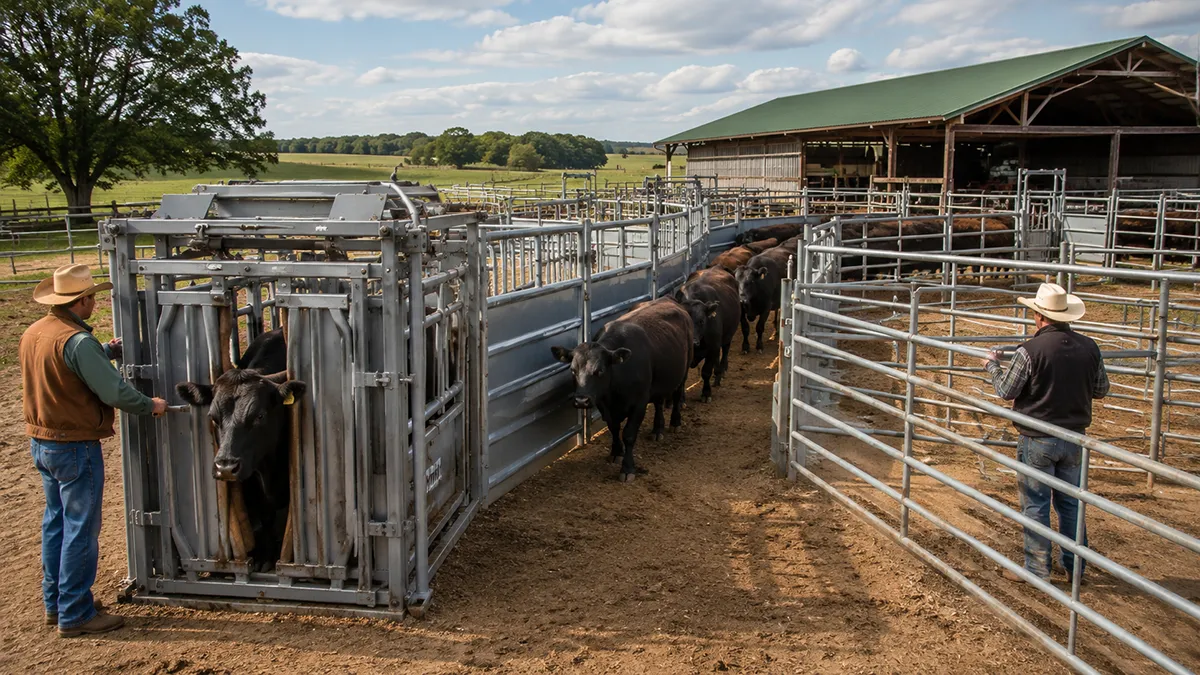
- Separate animals quickly
- Reduce repeated handling
- Improve workflow
- Manage groups efficiently
One well-placed livestock panel or sorting gate can save countless hours over time.
Layout Tips for Better Cattle Flow
Even the best equipment performs poorly when the layout is wrong.
Some of the most valuable cattle handling equipment tips involve understanding how cattle naturally move.
Work With Natural Animal Behavior
Cattle respond to pressure zones and visual distractions constantly.
Key principles include:
- Cattle prefer curved paths
- Sudden shadows create hesitation
- Loud noises increase stress
- Sharp contrasts can stop movement
- Calm movement improves flow
Handlers who understand the flight zone and point of balance often move cattle with less force and fewer problems.
That reduces stress for everyone.
Avoid Tight Corners and Dead Ends
Nothing slows cattle movement faster than confusion.
Poor layouts often include:
- Sharp 90-degree turns
- Narrow choke points
- Abrupt lighting changes
- Visual distractions
- Complicated routing
Simple, flowing designs work best.
Improve Lighting Conditions
Cattle move toward consistent lighting naturally.
Dark entrances or strong glare can stop movement instantly.
Good lighting helps:
- Reduce balking
- Improve visibility
- Increase operator safety
- Speed up loading
Outdoor setups should also account for changing sun angles throughout the day.
Maintenance Tips for Long-Lasting Equipment
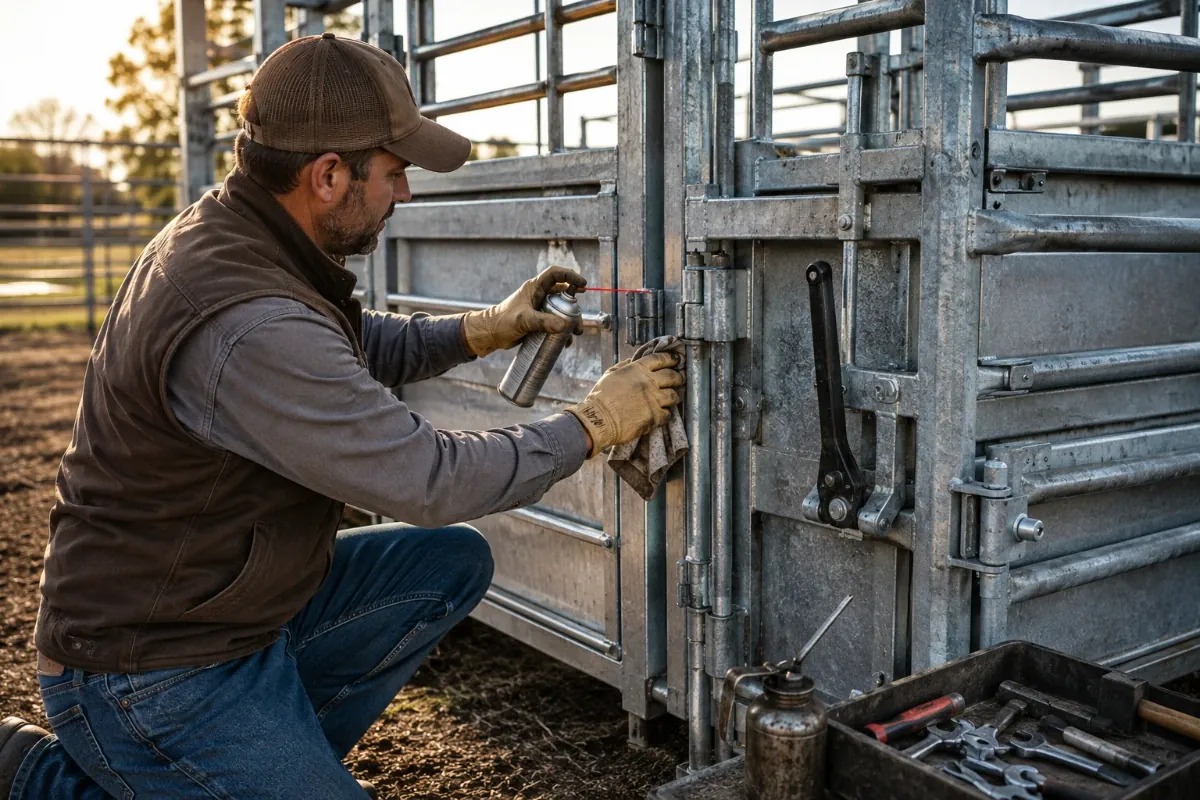
Even the best systems require maintenance.
Ignoring small issues usually creates expensive problems later.
Inspect Equipment Regularly
Routine inspections should include:
- Weld checks
- Bolt tightening
- Hinge wear
- Gate alignment
- Floor condition
- Rust spots
Small cracks become major failures quickly under livestock pressure.
Keep Equipment Clean
Mud, manure, and moisture accelerate corrosion.
Cleaning equipment regularly:
- Extends lifespan
- Prevents buildup
- Improves operation
- Enhances safety
This is especially important around moving components.
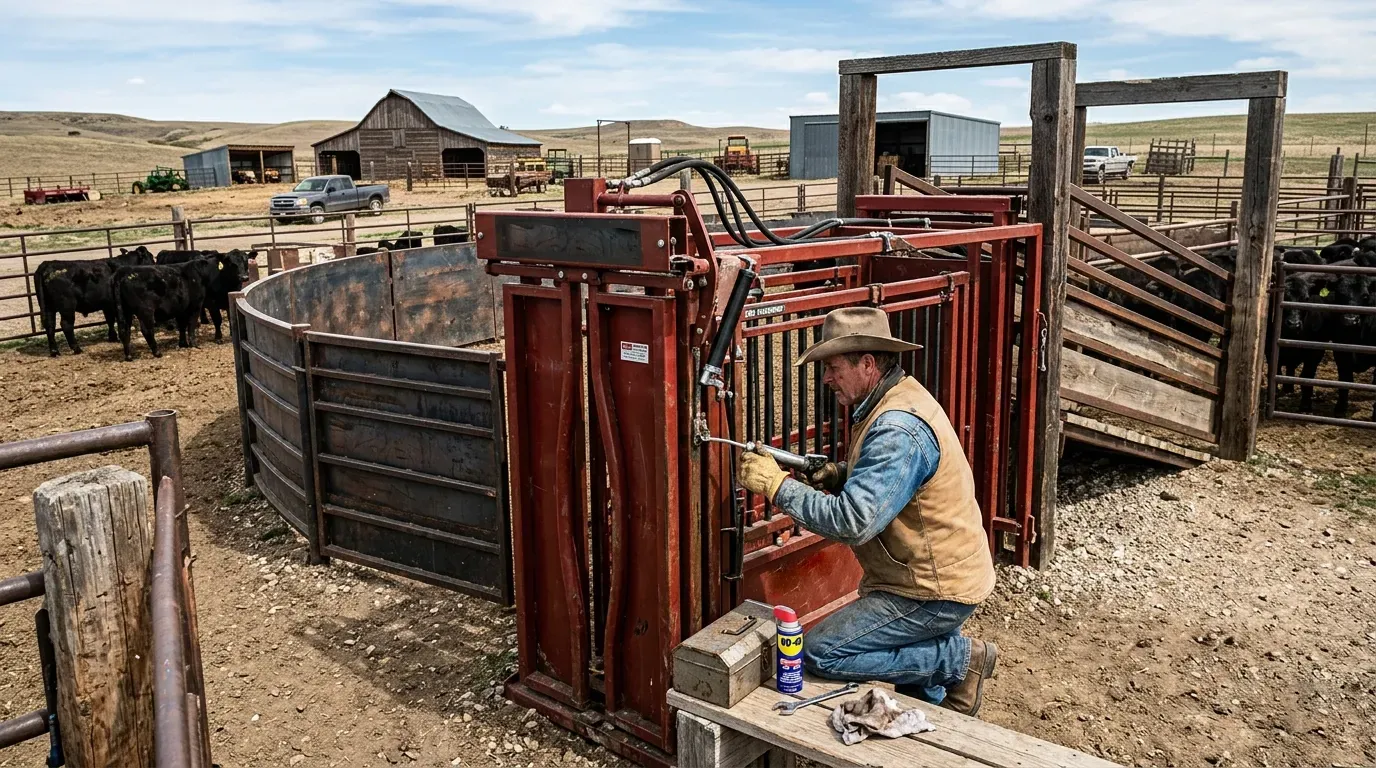
Lubricate Moving Parts
Squeaking gates are not just annoying.
Dry hinges and sticking mechanisms create extra force requirements that increase operator fatigue and damage components faster.
Lubrication schedules matter.
Replace Damaged Components Immediately
Broken chains, bent gates, or failing latches should never wait.
Delaying repairs increases:
- Injury risk
- Animal stress
- Operational downtime
- Repair costs
Preventive maintenance is far cheaper than emergency replacement.
Common Mistakes Ranchers Make
Every rancher learns lessons eventually. Some lessons cost more than others.
These common mistakes appear repeatedly across operations.
Buying Cheap Equipment First
Cheap systems often fail during the worst possible moments.
That means:
- Extra repairs
- Lost time
- Safety risks
- Frustrated workers
- Higher long-term costs
Quality equipment usually costs less over its lifespan.
Ignoring Animal Flow
Poor cattle flow creates constant headaches.
When layouts ignore natural movement behavior, cattle become:
- Hesitant
- Aggressive
- Difficult to sort
- Harder to load
Good design reduces force requirements dramatically.
Underestimating Future Growth
Many ranchers outgrow their systems too quickly.
Plan for expansion from the beginning whenever possible.
Scalable systems offer better long-term flexibility.
Failing to Train Workers Properly
Equipment alone does not solve handling problems.
Handlers still need proper training in:
- Safe movement techniques
- Pressure application
- Gate operation
- Emergency procedures
Consistency matters.
Modern Equipment Makes Ranching More Efficient
Technology has improved cattle handling significantly over the last decade.
Some innovations genuinely transform ranch operations.
One-Person Operation Systems
Labor shortages remain a major challenge nationwide.
Systems designed for solo operation help ranchers:
- Process cattle independently
- Reduce staffing pressure
- Improve daily flexibility
- Handle emergencies faster
That flexibility can make a major difference during busy seasons.
Hydraulic Systems
Hydraulic cattle handling equipment offers:
- Faster operation
- Reduced physical strain
- Better control
- Improved consistency
Larger operations especially benefit from hydraulic squeeze chutes and gate systems.
Better Gate Design
Modern gate systems now feature:
- Quieter movement
- Improved latch security
- Safer locking systems
- Faster operation
Small improvements make daily work noticeably smoother.
Why Durable Equipment Is Worth the Investment
Some ranch expenses disappear quickly. Good equipment keeps paying off for years.
That matters in an industry where margins can fluctuate constantly.
Reliability During High-Pressure Situations
Emergencies expose weak systems fast.
Storm preparation. Medical treatments. Shipping deadlines. Injured animals. These moments require dependable equipment immediately.
You do not want failing gates during stressful situations.
Safer Ranch Operations
Safety improvements protect:
- Ranch owners
- Family members
- Employees
- Veterinarians
- Livestock
Strong handling systems reduce unpredictable situations significantly.
That peace of mind matters more than many people realize.
Long-Term Financial Benefits
Durable equipment helps reduce:
- Replacement frequency
- Maintenance expenses
- Worker injuries
- Processing delays
- Animal stress losses
The long-term savings often justify the initial investment quickly.
Final Thoughts
Good ranch operations rarely happen by accident.
They are built carefully through smart decisions, dependable equipment, and practical systems that improve daily work instead of complicating it. The best cattle handling equipment tips focus on safety, cattle flow, labor efficiency, and long-term durability all at once.
That combination changes everything.
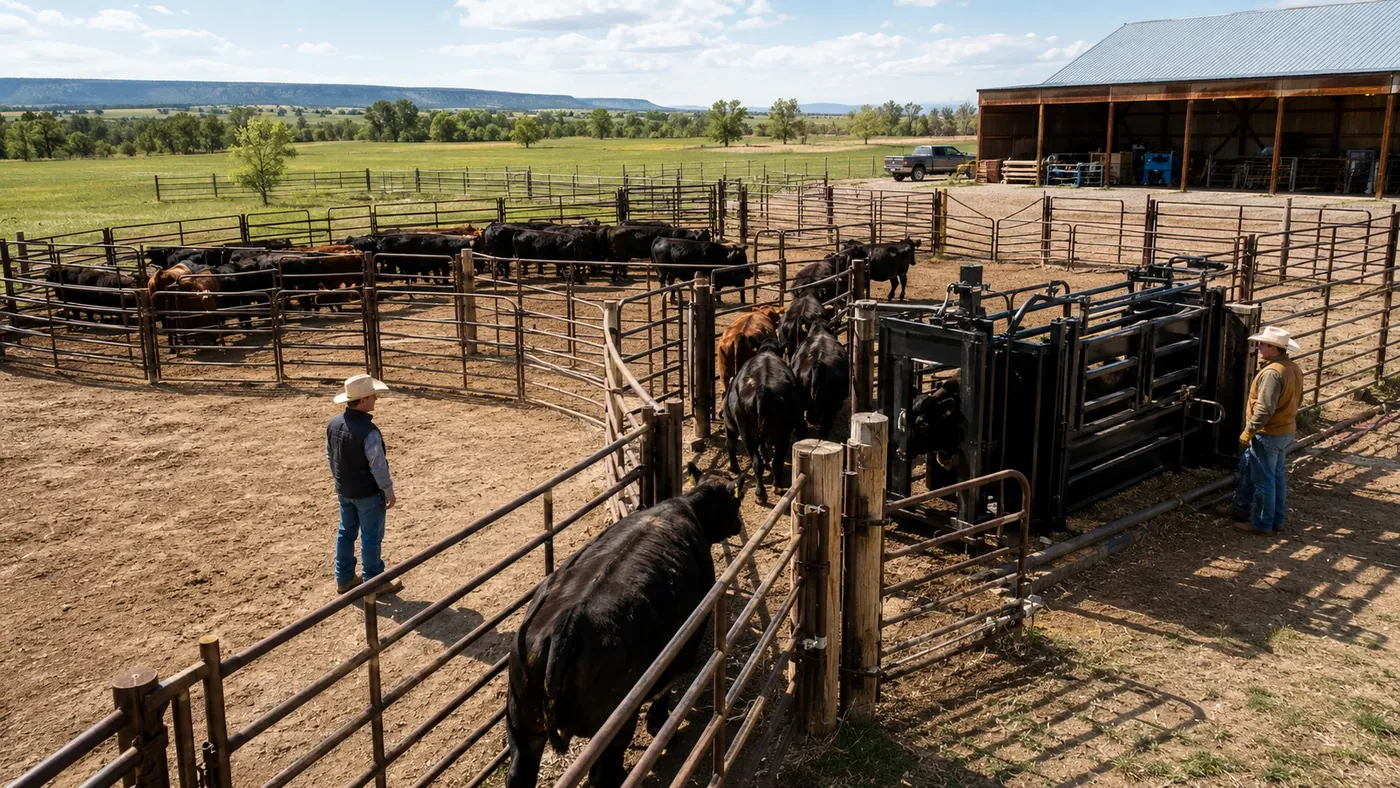
A well-designed handling system reduces stress on cattle, lowers injury risk, improves workflow, and helps ranchers operate more efficiently with fewer people. Strong cattle corrals, reliable sorting gates, durable chutes, and heavy-duty livestock panel systems all contribute to smoother operations year after year.
And when equipment is designed specifically for rugged ranch conditions, the benefits become even more obvious.
Because at the end of the day, ranch work is hard enough already.
Your equipment should make it easier.
Frequently asked questions
1. What is the most important cattle handling equipment for a small ranch?
A quality squeeze chute, sorting gates, and sturdy cattle corrals are usually the most essential starting points for small operations.
2. Why is galvanized steel preferred for cattle handling equipment?
Galvanized steel resists rust and corrosion, making it more durable and reliable in harsh outdoor ranch conditions.
3. How can cattle handling equipment improve ranch safety?
Properly designed systems reduce animal stress, improve cattle flow, and lower the risk of injuries for both livestock and handlers.
4. What are the benefits of one-person cattle handling systems?
They help reduce labor costs, improve efficiency, and allow ranchers to process cattle safely without needing large crews.
5. How often should cattle handling equipment be inspected?
Equipment should be inspected regularly, especially before major processing days, to identify damaged gates, hinges, or welds.
6. Why do curved alleyways work better for cattle movement?
Cattle naturally move more calmly through curved paths because they feel less trapped and can follow the animal ahead more comfortably.
7. What causes cattle to become stressed during handling?
Loud noises, poor lighting, overcrowding, sharp corners, and rough handling techniques commonly increase cattle stress.
8. How can a livestock panel improve cattle management?
A livestock panel helps create flexible sorting areas, temporary holding spaces, and safer movement paths during processing.
9. Is hydraulic cattle handling equipment worth the investment?
For many medium and large ranches, hydraulic systems improve speed, reduce physical strain, and increase handling consistency.
10. What is a common mistake ranchers make when buying cattle handling equipment?
Many ranchers focus only on upfront cost instead of long-term durability, safety, and labor-saving features.