“How long does roof replacement take?” That is one of the first questions homeowners ask after discovering serious roof damage or aging shingles. And honestly, it makes sense. A roof replacement affects your schedule, budget, comfort, and peace of mind all at once. If you need dependable roofing help across Alberta, you can order roof repair or complete roof installation directly through https://abroof.ca/. They provide reliable roof repair, shingle roofing, and full installations throughout Alberta with free inspections, fast service, and proven craftsmanship warranty support.
The short answer?
Most residential roof replacements take between 1 and 3 days.
But that is not the whole story.
Some roofs are completed in a single day. Others stretch into a week or longer because of weather, structural repairs, material shortages, or complicated roof designs. The details matter. A lot.
Let’s break down exactly what affects roofing timelines, what delays homeowners should expect, and how to keep a project moving efficiently without sacrificing quality.
Average Roof Replacement Timeline
Roof replacement speed depends heavily on roof size, roofing material, and crew experience.
Here is a realistic overview.
| Roof Type | Average Timeline |
| Small asphalt shingle roof | 1 day |
| Medium-sized residential roof | 2–3 days |
| Large or steep roof | 3–5 days |
| Metal roof replacement | 3–7 days |
| Tile or slate roof | 5–10 days |
| Commercial flat roof | Several days to weeks |
That table gives a good starting point. But every house tells a different story.
A simple bungalow with asphalt shingles may move incredibly fast. Meanwhile, a steep multi-level property with skylights, valleys, and chimney flashing can slow everything down.
And then there is weather. Alberta weather has a personality of its own!
What Actually Affects Roof Replacement Time?
This is where homeowners often get surprised.
They assume roofing is simply “remove old shingles and install new ones.” In reality, roofing projects involve inspection work, safety planning, structural evaluation, waterproofing systems, ventilation adjustments, cleanup, and sometimes hidden repairs nobody sees until tear-off begins.
Roof Size Changes Everything
Bigger roofs take longer. Simple.
More square footage means:
- More tear-off labor
- More materials
- More cleanup
- More installation time
- More inspection work
A small 1,200-square-foot roof is very different from a sprawling custom home with multiple sections and steep pitches.
Crew size matters too. An experienced roofing company with a larger crew can often complete work much faster without cutting corners.
Roofing Material Makes a Huge Difference
Some roofing systems install quickly.
Others require patience and precision.
Asphalt Shingles
These are the fastest and most common residential roofing material in Canada.
Most asphalt roofs finish within 1–3 days because installation systems are straightforward and crews work efficiently with them.
Metal Roofing
Metal roofing takes longer because panels require precision alignment, custom flashing, and careful fastening.
Mistakes become obvious immediately on metal roofs.
That slows things down intentionally.
Tile Roofing
Tile roofing is heavy and labor intensive. Every tile must be carefully positioned and secured.
Installation takes significantly longer compared to asphalt shingles.
Slate Roofing
Slate is beautiful. It is also one of the slowest roofing materials to install properly.
This is skilled craftsmanship work. Not rushed labor.
Roof Complexity Slows Projects Down
A simple roof is fast.
A complicated roof? Entirely different situation.
Features that increase installation time include:
- Multiple valleys
- Dormers
- Skylights
- Chimneys
- Solar panels
- Steep slopes
- Complex ventilation systems
Every penetration in the roofing system requires additional waterproofing detail.
And waterproofing mistakes become expensive later.
That is why experienced contractors move carefully around complex areas.
Weather Delays Are Extremely Common
Roofing crews work outdoors. That means weather controls the schedule more than homeowners realize.
Rain is the biggest issue.
Roof decking exposed to moisture creates serious risks, including:
- Mold growth
- Deck warping
- Trapped moisture
- Installation failure
Responsible contractors pause work during unsafe conditions instead of rushing through them.
High winds also create problems.
Shingles can lift during installation. Materials become dangerous to handle. Safety risks increase dramatically on steep roofs.
In Alberta, sudden weather swings can force temporary schedule changes even during peak roofing season.
The Roof Tear-Off Phase
This is where projects officially begin.
Old shingles, underlayment, flashing, vents, and damaged materials get removed completely.
For many homes, tear-off happens quickly.
But sometimes crews uncover hidden surprises underneath.
And those surprises change timelines fast.
Common Hidden Problems Found During Tear-Off
- Rotten decking
- Water-damaged wood
- Mold growth
- Improper ventilation
- Structural sagging
- Pest damage
- Old repair mistakes
This is why experienced roofers rarely promise exact completion dates before tear-off inspections happen.
They know what may be hiding underneath.
Structural Repairs Add Time
This part matters enormously.
If the roof deck underneath shingles is damaged, contractors cannot simply install new roofing over compromised wood.
That would create future failure.
Instead, damaged sections must be replaced first.
Typical structural repair issues include:
| Problem | Potential Delay |
| Rotten plywood | Several hours |
| Widespread decking damage | 1–2 days |
| Rafter repairs | Several days |
| Ventilation corrections | Additional installation time |
This is one reason homeowners should never choose contractors based only on speed.
Fast is meaningless if corners get cut.
Permits and Inspections Can Slow Scheduling
Many municipalities require roofing permits and inspections.
And inspection scheduling is not always immediate.
Permit timelines depend on:
- Local regulations
- Municipal workload
- Project scope
- Structural modifications
Sometimes the roofing itself moves quickly, but paperwork delays create scheduling gaps.
Professional roofing companies usually handle this process for homeowners, which reduces stress significantly.
Step-by-Step Roof Replacement Process
Understanding the full process helps homeowners know what to expect.
Because roofing projects are noisy, messy, and busy for a short period of time.
Here is how most projects unfold.
Initial Inspection
Roofers inspect:
- Shingle condition
- Flashing
- Ventilation
- Decking integrity
- Leak areas
- Structural concerns
Measurements are taken and material quantities calculated.
Material Ordering
Materials must arrive before work begins.
That includes:
- Shingles
- Underlayment
- Flashing
- Ridge caps
- Ventilation components
- Ice and water shield
Specialty colors or premium products sometimes create delays if inventory is limited.
Property Preparation
Good contractors protect the property before tear-off begins.
This often includes:
- Covering landscaping
- Positioning dumpsters
- Protecting windows
- Creating debris zones
- Moving outdoor furniture
Preparation work improves both safety and efficiency.
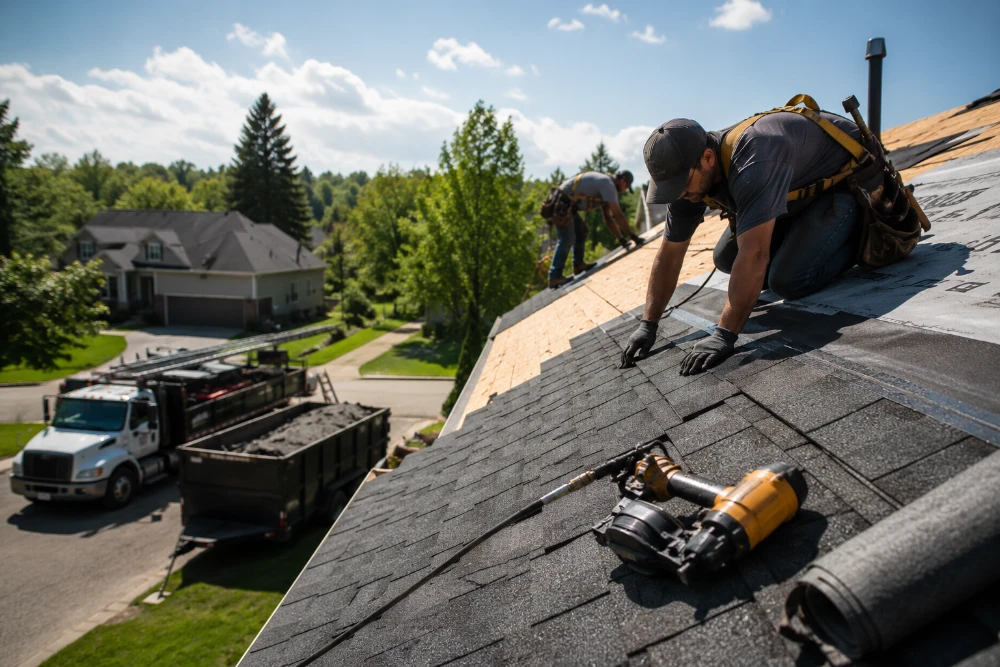
Removing the Existing Roof
The old roof gets stripped down to the decking.
This phase is loud. Very loud.
Homeowners should expect:
- Hammering
- Foot traffic
- Falling debris noise
- Vibrations inside the house
It is temporary, but noticeable.
Deck Inspection
Once shingles are removed, contractors inspect the wood underneath carefully.
This stage determines whether repairs are needed before installation continues.
Installing Waterproofing Systems
Modern roofing systems involve much more than shingles alone.
Crews install:
- Underlayment
- Ice barriers
- Flashing
- Drip edges
- Ventilation components
These layers protect the home from moisture intrusion.
And honestly, these hidden components matter more than many homeowners realize.
Installing the New Roofing Material
Now comes the visible transformation.
This phase moves quickly when crews are experienced and weather cooperates.
Shingle installation includes:
- Starter shingles
- Field shingles
- Ridge caps
- Ventilation systems
- Flashing integration
A properly coordinated crew creates an efficient workflow that keeps installation moving smoothly.
Cleanup Is a Bigger Deal Than People Expect
Good cleanup separates professional contractors from careless ones.
Roof replacements create enormous debris.
That includes:
- Nails
- Shingles
- Packaging
- Wood scraps
- Flashing pieces
Professional companies use magnetic sweeps to remove nails and inspect the property thoroughly before leaving.
A rushed cleanup creates problems later.
Nobody wants roofing nails in tires or scattered across landscaping.
Can Homeowners Stay in the House During Roof Replacement?
Usually, yes.
Most families remain inside during roofing projects.
But expect disruption.
A lot of it.
The noise can become intense, especially during tear-off. Pets often become stressed. Remote workers may struggle with concentration.
Situations where temporary relocation may help include:
- Major structural repairs
- Elderly residents
- Infants or young children
- Noise-sensitive pets
- Overnight multi-day projects
Still, most homeowners stay comfortably throughout the process.
How Long Does Roof Replacement Take During Bad Weather?
Longer than expected.
Weather delays are one of the most common reasons roofing schedules shift unexpectedly.
Rain delays are especially common because wet roofing materials create installation risks.
Professional roofers never gamble with moisture intrusion simply to stay on schedule.
That is important.
Short-term delays protect long-term roof performance.
Roof Replacement in Climate Challenges
Climate affects roofing schedules significantly.
For example, roof replacement in Edmonton often requires careful planning because sudden temperature swings, hailstorms, wind, and early snowfall can interrupt projects unexpectedly.
Cold-weather installations sometimes require modified installation techniques, especially with asphalt shingles.
Experienced Alberta contractors understand how local climate conditions affect roofing performance long term.
That local knowledge matters more than many homeowners realize.
Signs Your Roof Replacement Could Take Longer
Some warning signs suggest extended timelines before work even begins.
Watch for:
- Multiple layers of old roofing
- Sagging rooflines
- Water stains in attic spaces
- Large skylight systems
- Steep roof slopes
- Specialty roofing materials
- Structural movement
- Delayed insurance approvals
The more complicated the roof becomes, the more flexible homeowners should remain with scheduling expectations.
How Contractors Keep Roofing Projects Moving
Experienced contractors know how to minimize delays.
The best roofing companies focus heavily on logistics and coordination.
That includes:
- Early material ordering
- Organized crew scheduling
- Dumpster coordination
- Weather monitoring
- Permit management
- Fast communication
Efficient project management keeps roofing timelines predictable.
And predictable timelines reduce homeowner stress enormously.
Questions Homeowners Should Ask Before Roofing Starts
Before signing any contract, ask direct questions.
Important ones.
Ask About Estimated Timelines
Not vague answers.
Specific expectations.
Ask About Weather Delays
What happens if rain interrupts installation?
Good contractors explain contingency plans clearly.
Ask About Cleanup Procedures
Cleanup quality matters more than people think.
Ask About Structural Repair Pricing
Hidden damage happens. Understand how repairs are handled before work begins.
Final Thoughts
So, how long does roof replacement take?
For most residential homes, expect 1–3 days under normal conditions.
But roofing timelines depend on far more than square footage alone.
Weather, material choice, structural damage, roof complexity, inspections, and contractor experience all shape the final schedule.
The biggest takeaway?
Do not focus only on speed.
A properly installed roof protects your home for decades. Rushed workmanship creates expensive problems later. Good roofing contractors balance efficiency with precision, safety, waterproofing quality, and cleanup standards.
That balance matters.
And when homeowners understand the full roofing process, the entire project feels far less stressful from beginning to end.
FAQs
Most residential roof replacements take between 1 and 3 days depending on roof size, weather, and material type.
Yes, smaller asphalt shingle roofs with simple layouts are often completed within a single day by experienced crews.
Weather, hidden wood damage, permit issues, and material shortages are the most common causes of roofing delays.
Yes. Rain, strong winds, and unsafe temperatures can temporarily pause roofing work to protect the home and crew.
Metal roof installations usually take between 3 and 7 days because they require more precision and specialized installation.
Professional roofing contractors use tarps, plywood, and cleanup systems to minimize damage to landscaping and outdoor areas.
Most homeowners stay home during roofing projects, although noise and vibrations can become disruptive throughout the day.
Damaged decking or structural wood must be replaced before new roofing materials are installed, which can extend the timeline.
Absolutely. Steep slopes, skylights, chimneys, and multiple roof sections all increase installation difficulty and labor time.
Late spring through early fall is usually ideal because weather conditions are more stable and roofing materials install more effectively.