Raising Goats
How to Keep Goat Shelters Dry and Parasite-Free
Learn how to keep goat shelters dry and parasite-free with proven cleaning systems, checklists, and natural care practices.
Browse by topic
Grow better, live simpler.
Free tool from Purely Wholesome Farm
Enter the breeding date to get the kidding window and a week-by-week pregnancy care timeline.
Free interactive tool
Enter the breeding date to get the kidding window and a week-by-week pregnancy care timeline.
Goats are pregnant for about 150 days, give or take five. Miniature breeds such as Nigerian Dwarfs and Pygmies often kid a few days earlier. Enter the date your doe was bred (or the first day the buck was in with her) and the calculator lays out the kidding window and the care milestones leading up to it.
About 150 days on average, with a normal range of roughly 145 to 155 days. Nigerian Dwarf and Pygmy goats often deliver around day 145.
Most vets recommend a CD&T booster about 4 weeks before kidding so antibodies pass to the kids through colostrum. Follow your vet’s protocol.
Dry off a milking doe about two months before her due date so her body can put its resources into the kids and the next lactation.
Results are planning guides based on typical values. Always use a thermometer and follow tested recipes; for animal health questions, your veterinarian has the final word.
Related guides
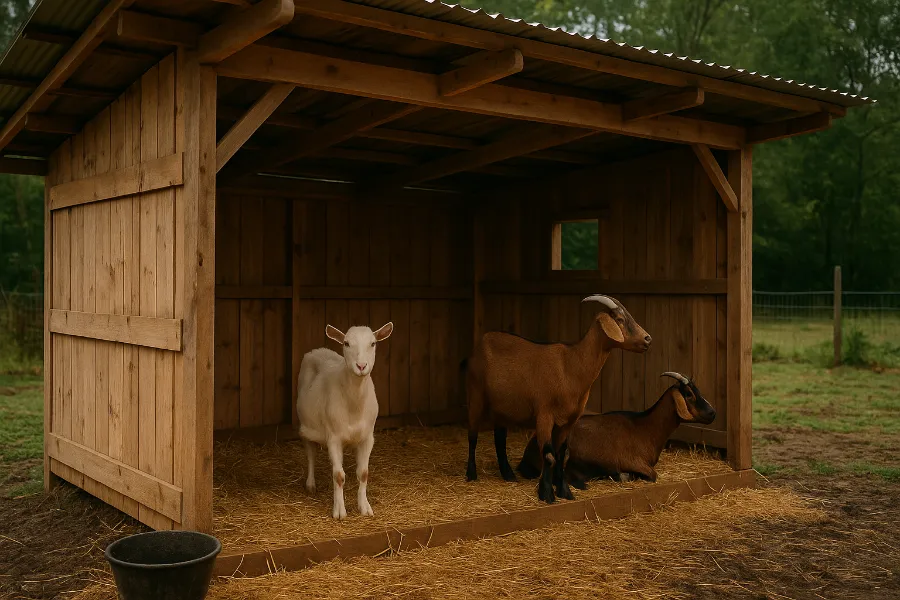
Learn how to keep goat shelters dry and parasite-free with proven cleaning systems, checklists, and natural care practices.
Learn what goat eyelid color means, how to detect anemia early, and use FAMACHA for better goat health and care.
Learn what causes sudden diarrhea after pasture change in goats and how pasture management helps prevent it.
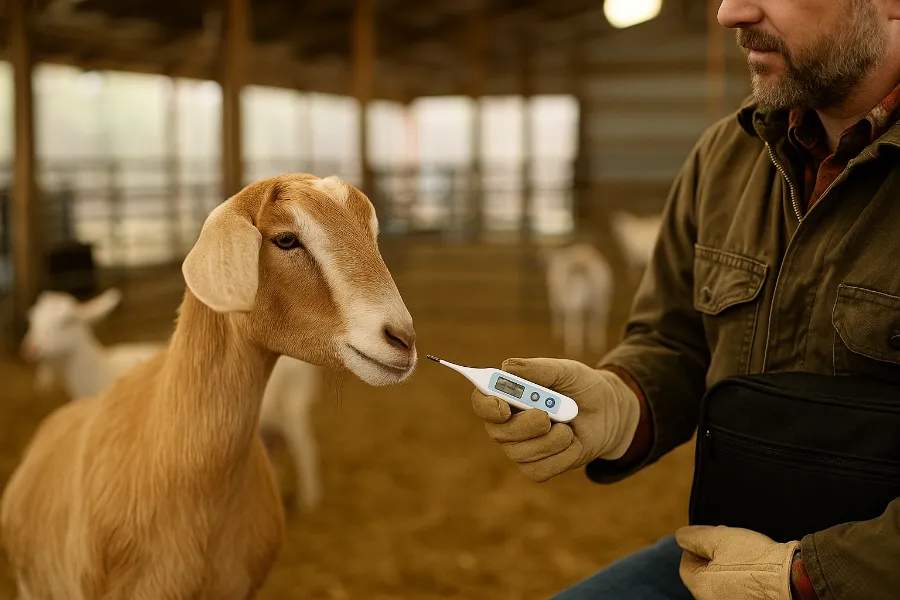
Normal goat temperature is about 101.5-103.5°F. How to take a goat's temperature, what a fever or low reading means, and when to call the vet.
More tools
Try