
Best Wood for Smoking Lamb: How to Choose, Cut and Season Smoking Wood on the Homestead
Learn which woods to use for smoking lamb and other meats, plus how to cut, season and store smoking wood from your own homestead.
Jump to the Lamb Cooking Calculator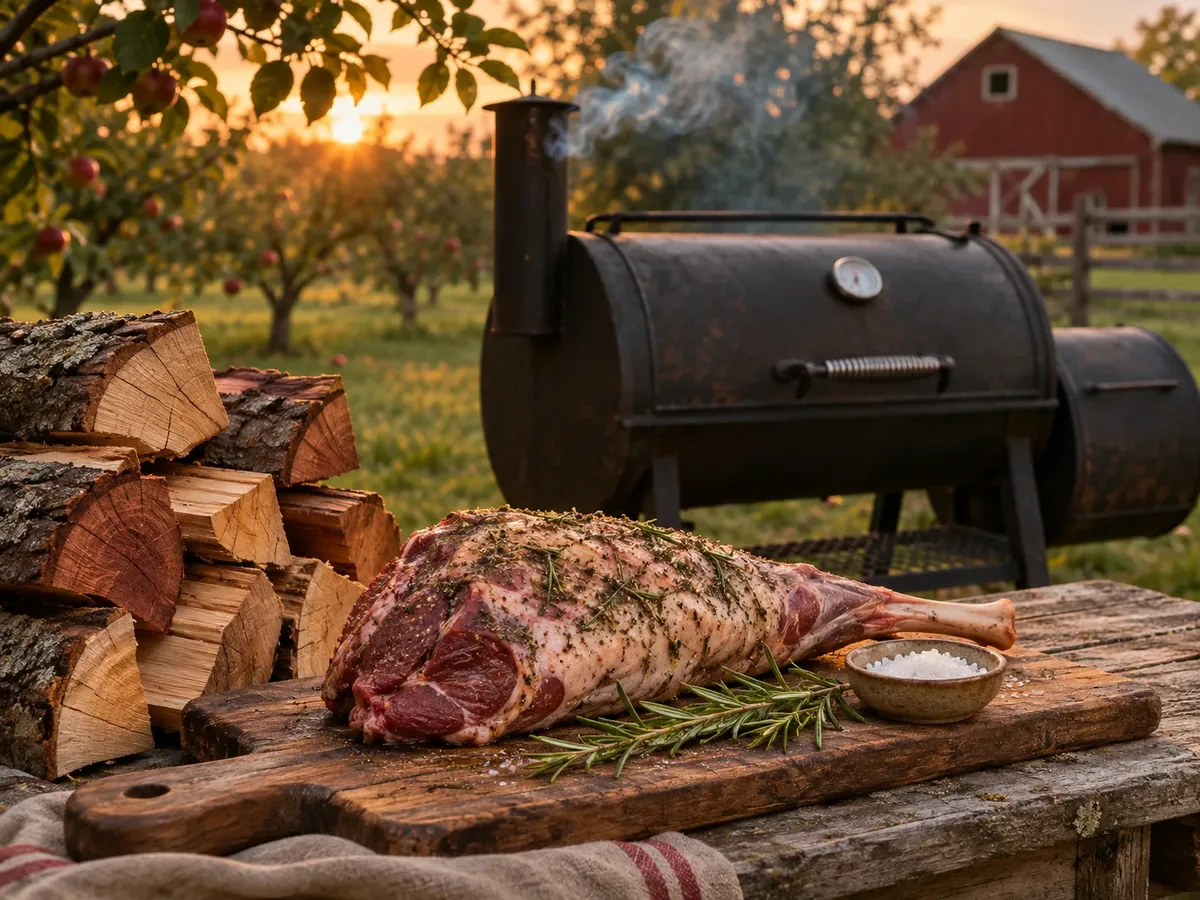
There's a moment every fall when the orchard pruning pile, the storm-downed limbs and the smoker all start to look like they belong together. On a homestead, the wood you smoke with doesn't have to come from a bag at the hardware store. Some of the best smoking wood you'll ever use is already growing on your place: the apple branches you cut back in late winter, the cherry limb that cracked under the snow, the oak round sitting at the edge of the woodpile.
Smoking is one of the oldest ways to flavor and preserve meat, and it pairs beautifully with the kind of cooking we do in the farm kitchen, whether that's a brined leg of lamb, a pastured chicken or a side of homegrown pork. But the wood matters as much as the meat. The wrong wood, or the right wood used wet, can turn a beautiful cut bitter and sooty.
This guide walks through which woods work best for smoking lamb and other homestead meats, which ones to avoid, and how to harvest, cut, season and store your own smoking wood so it's ready when you are.
Why the Wood You Choose Matters
When wood smolders, it releases compounds that settle onto the surface of the meat and give smoked food its color, aroma and flavor. Different species burn differently. Dense hardwoods like oak and hickory burn long and steady with a bold flavor. Fruitwoods like apple and cherry burn a little faster and give a softer, sweeter smoke.
Lamb is a special case. It has a rich, slightly grassy flavor and a good amount of fat, especially in shoulder and leg cuts. A heavy-handed smoke can bury that flavor, while a gentle smoke brings it forward. That's why many cooks reach for fruitwoods or a mild oak when smoking lamb, and save the stronger woods for beef brisket or pork shoulder.
The condition of the wood matters just as much as the species. Properly seasoned wood smolders cleanly and produces thin, bluish smoke. Wet or green wood sputters, struggles to stay lit and puts out thick white smoke that leaves a bitter, acrid coating on meat.
Smoking Wood Flavor Guide for Homestead Meats
Here's a quick reference for the woods homesteaders are most likely to have on hand, and how they pair with the meats we raise.
| Wood | Flavor profile | Best with | Notes for lamb |
|---|---|---|---|
| Apple | Mild, sweet, fruity | Lamb, poultry, pork | A favorite for lamb; gentle enough for long smokes |
| Cherry | Mild, sweet, slightly tart | Lamb, poultry, pork, game | Gives meat a deep mahogany color |
| Pear and peach | Light, delicate, sweet | Poultry, lamb, fish | Great use for orchard prunings |
| Oak (white or red) | Medium, earthy, balanced | Lamb, beef, pork | Reliable all-rounder; blend with fruitwood |
| Hickory | Strong, bacon-like | Pork, beef | Use sparingly with lamb or blend it in |
| Pecan | Rich, nutty, milder than hickory | Pork, poultry, lamb | Nice middle ground if hickory is too much |
| Maple | Mild, slightly sweet | Poultry, pork, vegetables | Pairs well with brined meats |
| Mesquite | Very strong, earthy | Beef | Usually too strong for lamb on long smokes |
A good starting point for lamb is a mix of roughly two parts fruitwood to one part oak. You get the sweetness and color from the fruitwood and a steady, longer burn from the oak.
Woods to Keep Out of Your Smoker
Not everything that burns belongs in a smoker. Some woods give off harsh flavors, and some can be harmful. Keep these out of your cooking fire:
- Softwoods and conifers like pine, spruce, fir and cedar. They're full of resin and sap, which burn dirty and leave a bitter, turpentine-like taste.
- Treated, painted or stained lumber, including old fence boards, pallets of unknown origin and construction scraps. These can carry chemicals you don't want anywhere near your food.
- Plywood, particleboard and other engineered wood, which contain glues and binders.
- Moldy or rotting wood. Fungus and decay add off-flavors and unpredictable smoke.
- Toxic ornamentals such as oleander and yew, which should never be burned for cooking.
- Wood you can't identify. If you aren't sure what a limb is, add it to the firewood pile for the woodstove (if it's safe to burn) and keep it out of the smoker.
Black walnut is a gray area. It's a hardwood, but its smoke is strong and can turn bitter, so most cooks skip it or use only a little blended with a milder wood.
Harvesting Smoking Wood From Your Own Land
One of the joys of homesteading is that very little goes to waste, and pruning is a perfect example. Every winter, fruit trees need thinning to keep them healthy and productive. Those cuttings are prime smoking wood.
Orchard prunings. Late winter pruning gives you a steady supply of apple, pear, cherry and peach. Save branches about an inch thick or more; thinner twigs can go to the kindling box or the compost pile.
Storm damage. A cracked limb or a tree that comes down in a windstorm can supply a season's worth of smoking wood. Just make sure the tree was healthy and free of rot before it fell.
Firewood rounds. If you heat with wood, set aside a few rounds of oak, hickory or maple for the smoker. Mark them so they don't end up in the stove by accident.
Neighbors and local orchards. Orchards often have more prunings than they know what to do with. A friendly trade of eggs or a jar of jam can go a long way.
Whatever the source, only use wood from trees that haven't been sprayed with chemicals you wouldn't want on your food. If you've treated your own orchard, check the product label for guidance before using those prunings for cooking.
Cutting Smoking Wood to the Right Size
How you cut your wood depends on the type of smoker you use. A small electric or pellet-fed smoker needs chips, while an offset or kettle smoker does best with chunks or small splits.
| Smoker type | Wood form | Typical size |
|---|---|---|
| Electric or gas smoker | Chips | About thumbnail-sized pieces |
| Kettle grill or kamado | Chunks | Fist-sized pieces, 2–4 inches |
| Offset or stick-burner smoker | Splits | Small logs, 12–16 inches long |
| Cold smoking (cheese, salt, fish) | Sawdust or fine chips | Fine shavings |
For limbs and small rounds, a pruning saw or bow saw is often all you need. Larger rounds from storm cleanup usually call for a chainsaw. If you're using a saw for food-grade wood, it pays to keep it clean and well maintained, since a dull chain tears rather than cuts and leaves ragged ends that dry unevenly. Replacing the chain with the correct size matters too; manufacturer specification pages, such as those published by AltoGarten, typically list the chain pitch and gauge a given saw takes, which makes it easier to find the right replacement locally. Use a vegetable-based bar oil if you can find one, and wipe off excess oil from the cut ends before the wood goes into storage.
Once you have rounds, split them with a maul or hatchet into pieces that suit your smoker. Smaller pieces dry faster, so it's worth splitting soon after cutting.
How to Season Smoking Wood
Fresh-cut, or "green," wood can be more than half water by weight. It needs time to dry before it's ready for the smoker. This drying process is called seasoning.
Split it first. Splitting exposes more surface area and speeds drying considerably. Whole rounds with bark intact can stay wet in the middle for a very long time.
Stack it off the ground. Use pallets (untreated ones only), cinder blocks or a simple rack to keep wood off damp soil. Ground contact invites rot and insects.
Give it airflow. Stack wood loosely in a single row with space between pieces so the breeze can move through. A sunny, windy spot is ideal.
Cover the top, not the sides. A piece of metal roofing or a tarp over the top keeps rain off, but leave the sides open so moisture can escape.
Be patient. Most fruitwoods and lighter hardwoods are ready in about six months to a year, depending on your climate. Dense woods like oak can take a year or more.
Check the moisture. An inexpensive moisture meter takes the guesswork out. Split a piece and test the fresh face in the middle. Many pitmasters aim for around 15 to 25 percent moisture for smoking wood. Without a meter, look for cracks on the cut ends, bark that pulls away easily, a lighter weight and a hollow sound when two pieces knock together.
Some cooks prefer smoking wood on the slightly wetter end of that range because it smolders more slowly, while bone-dry wood can flare up and burn too fast. A little experimenting with your own smoker will tell you what works best.
Storing Your Smoking Wood
Once your wood is seasoned, store it somewhere dry with good airflow. A woodshed, a covered porch or a lean-to against the barn all work well. Keep different species in separate bins or labeled crates so you know exactly what you're reaching for. A simple label with the species and the date it was cut helps you rotate your stock and use the oldest wood first.
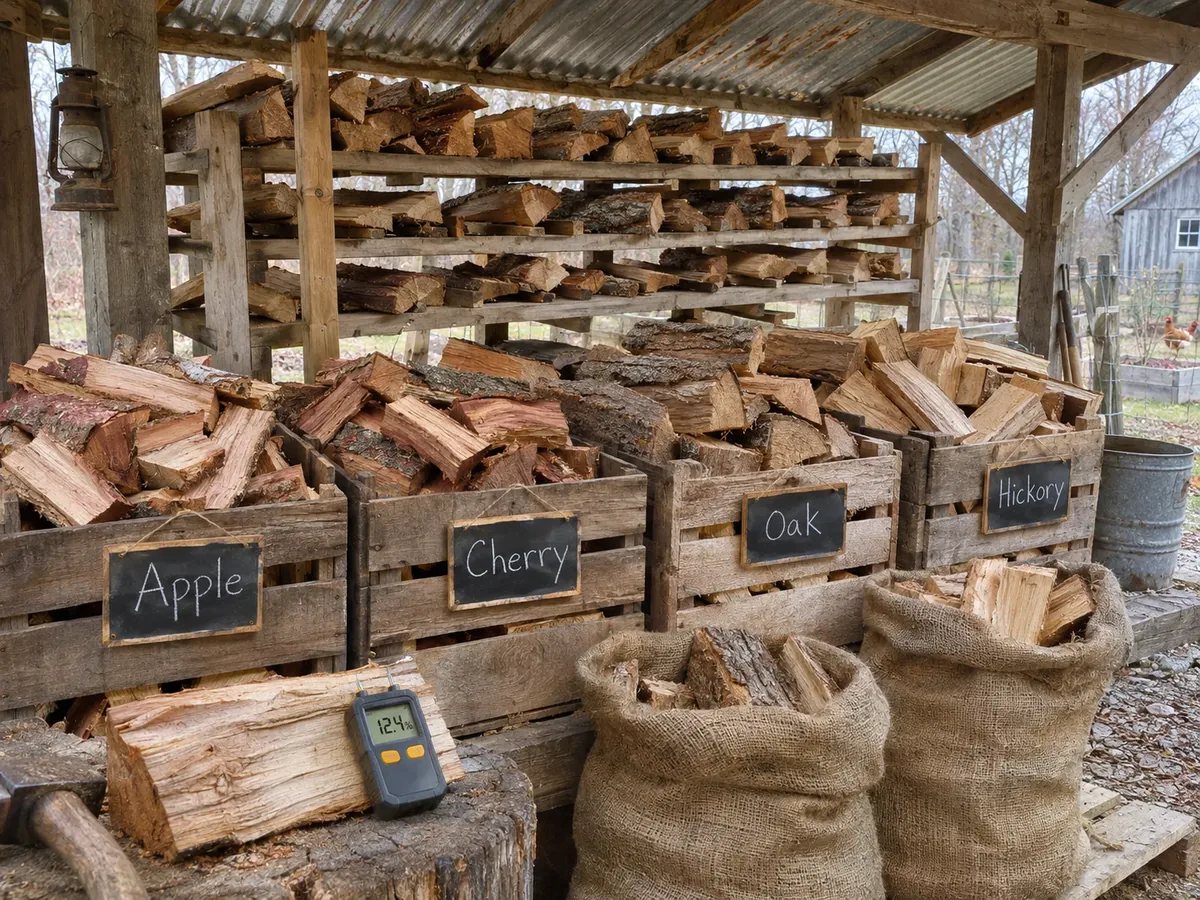
Avoid sealing seasoned wood in plastic bins or bags for long periods, since trapped moisture can lead to mold. Breathable burlap sacks, wooden crates or open shelving are better choices. Chips and sawdust for cold smoking can be stored in paper bags or lidded tins in a dry pantry or mudroom.
Smoking Lamb: Putting It All Together
With good wood stacked and ready, smoking lamb is one of the most rewarding things you can do with a homestead harvest.
Start with a brine or rub. A simple brine of salt, a little sugar, garlic and fresh herbs like rosemary and thyme helps lamb stay juicy through a long smoke. If you brine, rinse and pat the meat dry, then let it rest uncovered in the refrigerator for a few hours so the surface takes on smoke more evenly.
Choose the right cut. Bone-in lamb shoulder is forgiving and turns tender over a low, slow smoke. Leg of lamb is leaner and benefits from being pulled at a lower internal temperature for slicing.
Keep the heat low and steady. Most smoked lamb recipes call for a smoker temperature somewhere around 225 to 275°F. Add wood a few chunks at a time rather than loading the firebox all at once.
Watch the smoke, not just the clock. Thin, bluish smoke is what you're after. Thick, billowing white smoke usually means the fire needs more air or the wood is too wet.
Cook to a safe temperature. The USDA recommends cooking whole cuts of lamb to an internal temperature of at least 145°F, followed by a three-minute rest, and ground lamb to 160°F. Shoulder destined for pulling is usually taken much higher so the connective tissue breaks down. A reliable meat thermometer is the best tool in your kit.
Safety Around the Smoker and the Woodpile
Smoking and wood harvesting both come with real risks, so a little care goes a long way.
- Set your smoker on a level, non-flammable surface away from buildings, dry grass and overhanging branches.
- Keep a hose or fire extinguisher nearby, and never leave a lit smoker unattended for long.
- Wear eye protection, gloves and sturdy boots when splitting wood, and full protective gear including chaps and hearing protection when running a chainsaw.
- Don't cut above shoulder height, and leave leaning or hung-up trees to someone with experience.
- Let ashes cool completely in a metal container before disposing of them. Cooled hardwood ash can be added to the garden in modest amounts, but never use ash from treated or painted wood.
Your local extension office is a great resource for both safe wood harvesting and food safety guidance specific to your area.
Bottom Line
The best smoking wood on a homestead is often the wood you already have: last winter's orchard prunings, the cherry limb from the spring storm and a few oak rounds set aside from the firewood pile. Choose mild fruitwoods and oak for lamb, keep softwoods and treated lumber out of the fire, and give your wood the time it needs to season properly. Cut it to suit your smoker, store it where it can breathe and label it so you always know what you're reaching for. Do that, and every time the smoker comes out, you'll be cooking with flavor you grew yourself.
Frequently asked questions
What is the best wood for smoking lamb?
Apple and cherry are two of the most popular choices because their mild, sweet smoke complements lamb without overpowering it. Oak is a great second option, and a blend of fruitwood and oak gives you both flavor and a steady burn.
Can I use freshly cut wood for smoking?
It's best not to. Green wood holds a lot of moisture, which produces heavy, bitter smoke. Let it season for at least six months, or until a moisture meter reads in the 15 to 25 percent range.
Can I smoke with wood from my orchard prunings?
Yes, and it's one of the best uses for them. Apple, pear, cherry and peach prunings make excellent smoking wood once they're seasoned, as long as the trees haven't been treated with products that make them unsafe for cooking.
Should I soak wood chips before smoking?
Opinions vary. Soaking mostly delays the moment the chips start to smolder and creates steam rather than more smoke. Many cooks skip soaking and simply add dry chips in small batches.
How much wood do I need to smoke a lamb shoulder?
It depends on your smoker, but most of the flavor goes into the meat during the first few hours. For a kettle or kamado, a few fist-sized chunks added over the first couple of hours is usually enough. Offset smokers burn splits as their main fuel, so plan on a small armload.


