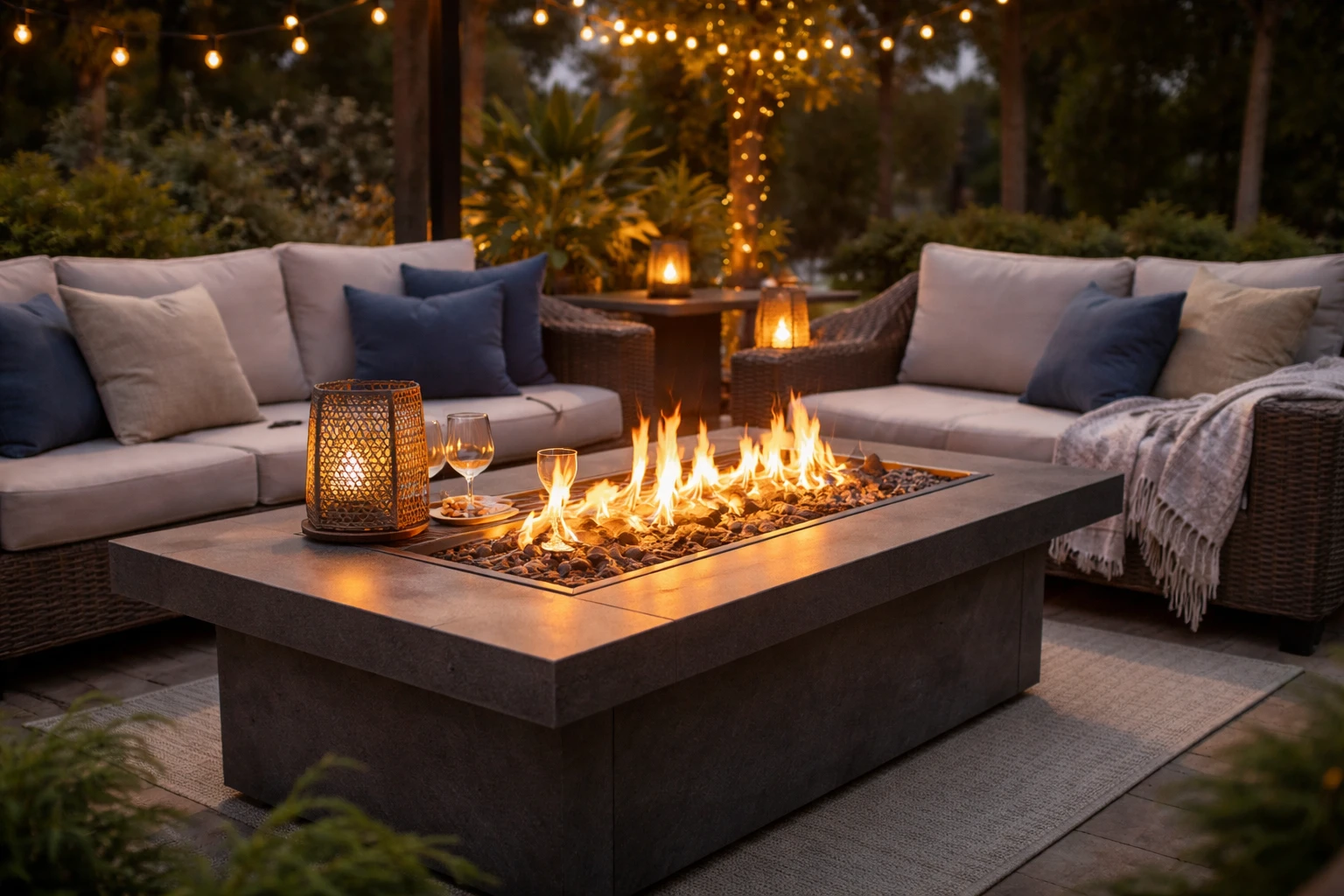
Fire tables have become a popular choice for outdoor spaces, but many people wonder if they actually provide enough warmth to make a difference on cool evenings. Most gas fire tables produce between 30,000 to 60,000 BTUs of heat, which is enough to warm people seated within a few feet of the flames. The actual warmth someone feels depends on several factors, from the size of the fire table to weather conditions.
The heat output varies based on fuel type, design, and how the fire table is set up. Gas-powered models tend to offer consistent heat levels, while wood options can produce more intense warmth but require more effort to maintain. Different models on the market range from compact tabletop versions to large statement pieces, and each produces different amounts of heat.
This guide breaks down what BTUs mean for real-world warmth, how different factors affect heat output, and practical ways to get the most comfort from a fire table on the patio. Anyone who wants to extend their outdoor season will find clear answers about whether a fire table meets their needs.
Understanding Fire Table Heat Output
Fire tables produce measurable warmth through BTU ratings, typically range from 30,000 to 65,000 BTUs in most residential models, and deliver varying heat levels based on fuel type, burner design, and environmental conditions.
Average BTU Ranges for Popular Models
Residential fire tables typically fall between 30,000 and 65,000 BTUs. Small models designed for intimate spaces often produce 30,000 to 40,000 BTUs. These work well for patios up to 150 square feet.
Mid-range options generate 40,000 to 50,000 BTUs. These models suit most standard patios and can create comfortable zones for groups of four to six people. Many options in the outdoor fire tables collection fall within this range and provide adequate warmth for typical residential use.
High-output models reach 50,000 to 65,000 BTUs or more. These larger units heat bigger spaces and perform better in cold or windy conditions. They can provide noticeable warmth up to 8 feet away in ideal settings.
How Heat Is Measured for Fire Tables
BTU, or British Thermal Unit, serves as the standard measurement for fire table heat output. One BTU represents the energy needed to raise one pound of water by one degree Fahrenheit. This measurement allows buyers to compare different models and predict how much warmth a fire table will deliver.
Fire tables use BTU ratings to indicate their maximum heat capacity. A higher BTU number means more potential heat output. However, the actual warmth people feel depends on several variables beyond the BTU rating alone.
Most manufacturers list BTU ratings in product specifications. This information helps match a fire table to the space size and climate needs. For example, a small covered patio may need less heat output than a large open deck.
Factors Affecting Heat Production
Fuel type directly impacts heat delivery. Propane fire tables offer consistent output and easy flame adjustment. Natural gas models provide similar performance with the convenience of a permanent gas line connection. Both fuel types deliver clean burns with predictable heat patterns.
Burner design changes how heat spreads from the flame. Ring burners distribute warmth evenly around the table perimeter. Linear burners create focused heat zones along one side. Pan burners offer concentrated warmth in the center of the table.
Environmental conditions reduce the heat people actually feel. Wind carries warmth away from the seating area and can cut perceived heat by 30 to 50 percent. Ambient temperature affects how much additional warmth the fire table needs to produce for comfort. Humidity levels also influence how heat feels on the skin.
Table width and seating distance matter for heat reception. People seated 30 to 36 inches from the flame feel less warmth than those closer to the fire. Glass wind guards help block breezes and keep heat near the seating area. Flame height adjustment allows users to increase or decrease heat output based on current needs.
Maximizing Fire Table Warmth on Patios
The right fire table paired with smart placement can make a patio feel comfortable even on cold nights. Fuel type and size both affect how much heat reaches guests.
Choosing the Right Fire Table for Patio Size
A fire table should match the space it serves. Small patios under 100 square feet work best with compact fire tables that produce 30,000 to 40,000 BTUs. Medium patios between 100 and 200 square feet need fire tables with 40,000 to 50,000 BTUs to heat the area well.
Large patios over 200 square feet require fire tables with 50,000 BTUs or more. The heat radius matters too. Most fire tables create a comfortable zone that extends 3 to 6 feet from the flame.
People who sit farther away feel less warmth. A fire table rated at 50,000 BTUs can keep four to six people comfortable at typical patio furniture distances. Square and rectangular fire tables distribute heat more evenly across multiple seating positions than round models do.
Impact of Fuel Types on Heat Delivery
Propane fire tables deliver consistent heat output that ranges from 30,000 to 65,000 BTUs. These units maintain steady warmth throughout the evening. Natural gas fire tables produce similar BTU levels but connect to home gas lines instead of tanks.
Wood-fired fire tables generate more heat per pound of fuel but create uneven warmth as the fire burns down. The media inside the fire table affects heat distribution. Glass beads and lava rocks absorb heat from the flame and radiate it outward toward seated guests.
Fire glass reflects more heat than ceramic logs do. Dark-colored fire media absorbs and releases more warmth than light-colored options. The flame height also makes a difference. Higher flames produce more radiant heat but consume fuel faster.
Placement and Wind Considerations
Fire tables work best in spots protected from strong wind. Even light breezes can push heat away from the area where people sit. Position the fire table near walls, hedges, or other barriers that block wind.
Covered patios trap heat better than open spaces. However, fire tables under covers need at least 6 feet of clearance from the ceiling to stay safe. Wind guards made of tempered glass surround the flame and prevent gusts from disrupting heat output.
These guards keep the flame stable and direct warmth toward guests. For maximum comfort, place seating within 4 feet of the fire table. This distance provides strong radiant heat without excess smoke or discomfort. Avoid corners or edges of patios where cold air flows more freely.
Conclusion
Fire tables deliver between 30,000 and 50,000 BTUs for most residential setups, which provides enough warmth for small to medium outdoor spaces. The actual heat a person feels depends on fuel type, fire media, and distance from the flames. Gas fire tables offer convenience and consistent output, while wood options produce higher BTUs but require more maintenance. Fire tables work best as a heat source for guests seated nearby rather than as a primary heater for large patio areas.
FAQs
Most fire tables produce between 30,000 and 65,000 BTUs, enough to warm people sitting within a few feet of the flame.
No, fire tables are designed to provide localized warmth rather than heat an entire outdoor space.
Heat usually extends about 3 to 6 feet from the flame, depending on the BTU output and weather conditions.
Higher BTUs generally produce more heat, but actual warmth also depends on wind, seating distance, and table design.
Wood-burning fire tables can produce more intense heat, but gas models offer more consistent and controllable output.
Yes, wind can reduce perceived heat significantly by dispersing warmth away from the seating area.
For patios under 100 square feet, fire tables with 30,000 to 40,000 BTUs are usually sufficient.
Yes, but their effectiveness decreases in very cold or windy conditions unless paired with wind guards or covered spaces.
Yes, materials like lava rocks or fire glass can absorb and radiate heat, improving overall warmth.
Place it in a wind-protected area, keep seating within 4 feet, and consider using a glass wind guard to retain heat.