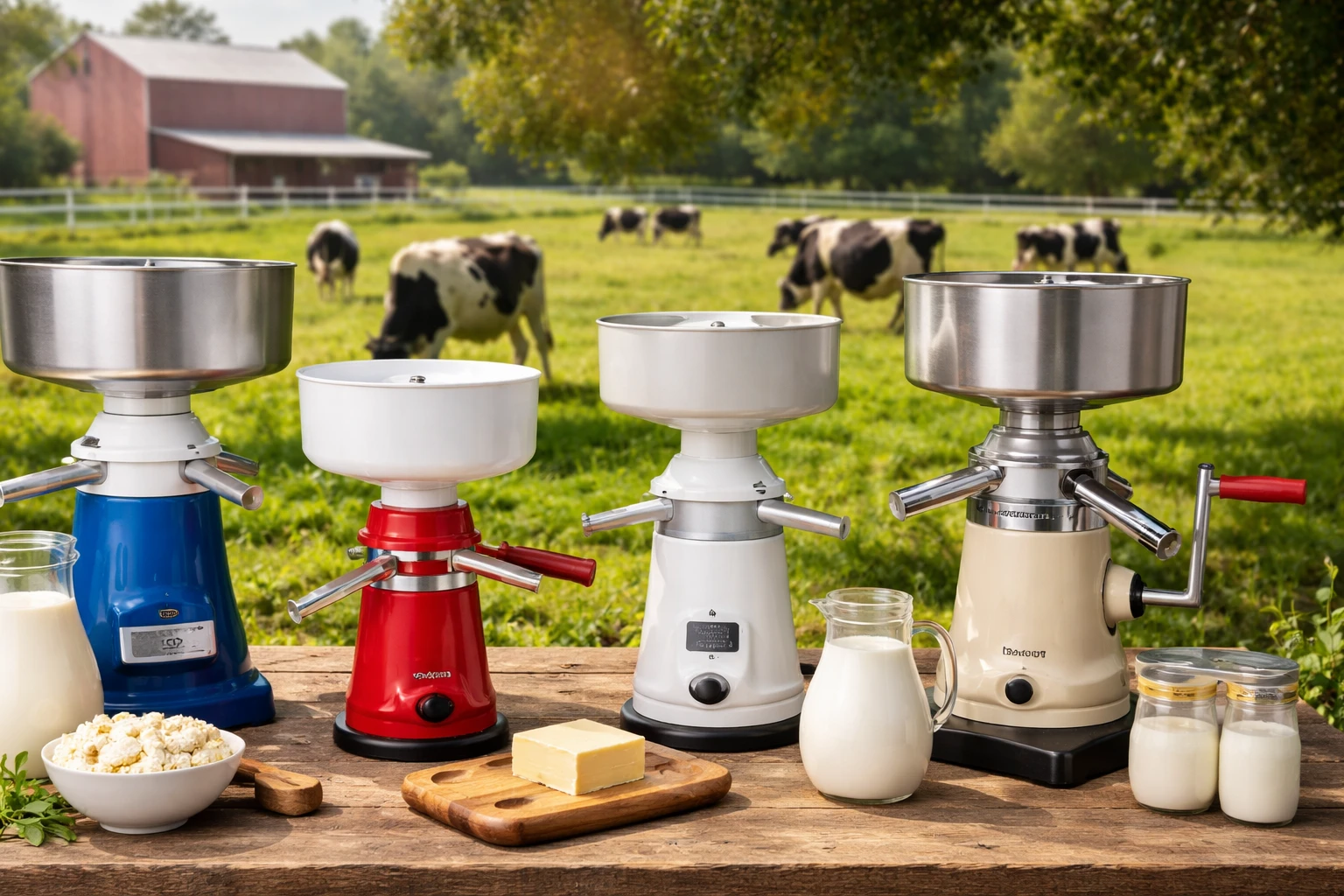
Small-scale dairy farms need the right equipment to process milk and create products like butter and cheese. A cream separator divides whole milk into cream and skim milk through a simple mechanical process. The best cream separator for a small farm depends on the volume of milk processed, the available power source, and the budget for equipment.
Farm owners can choose between manual and electric models. Manual separators work well for smaller operations that process a few gallons per day. Electric versions handle larger volumes and reduce the physical effort required. Both types come in different sizes and price ranges to fit various farm needs.
This guide examines five separators that work well for small dairy operations. Each option offers different features and benefits based on how much milk a farm produces and what products the farmer plans to make.
Milky Day’s Cream Separator
Small dairy farms need equipment that works well without breaking the budget. A cream separator from Milky Day offers several models that fit different farm sizes and needs.
The FJ90-PP stands out as the most compact and budget-friendly electric option in their range. This machine processes 90 liters of milk per hour, which equals about 24 gallons. Despite its small size, it handles the job efficiently for home users and small operations.
For farms that process more milk, the 100-18 model offers increased capacity. It separates up to 100 liters per hour and works well for daily dairy tasks. Both electric models run quietly and feature spinning disc technology.
Farms without reliable electricity can choose the manual FJ 85 HAP model. This hand-crank separator also processes 100 liters per hour and provides independence from power sources. The manual option works well for homesteads and remote locations.
Each model uses quality materials and comes with a two-year warranty. The machines produce cream suitable for butter, cheese, and other dairy products.
Arsor Milk Cream Centrifugal Separator
The Arsor Milk Cream Centrifugal Separator offers a manual solution for small dairy operations. This hand-crank device separates whole milk into cream and skim milk through centrifugal force. Farmers can use it without electricity, which makes it practical for locations with limited power access.
The separator uses aluminum alloy, ABS plastic, and silicone in its construction. These materials provide durability while the silicone gaskets create proper seals during operation. The machine works well for homes and small farms that process milk from cows, goats, or sheep.
Users turn the hand crank to spin the separator at high speed. This action divides the milk into two layers. The cream rises to the top while the skim milk settles at the bottom. The process removes contaminants from the milk as well.
Small-scale farmers appreciate how easy it is to set up and operate. The device requires no special skills or training. It processes fresh milk quickly and produces clean separation results for butter or cheese production.
Alfa Laval LAC1-1 Cream Separator
The Alfa Laval LAC1-1 stands out as a compact separator designed for small dairy operations. This model uses centrifugal force to separate cream from whole milk with good efficiency. It processes milk gently while maintaining product quality.
The machine features a self-cleaning design that reduces manual labor. Operators can run the separator without complex training or technical expertise. The plug-and-play setup makes installation straightforward for most small farms.
This separator handles clarification and skimming in a single pass. It removes impurities from the milk while separating the cream fraction. The design treats the product with care to preserve its natural properties.
Small-scale dairy farmers benefit from the unit’s efficiency and simple operation. The compact size fits well in limited processing spaces. Maintenance requirements stay minimal compared to larger industrial models.
Gecold Electric Milk Cream Separator
The Gecold electric milk cream separator offers a practical solution for small dairy operations that need consistent results. This machine uses centrifugal force to separate cream from whole milk quickly and efficiently. It works with milk from cows, goats, and sheep, which makes it versatile for different farm setups.
The electric motor provides steady power, so farmers can process multiple batches without physical strain. Most models handle between 80 to 100 liters per hour, which suits the needs of small-scale operations. The unit comes with adjustable cream settings that let users control fat content in the final product.
Farmers appreciate the straightforward design because it requires minimal technical knowledge to operate. The separator includes food-grade materials that meet safety standards for dairy processing. Cleanup takes less time compared to manual alternatives, which helps maintain daily workflow on busy farms.
Mammooth Manual Cream Separator
The Mammooth Manual Cream Separator offers small dairy farms a practical hand-crank option for processing fresh milk. This separator uses traditional disc technology to split cream from milk without electricity.
The unit operates at about 85 liters per hour. Farmers need to warm milk to roughly 104 degrees Fahrenheit before processing for the best results. The hand-crank design makes it useful for off-grid operations or areas with an unstable power supply.
Small-scale dairy producers appreciate the straightforward maintenance requirements. The separator features food-grade stainless steel components that resist corrosion. Operators can adjust the cream-to-milk ratio based on their specific needs.
The manual operation requires a consistent hand-crank speed for proper separation. However, this gives farmers direct control over the process. The compact design fits well in small dairy spaces and does not require a special electrical setup.
Conclusion
The right cream separator for a small-scale dairy farm depends on daily milk volume, available power sources, and budget constraints. Manual models work well for farms that process less than 20 liters per day, while electric separators handle larger volumes more efficiently. Farmers should prioritize machines that are easy to clean and maintain, as these factors directly affect product quality and time spent on daily tasks.
The best choice balances processing capacity with practical features like durable construction and consistent separation performance. Small dairy operations benefit most from equipment that matches their actual needs rather than excess capacity that goes unused.
FAQs
A cream separator separates whole milk into cream and skim milk using centrifugal force. This allows farmers to produce butter, cheese, and other dairy products more efficiently.
Choose based on how much milk you process daily, whether you have electricity available, and how much you want to spend on equipment.
Yes, manual cream separators work well for small farms processing limited amounts of milk and for locations without reliable electricity.
Electric separators process milk faster and require less physical effort, making them ideal for farms handling larger volumes of milk.
Most small farm separators process between 80 and 100 liters of milk per hour, depending on the model and power source.
Yes, most cream separators are designed to handle milk from cows, goats, and sheep with similar efficiency.
Yes, milk usually needs to be warmed slightly to improve separation and ensure the cream and skim milk divide properly.
Most modern separators are designed for easy disassembly, allowing farmers to wash the parts quickly after each use.
With proper cleaning and maintenance, a quality cream separator can last many years on a small dairy farm.
While not strictly required, a cream separator makes it much easier to extract cream efficiently for butter, cheese, and other dairy products.