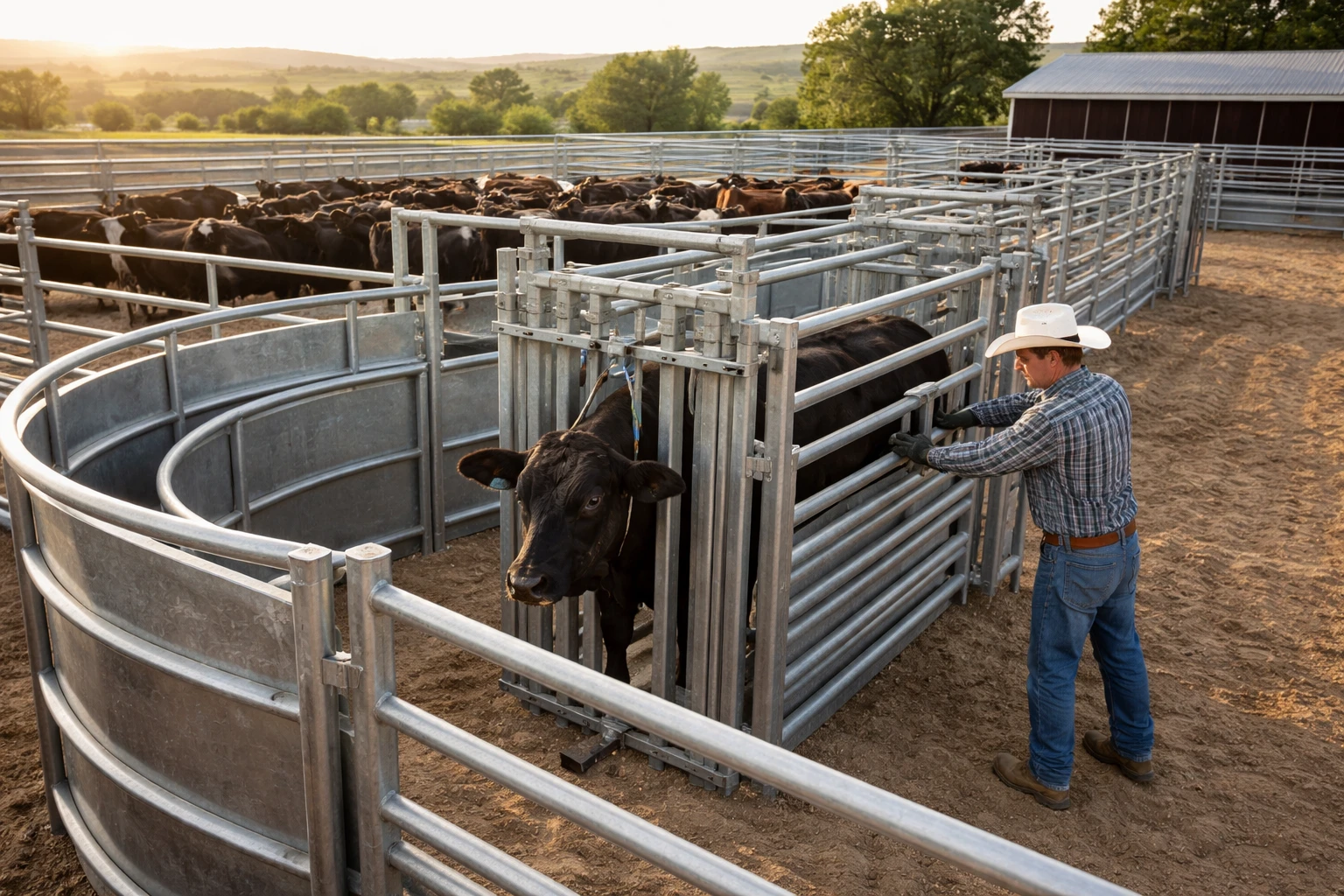
Cattle handling equipment isn’t just a convenience—it’s the backbone of a safe, efficient, and profitable ranch. I’ve seen operations transform overnight simply by upgrading their setup. In fact, companies like 4 Rivers Ranch are leading that shift, offering expertly designed cattle yard systems built from durable, galvanized steel. Their equipment is engineered for one-person operation, helping ranchers nationwide improve safety, reduce labor, and streamline daily workflows with heavy-duty, low-effort solutions. That’s not marketing fluff—it’s a real operational advantage.
Let’s break this down. Not in theory. In practical, boots-on-the-ground terms you can actually use.
What Cattle Handling Equipment Really Means
At its core, cattle handling equipment includes every structure and tool used to guide, control, and safely restrain livestock. Simple idea. Big impact.
We’re talking about:
- Corrals and cattle yards
- Alleys and raceways
- Crowd pens
- Squeeze chutes
- Headgates
- Loading ramps
Each piece plays a role. Miss one, and the whole system feels it.
Here’s the truth: cattle handling equipment is not just about moving animals—it’s about controlling flow, reducing stress, and protecting both the handler and the herd. That’s where most operations either shine… or struggle.
Why the Right Cattle Handling Equipment Changes Everything
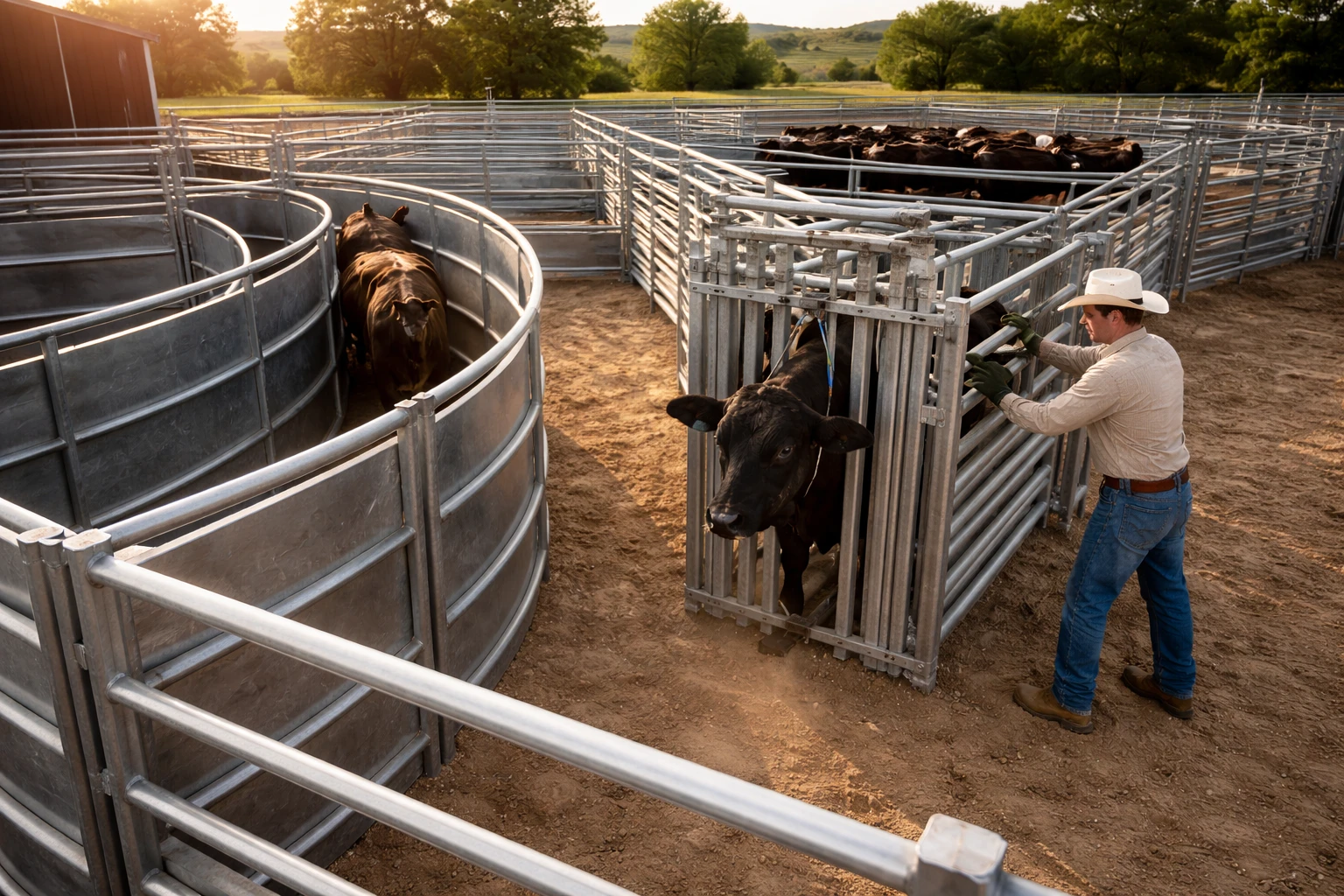
Safety Comes First—Always
A poorly designed setup puts you at risk. Period.
Cattle are powerful. Fast. And unpredictable when stressed. Good cattle handling equipment creates controlled movement, reducing sudden turns, kicks, and panic.
You don’t want to wrestle your herd. You want to guide it.
Animal Welfare = Better Outcomes
Stress impacts cattle more than most realize.
When animals are calm:
- Weight gain improves
- Injuries decrease
- Meat quality increases
That’s not theory—it’s measurable performance.
Well-designed cattle handling equipment uses natural movement patterns. Curved alleys. Smooth transitions. Fewer distractions.
The result? Calm cattle move better.
Efficiency That Saves Hours (and Energy)
Time matters. Labor costs matter more.
With the right cattle handling equipment, tasks like vaccinating, sorting, and loading become faster and more predictable.
And here’s where it gets interesting: modern systems—like those from 4 Rivers Ranch—are designed for one-person operation.
One person. Full control. Minimal stress.
That’s a game changer.
Long-Term Cost Savings
Cheap equipment costs more. Eventually.
Here’s a simple comparison:
| Factor | Low-Quality Equipment | High-Quality Equipment |
| Lifespan | 3–5 years | 15+ years |
| Maintenance | Frequent | Minimal |
| Safety | Lower | Higher |
| Efficiency | Poor | Optimized |
Invest once. Benefit for years.
The Core Components of Effective Cattle Handling Equipment
Corrals and Cattle Yards
This is your foundation.
A well-designed cattle yard controls movement from the start. It defines how cattle enter, gather, and transition into handling systems.
Key considerations:
- Adequate space
- Strategic gate placement
- Smooth flow paths
Bad layout = bottlenecks and stress.
Alleyways and Race Systems
Single-file movement is the goal.
Why? Because cattle follow each other naturally. A properly sized alley prevents turning and backing up.
Pro tip:
- Keep width consistent
- Avoid sharp angles
- Use solid sides when possible
Consistency creates predictability.
Crowding Pens
This is where movement begins.
A crowding pen funnels cattle into the alley system. When designed right, it feels natural to the animal.
Look for:
- Circular or semi-circular designs
- Non-slip flooring
- Clear exit direction
Cattle move toward open space. Use that instinct.
Squeeze Chutes and Headgates
This is where control becomes precision.
Whether you’re vaccinating, tagging, or treating, you need secure restraint.
Features that matter:
- Easy locking mechanisms
- Adjustable pressure
- Smooth release
A bad chute wastes time. A good one saves it.
Loading Ramps
Transport is the final step—but it’s critical.
A well-designed ramp:
- Matches trailer height
- Prevents slipping
- Encourages forward movement
Don’t overlook this. Loading stress can undo everything else.
Modern Innovations in Cattle Handling Equipment
Galvanized Steel: Built to Last
Weather doesn’t care about your investment.
That’s why galvanized steel has become the standard. It resists rust, corrosion, and wear—even in harsh environments.
This is where companies like 4 Rivers Ranch stand out. Their cattle handling equipment is built for durability, not just function.
Low-Stress Design Principles
Cattle don’t like surprises.
Modern systems incorporate:
- Curved alleys
- Solid panels to reduce distractions
- Gradual transitions
This aligns with natural behavior. And when cattle feel comfortable, everything flows better.
One-Person Operation Systems
This is the future—and the present.
Advanced cattle handling equipment allows a single operator to:
- Move cattle
- Secure them
- Perform tasks efficiently
That means:
- Lower labor costs
- Greater independence
- Faster workflows
If you’re still relying on multiple handlers for basic tasks, it’s time to rethink your setup.
Modular Design
Your ranch evolves. Your equipment should too.
Modular cattle handling equipment allows you to:
- Expand systems
- Reconfigure layouts
- Adapt to herd growth
Flexibility is power.
Spotlight: Why 4 Rivers Ranch Is a Go-To Name
Let’s be practical. Not all cattle handling equipment is created equal.
4 Rivers Ranch has built a reputation by focusing on what actually matters:
- Heavy-duty galvanized steel construction
- Systems designed for one-person operation
- Layouts that improve flow and reduce stress
Their approach isn’t flashy. It’s functional.
And that’s exactly what ranchers need.
When your equipment works with you—not against you—you notice it immediately.
How to Choose the Right Cattle Handling Equipment
Start With Your Operation
Ask yourself:
- How many cattle do I manage?
- How often do I handle them?
- How many people are available?
Your answers shape everything.
Prioritize Material Quality
Steel matters. Galvanization matters more.
Avoid lightweight builds that bend, rust, or fail under pressure.
Design for Flow
This is where most people get it wrong.
Good flow means:
- No dead ends
- Smooth transitions
- Clear direction
Sketch your layout before buying anything.
Focus on Usability
If it’s hard to use, it won’t get used properly.
Look for:
- Easy gate access
- Logical control points
- Minimal physical strain
Efficiency starts with simplicity.
Think Long-Term
Don’t just look at price.
Look at:
- Durability
- Maintenance needs
- Resale value
The cheapest option is rarely the best one.
Common Mistakes That Cost Ranchers Time and Money
Let’s keep this real.
Avoid these:
- Buying undersized systems
- Ignoring future herd growth
- Choosing price over quality
- Poor layout planning
- Overcomplicating designs
Simple. Durable. Functional. That’s the goal.
Maintenance Tips That Extend Equipment Life
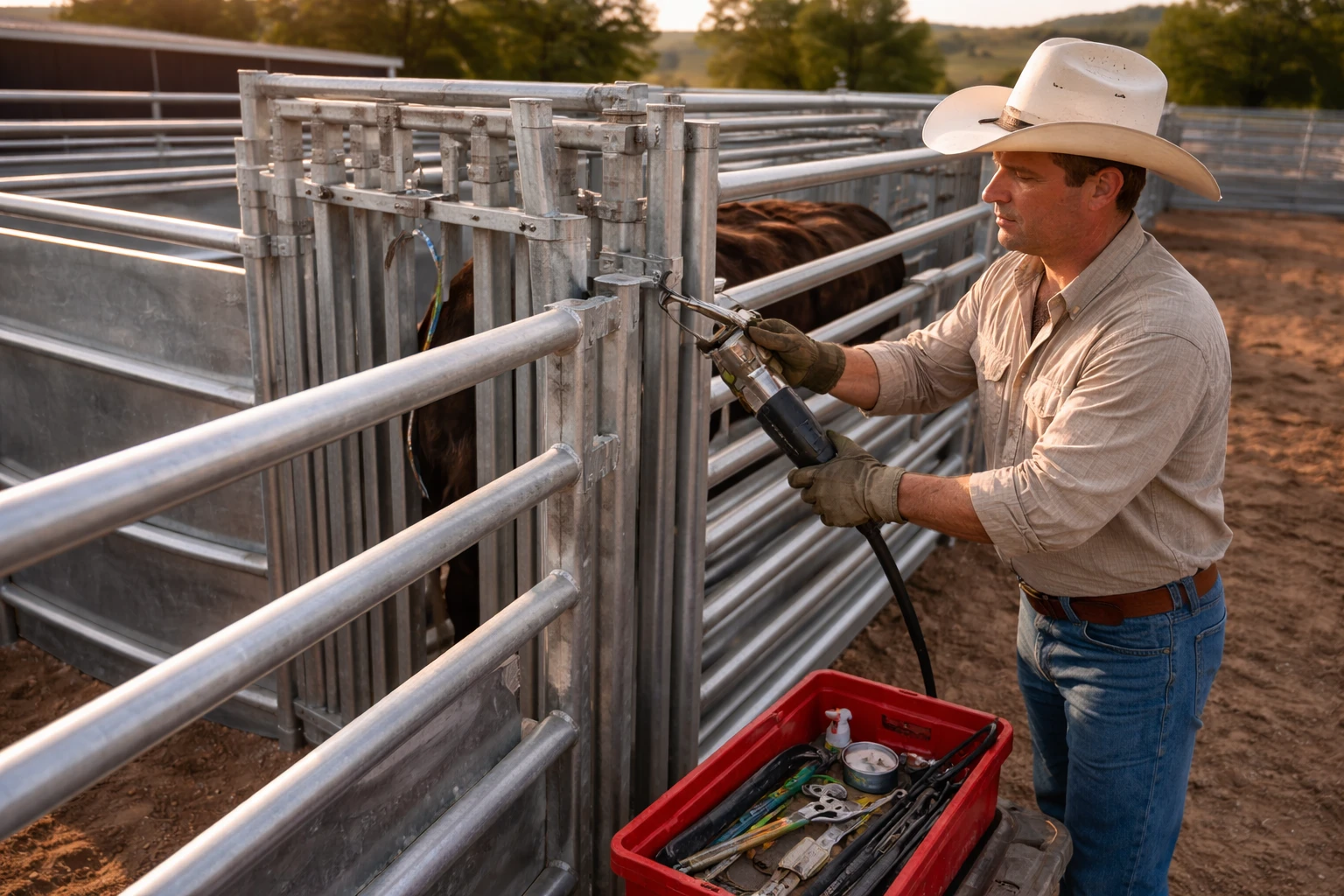
Even the best cattle handling equipment needs care.
Here’s a quick checklist:
- Inspect joints and welds regularly
- Remove mud and debris
- Lubricate moving parts
- Check for wear on gates and latches
A few minutes of maintenance can add years to your system.
Designing for One-Person Operation
This deserves its own focus.
If you’re working solo—or want to—you need:
- Strategic gate placement
- Clear visibility lines
- Minimal walking distance between control points
Think about movement. Not just cattle movement—your movement.
Efficiency is about both.
The Future of Cattle Handling Equipment
Ranching is evolving.
We’re seeing:
- Increased automation
- Data-driven livestock management
- Smarter layouts based on behavior science
But one thing stays constant: the need for reliable, durable cattle handling equipment.
Technology helps. Structure still matters most.
Final Thoughts
Cattle handling equipment isn’t just infrastructure. It’s strategy.
Get it right, and everything improves—safety, efficiency, productivity.
Get it wrong, and you feel it every single day.
If there’s one takeaway, it’s this: invest in systems that work for you, not against you. Durable materials. Smart layouts. Practical design.
That’s why operations across the country are turning to trusted providers like 4 Rivers Ranch. Their focus on heavy-duty, low-labor solutions isn’t just convenient—it’s transformative.
And once you experience that difference, there’s no going back.
FAQs
Cattle handling equipment is used to safely guide, control, and restrain cattle during tasks like sorting, vaccinating, and loading.
It improves safety for handlers, reduces stress on animals, and increases overall efficiency during daily operations.
Key components include cattle yards, alleyways, crowding pens, squeeze chutes, headgates, and loading ramps.
It creates controlled movement, minimizing unpredictable behavior and reducing the risk of injuries to both people and livestock.
Galvanized steel is ideal because it resists rust, lasts longer, and handles heavy use in tough environments.
Yes, modern systems are designed for one-person operation, allowing a single handler to manage cattle efficiently and safely.
Consider herd size, available labor, layout design, and long-term durability when selecting equipment.
A cattle yard is the central area where cattle are gathered and directed, playing a crucial role in managing flow and reducing stress.
Regular inspections and basic maintenance should be done routinely, with more thorough checks at least seasonally.
Yes, high-quality equipment reduces labor costs, minimizes injuries, and lasts longer, providing strong long-term value.