Every kidding season reminds me of just how fragile new life can be. When a baby goat hits the ground, wet and trembling, my first instinct is to grab a towel — and then a goat blanket.
That simple piece of fabric can mean the difference between life and loss. Over the years, I’ve learned that keeping newborn goats warm at night is less about fancy gear and more about preparation, intuition, and balance.
In this post, I’ll walk you through how I use goat blankets, goat sweaters, and other warming methods — from old-fashioned straw bedding to modern barn tech — to help my kids stay cozy and safe all night long.
Goat Care Starts with Warmth and Awareness
Good goat care isn’t just about feed and fencing; it’s about understanding what your goats feel.
Newborns lose body heat incredibly fast. They don’t have fat stores yet, and their wet coats make them magnets for chill. Even in a closed barn, cold air and damp bedding can drop their body temperature in minutes.
The key is acting fast: dry the kid completely, wrap it in a towel, and slip on a goat blanket or goat sweater to lock in warmth.
I also make sure the barn stays draft-free and dry, with fresh bedding before the night chill sets in. That combination of clean, dry, and wrapped in warmth has saved more kids than I can count.
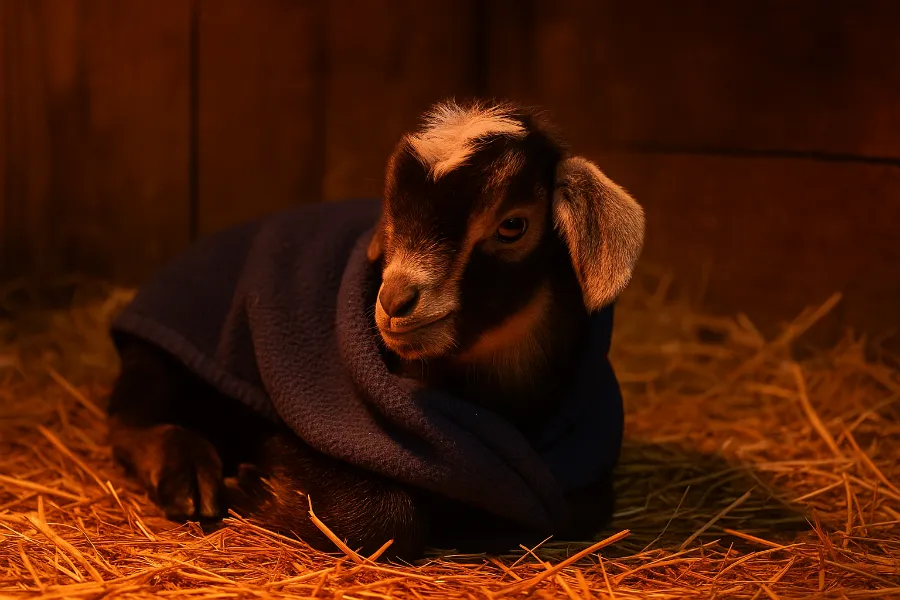
Goat Birthing: Preparing for Cold Nights Before They Happen
Every kidding season begins with preparation. Before a doe is even close to labor, I’m already thinking about goat birthing conditions — especially if it’s winter.
Here’s what I keep ready in my kidding area:
- Soft, deep bedding — usually straw or pine shavings at least 8 inches thick.
- Draft protection — tarp or solid walls on three sides of each kidding pen.
- Warm towels and blankets in a sealed tote.
- Heat source (more on my setup below).
- Clean, labeled goat blankets ready for newborns.
When the doe delivers, I dry the kid thoroughly, slip on a goat blanket, and make sure the mother licks and nurses immediately. That skin contact, warmth, and first colostrum feeding stabilize the baby faster than anything else.
Goat Body Temperature: The First Thing I Check
Nothing reveals a baby goat’s health faster than its body temperature.
A healthy kid should stay between 101.5°F and 103.5°F (38.5°C–39.7°C).
Below 100°F (37.7°C), they’re cold-stressed. Below 97°F (36°C), they’re in trouble.
When that happens, I don’t just wrap them tighter — I combine warmth sources. A goat blanket keeps heat in, but I’ll add gentle radiant warmth underneath using a low-wattage heat pad or a goat heat lamp mounted safely above.
And I always recheck temperature every 15 minutes until it stabilizes.
Goat Sweater vs. Goat Blanket: My Experience with Both
Over time, I’ve collected both goat sweaters and goat blankets, and each serves a slightly different purpose.
- Goat Sweater: Great for mild weather, indoor barns, or short-term warmth right after birth. I’ve made plenty out of old sweatshirts or fleece sleeves.
- Goat Blanket: Ideal for cold, damp, or drafty nights — often waterproof, heavier, and designed for outdoor or unheated barns.
In my experience, sweaters are perfect for the first 12 hours after birth, while blankets are better for long, cold nights or kids that need extra protection.
I rotate them daily to prevent dampness, and every morning I check that the blanket isn’t too tight or rubbing anywhere.
Goat Heat Lamp: My Safe and Reliable Setup
A goat heat lamp is one of my favorite tools, but only if used safely. I’ve seen too many barns burn from poorly mounted lamps or cheap clamps.
Here’s my personal rulebook for heat lamps:
- Use a ceramic bulb with a metal guard (never exposed glass).
- Hang at least three feet above bedding, pointed at a safe, open area.
- Use GFCI outlets and cords rated for outdoor or barn use.
- Add a thermostat controller so it cycles off automatically when the temperature stabilizes.
When combined with goat blankets, a heat lamp creates a cozy micro-climate: the blankets trap the warmth while the lamp adds gentle radiant heat.
But I never leave lamps unattended unless I have a temperature monitor or camera watching the pen.
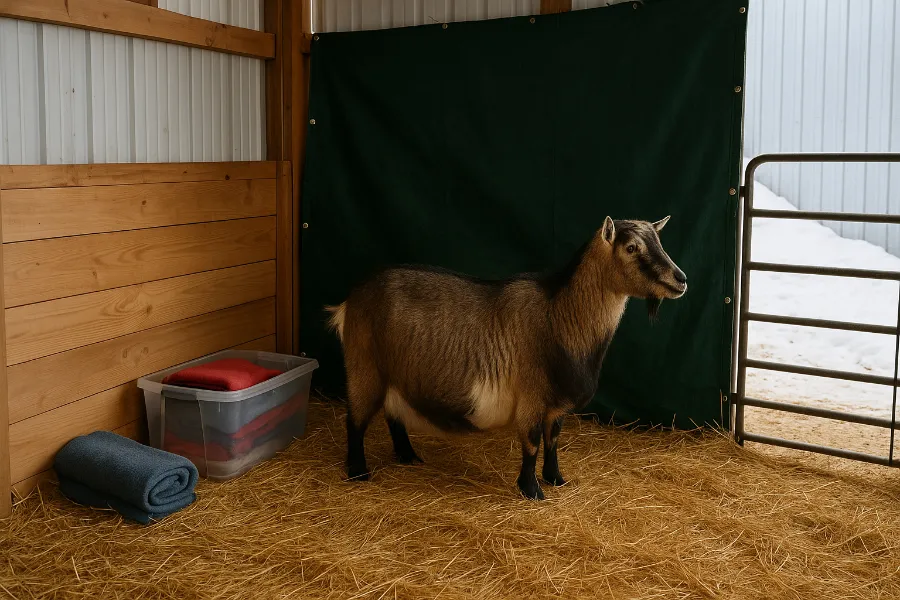
Goat Barn Setup for Warmth and Safety
The heart of every kidding season is a well-planned goat barn setup.
Mine isn’t fancy — just smart.
Each kidding pen has:
- Solid back and side walls to block wind.
- A small vent high up for airflow.
- A “warm zone” under the heat lamp.
- A “cool zone” where goats can step away if it gets too warm.
This setup helps kids self-regulate. They’ll naturally snuggle under the warm side with their goat blankets when chilly and wander to the cooler side when they’re comfortable.
Concrete floors? I lay down thick rubber mats first, then add deep straw. That keeps ground chill away.
If you’re building from scratch, face doors and vents away from prevailing winds. And if you’re off-grid, insulated walls and thick bedding will go a long way.
Raising Goats: Balancing Nature and Technology
There’s an art to raising goats through winter — it’s part science, part intuition.
Old-timers did it with straw and body heat; modern homesteaders often use sensors and smart heaters. Both work. What matters is knowing when to use which.
Traditional Warmth Advantages:
- No electricity needed.
- Builds herd resilience.
- Teaches you to “read” your goats.
Modern Warmth Advantages:
- Automated control saves time.
- Ideal for large herds or full-time jobs.
- Consistent temperature = fewer losses.
On my farm, I blend the two: I use goat blankets and deep bedding for natural warmth, and backup tech — like temperature alerts on my phone — for peace of mind.
Goat Farming at Scale: Warming Systems for Larger Herds
If you’re expanding into goat farming, keeping dozens of kids warm can get tricky. One lamp or one blanket isn’t enough.
Here’s what I’ve found works best for scaling warmth safely:
- Labeled blankets: Each kid gets its own, rotated and washed daily.
- Warming crates: For chilled or orphaned kids — insulated boxes with low heat and ventilation.
- Zone heating: Instead of heating the whole barn, I heat specific areas where kids sleep.
- Smart monitors: Devices like BarnTalk or SmartBarn track temperature, humidity, and alert me if conditions change overnight.
Even with all that, nothing replaces hands-on checks. I still walk the barn before bed with a flashlight, just to see that every little blanket is in place.
Goat Blankets: My Favorite Brands and DIY Tricks
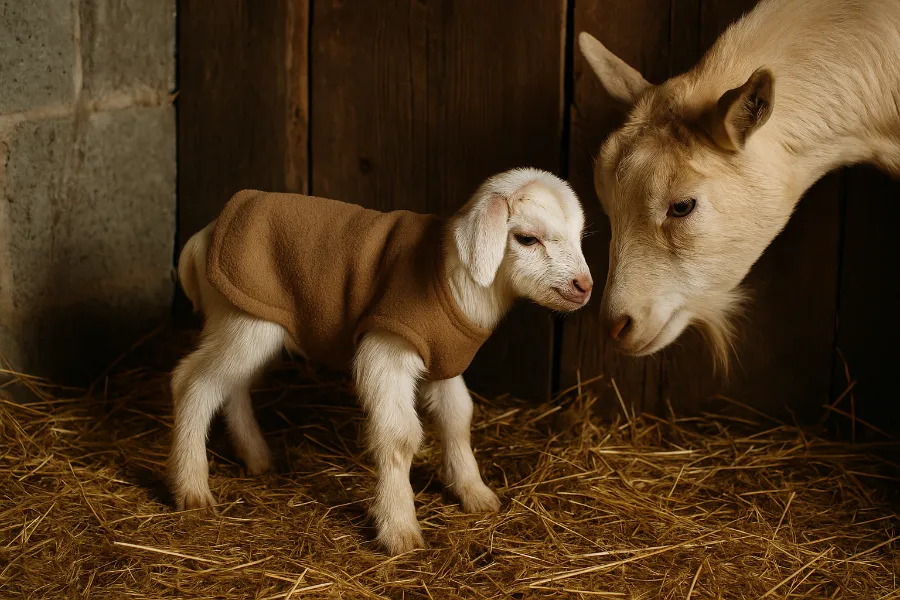
If you’re shopping or sewing, here’s what I’ve learned:
- Look for fleece-lined or quilted waterproof blankets with adjustable straps.
- Avoid ones that slide off the shoulders — fit matters.
- Keep several sizes: newborn, 2–3 weeks, and weaned kids.
DIY option:
Cut an old fleece jacket sleeve, sew the open edge, and add Velcro straps under the belly. It’s soft, washable, and perfect for emergencies.
And yes — sometimes I repurpose dog coats or baby vests for my Nigerian Dwarfs. They fit like a dream.
Monitoring Goat Body Temperature the Right Way
Thermometers are your best friend. I check goat body temperature regularly the first two nights.
If a kid drops below 100°F, I take action immediately:
- Move to a dry, draft-free pen.
- Wrap in a warm towel and use a hair dryer on low setting.
- Apply a clean, dry goat blanket or sweater once the body warms.
- Feed warmed colostrum only after temperature stabilizes.
Never rush feeding a cold kid — digestion slows and can cause bloating or scours. Warm first, then feed.
Goat Care Routine: My Nightly Checklist
Every night during kidding season, I follow the same routine before I head to bed:
✅ Refill water buckets with lukewarm water.
✅ Top off hay to encourage rumen warmth overnight.
✅ Check all goat blankets for moisture.
✅ Confirm lamps are secure and thermostats on.
✅ Walk the barn quietly and listen — contented sighs mean comfort.
It takes 15 minutes, but it prevents 90% of cold stress issues.
Winter Goat Birthing Lessons Learned
When I first started, I underestimated how quickly a wet kid could chill. One freezing January, I lost a twin before I even finished drying the first. I’ll never forget it — or how it changed my approach.
Now, I always:
- Keep a stack of goat blankets within arm’s reach.
- Never assume “warm enough” means safe.
- Use redundancy — blanket + heat + bedding + observation.
Experience is the best teacher, but preparation keeps you from learning the hard way.
Goat Farming Wisdom: Comfort Equals Growth
Cold stress doesn’t just risk lives — it stunts growth. A chilled kid burns energy trying to stay warm instead of using it to grow.
That’s why goat blankets aren’t a luxury — they’re an investment.
Warm kids nurse more, gain weight faster, and resist illness better.
Every time I see a row of snug little kids curled up in fleece, I know I’m setting my herd up for long-term health and productivity.
My Complete Warmth Kit
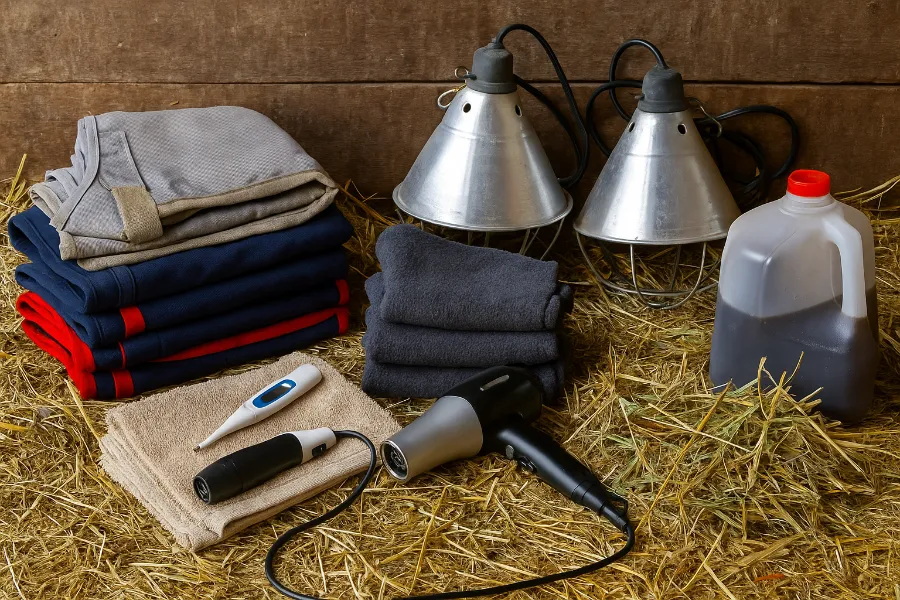
Here’s everything I keep in a labeled “Kidding Warmth Bin”:
- 6–8 goat blankets (various sizes)
- 3 fleece goat sweaters
- 2 metal-guard goat heat lamps
- Digital thermometer
- Towels and blow dryer
- Extra straw
- Warm molasses water for does
It’s simple, fast, and keeps chaos under control during those midnight births.
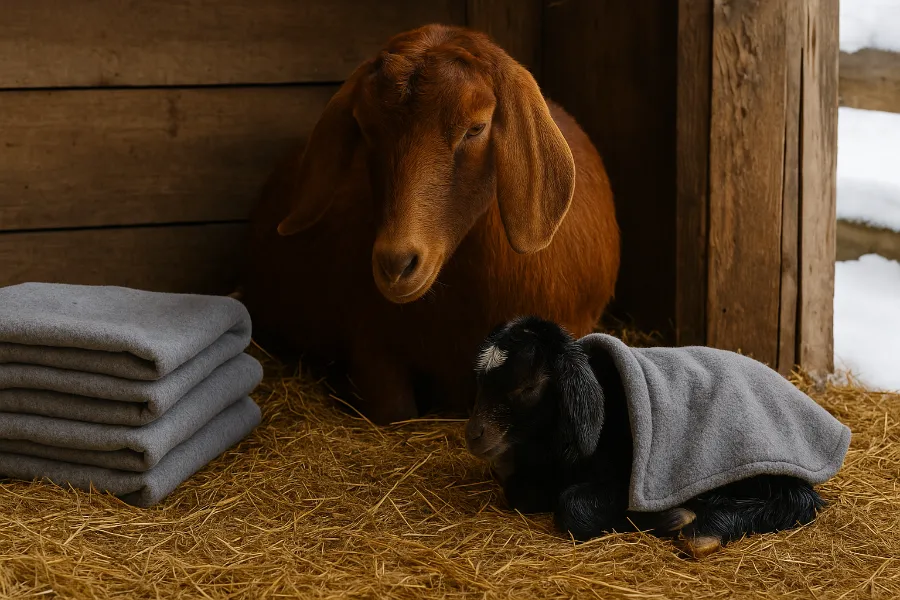
Final Thoughts: Warmth Is Love in Action
When I step into the barn on a cold night and hear the quiet breathing of contented kids under their goat blankets, I feel peace.
There’s something deeply rewarding about knowing they’re warm, safe, and thriving because of the care you’ve put in.
Whether you choose traditional bedding, a hand-sewn goat sweater, or a modern heated setup, what matters most is that your goats stay warm — and that you stay present.
In the end, warmth isn’t just temperature. It’s love, attention, and the promise of a strong start to life.
FAQs
Newborn goats can’t regulate body heat well, especially right after birth when they’re still wet. A goat blanket traps warmth and prevents hypothermia during cold nights.
Usually for the first 24–48 hours after birth or until they’re fully dry, active, and maintaining body temperature. Remove it once the kid starts staying warm without help.
Yes. A goat sweater works well in milder weather or indoor barns, while a goat blanket offers better insulation for cold or damp nights.
They can be safe if mounted securely with a metal guard and proper distance from bedding. Always use a thermostat or timer to prevent overheating or fire risk.
A healthy newborn’s temperature should stay between 101.5°F and 103.5°F (38.5°C–39.7°C). Anything below 100°F means the kid needs immediate warming.
Thick, dry straw or pine shavings work best. Deep bedding traps body heat, adds insulation, and helps goat blankets stay dry and effective.
If you can kneel on the bedding comfortably without feeling a chill, it’s likely warm enough for kids. Combine draft protection, bedding, and goat blankets for the best results.