Most people assume specialty coffee is just a fancier name for good coffee. It isn’t.
Specialty and commercial coffee aren’t two versions of the same drink; they’re two entirely different quality worlds. The difference runs far deeper than branding and price. It affects everything from how farmers are paid to how beans are processed, stored, roasted, and ultimately how the body feels after consumption.
Understanding these differences helps consumers make informed choices about what they’re actually drinking and why quality matters.
WHAT IS SPECIALTY COFFEE?
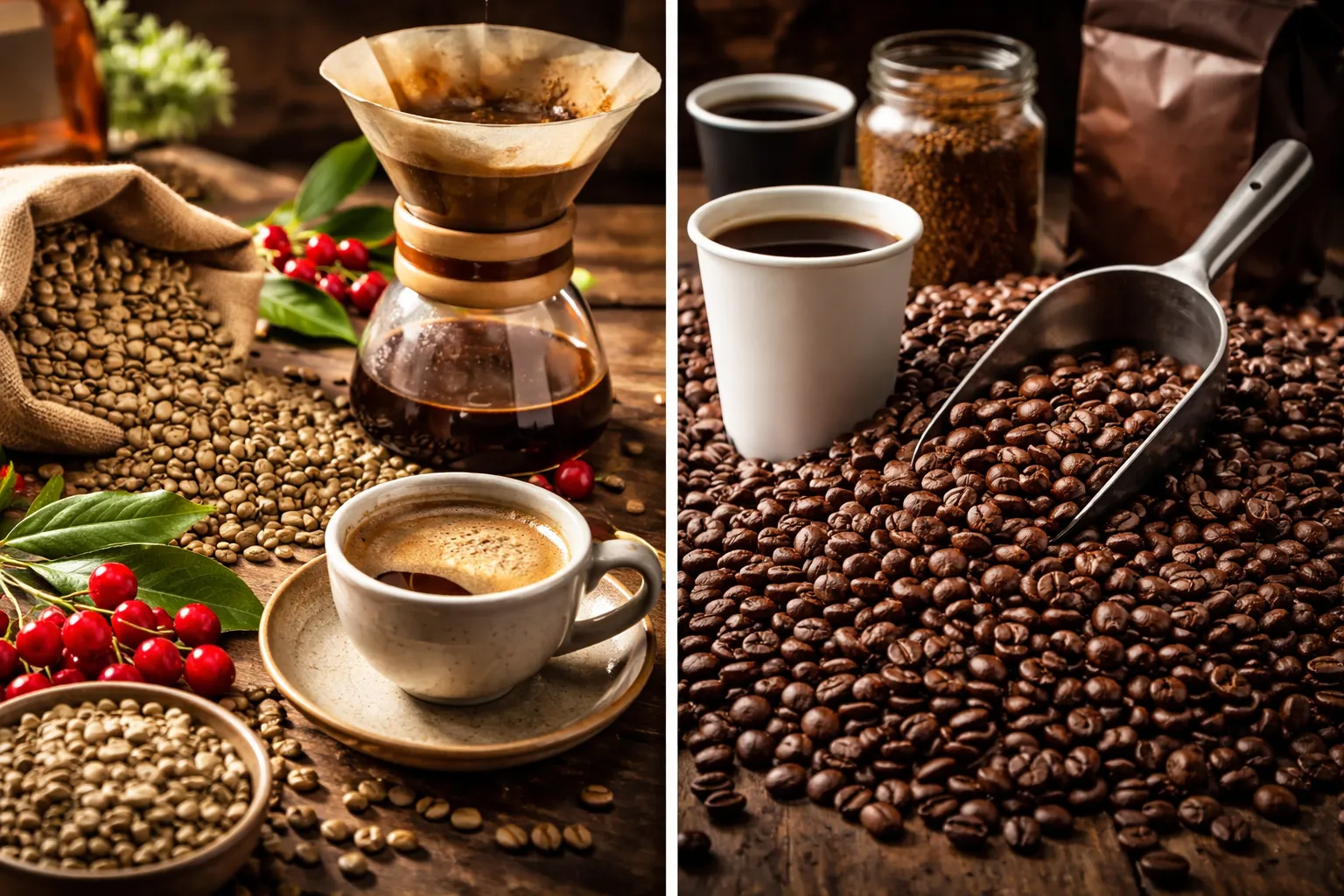
Specialty coffee represents the highest grade of coffee quality, beans that score 80 points or higher on the Specialty Coffee Association (SCA) scale. The SCA evaluates aroma, flavor, balance, and absence of defects through a rigorous cupping process.
Every stage, from altitude and harvesting to sorting, processing, and roasting, is handled with scientific precision. Specialty coffee farms typically sit above 1,200 meters in elevation, where slower ripening develops natural sweetness and complexity.
Specialty coffee is characterized by:
- Hand selection and sorting of ripe cherries
- Traceability from farm to cup
- Ethical sourcing with fair farmer compensation
- Small-batch processing that preserves bean quality
- Precise roasting that highlights natural flavors rather than masking defects
The discipline required to achieve specialty-grade status extends beyond flavor. It encompasses respect for the bean’s journey, transparent supply chains, and commitment to sustainability.
WHAT IS COMMERCIAL COFFEE?
Commercial coffee is built for scale, designed to deliver consistent flavor and cost regardless of origin. It’s what most of the world drinks: lower-grade Arabica and Robusta beans, roasted dark to hide defects and create uniformity across millions of cups.
Commercial coffee is characterized by:
- Mass production prioritizes volume over quality
- Farmer payment by weight creates no incentive for quality selection
- Extended storage in warehouses or containers degrades freshness
- Dark roasting that masks defects and creates bitter uniformity
- Limited traceability and unclear sourcing practices
Because commercial coffee prioritizes price and predictability, farms that produce it have little incentive to hand-pick cherries or properly manage post-harvest care. Quality control takes a backseat to efficiency.
WHY ELEVATION MATTERS FOR COFFEE
Altitude is one of the most critical factors separating specialty from commercial coffee.
Specialty coffee grows at high elevations where cooler temperatures slow the ripening of coffee cherries. That slower development builds complexity, producing denser beans packed with sweetness, balanced acidity, and aromatic depth.
Specialty coffee elevation standards:
- Premium Arabica: 1,200+ meters
- High-altitude Arabica: Above 1,500 meters
- These conditions create the ideal environment for flavor development
Commercial coffee elevation:
- Typically grown at lower altitudes (below 1,000 meters)
- Faster ripening cycle with less complexity
- Often, Robusta rather than Arabica
Robusta plants naturally contain approximately 83% more caffeine than Arabica, a natural defense mechanism against pests in warmer, humid environments. While this makes Robusta resilient and strong, it produces harsher, more bitter flavors. Arabica, especially from high-elevation mineral-rich soils, delivers the nuanced flavors that define true specialty coffee.
THE COFFEE QUALITY PYRAMID
Understanding coffee grades helps clarify the market spectrum:
| Tier | Description | Characteristics |
| Clean Coffee | Lab-tested for molds, mycotoxins, pesticides; specialty-grade with purity verification | Third-party tested, toxin-free, health-focused |
| Specialty Coffee | High-elevation Arabica scoring 80+ on the SCA scale; hand-picked and traceable | Complex flavor, ethical sourcing, small-batch |
| Organic Coffee | Ethically grown without synthetic chemicals; quality varies | Clean farming, sustainable, variable taste |
| Commercial Coffee | Mass-produced blends prioritize volume and price | Low cost, dark roast, minimal flavor definition |
FLAVOR, FRESHNESS, AND PROCESSING DIFFERENCES
Specialty Coffee Processing:
Specialty coffee is handled with meticulous care throughout the supply chain. Hand-selected cherries undergo careful processing, whether washed, natural, or honey fermentation, to highlight each bean’s unique characteristics. Roasting is precise and light to medium, preserving acidity, sweetness, and aromatic complexity.
Commercial Coffee Processing:
Mass-scale roasting and storage strips coffee of nuance. Beans lose freshness during extended storage in warehouses. Oxygen exposure dulls aroma. Dark roasting pushes every flavor toward bitterness, masking the actual quality (or lack thereof) of the original beans. While convenient and inexpensive, this approach sacrifices depth, balance, and transparency.
The difference in taste is immediate and noticeable. Specialty coffee offers complexity and refinement. Commercial coffee offers consistency through uniformity.
THE CLEAN COFFEE EVOLUTION
An emerging category, clean coffee, takes specialty coffee further by adding rigorous purity testing.
Clean coffee is specialty-grade coffee that’s third-party lab-tested for:
- Mold and mycotoxins
- Heavy metals
- Pesticide residue
- Other contaminants common in commercial supply chains
This focus on purity represents the next evolution of specialty coffee. It combines the flavor excellence of high-grade beans with health-focused sourcing and testing. Mould-free coffee represents this category, specialty-grade beans verified through rigorous lab testing to ensure they’re free from the mycotoxins, mold, and pesticide residues often found in commercial supply chains. The approach reflects a broader shift in the industry toward quality and wellness rather than quantity and convenience.
FARMER IMPACT AND ETHICS
One significant difference between specialty and commercial coffee is how farmers are compensated.
Specialty coffee farmers:
- Paid premium prices per pound
- Incentivized to invest in quality and sustainability
- Direct relationships with roasters and buyers
- Economic stability to reinvest in farm improvements
Commercial coffee farmers:
- Paid by weight, not quality
- Minimal incentive for careful harvesting or processing
- Large-scale commodity trading removes personal relationships
- Limited ability to invest in sustainable practices
This economic structure means specialty coffee supports farmer livelihoods and encourages sustainable practices. Commercial coffee perpetuates a cycle where quantity matters more than care.
WHY SOURCING TRANSPARENCY MATTERS
Specialty coffee supply chains prioritize transparency. Consumers can often trace beans to specific farms, regions, and harvests. This traceability ensures quality consistency and allows for verification of ethical sourcing.
Commercial coffee rarely offers this level of transparency. Beans from multiple origins and harvest years are blended, making it impossible to trace the journey of any specific bean.
For health-conscious consumers, this transparency is crucial. It enables verification that beans are clean, ethically sourced, and processed according to high standards.
FREQUENTLY ASKED QUESTIONS
Cost depends on priorities. Specialty coffee offers superior flavor, ethically sourced production, and transparent sourcing. For those valuing taste and production standards, the investment is worthwhile. Commercial coffee is adequate for basic caffeine consumption but lacks the complexity and purity of specialty options.
Yes, commercial coffee can be certified organic while maintaining low flavor grades. Organic certification verifies farming practices, not flavor quality. Specialty coffee can also be organic, combining both certifications for maximum quality assurance.
Altitude significantly impacts flavor complexity. High-altitude beans (1,200+ meters) develop more nuanced flavors than low-altitude commercial varieties. The slower ripening at higher elevations is largely responsible for specialty coffee’s superior taste profile.
Clean coffee is specialty-grade coffee verified through third-party lab testing for molds, mycotoxins, heavy metals, and pesticide residue. It combines the flavor excellence of specialty coffee with health-focused purity standards.
THE BOTTOM LINE
The difference between specialty and commercial coffee extends far beyond taste. It encompasses quality standards, farmer welfare, environmental practices, and health considerations.
Specialty coffee represents the industry’s highest standard, beans that have been carefully cultivated, processed, and roasted to preserve their natural character. Commercial coffee prioritizes efficiency and cost, often at the expense of quality.
For consumers seeking flavor, transparency, and ethical sourcing, specialty coffee offers a meaningful difference. For those focused primarily on caffeine consumption, commercial coffee remains a functional option.
Understanding these distinctions empowers informed choices about what’s actually in your cup and why it matters.