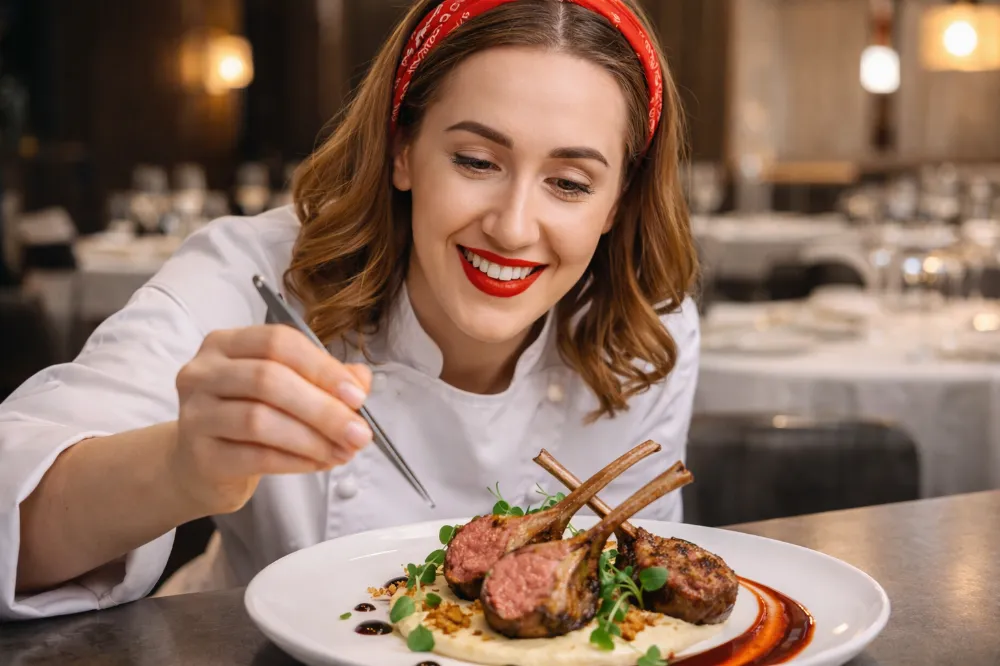
If you’re here wondering how chefs plate lamb lollipops, you’re definitely in the right place. I’ve spent way too many hours watching chefs transform simple chops into dishes that look like art and let me tell you, plating lamb lollipops is one of those subtle skills that separates home cooks from restaurant pros. You don’t just cook these little beauties and toss them on a plate you compose them.
This isn’t another recipe post (though I love those). Instead, I want to take you behind the scenes of fine dining plating sharing the kind of plating insights chefs obsess over, especially when it comes to lamb lollipops. Let’s dig into what makes these tiny chops look so good on the plate.
Fine Dining Plating and Why It Matters for Lamb Lollipops
When I first learned about fine dining plating, I was amazed at how much thought goes into every piece of food. It’s not just about flavor (though that’s obviously important), it’s about how the dish feels before you even take a bite.
With lamb lollipops, that feeling starts the second the plate lands in front of you. Chefs want you to see control and confidence in what’s placed in front of you. In a restaurant setting, these chops aren’t busy with a bunch of sides. They’re given space. They’re placed with purpose.
In my own kitchen experiments, I quickly learned that plating isn’t something you add at the end plating should guide how you cook in the first place. If your lamb is unevenly seared or your bones aren’t clean, no amount of garnish is going to save the plate.
Food Plating Ideas That Make Lamb Lollipops Look Incredible
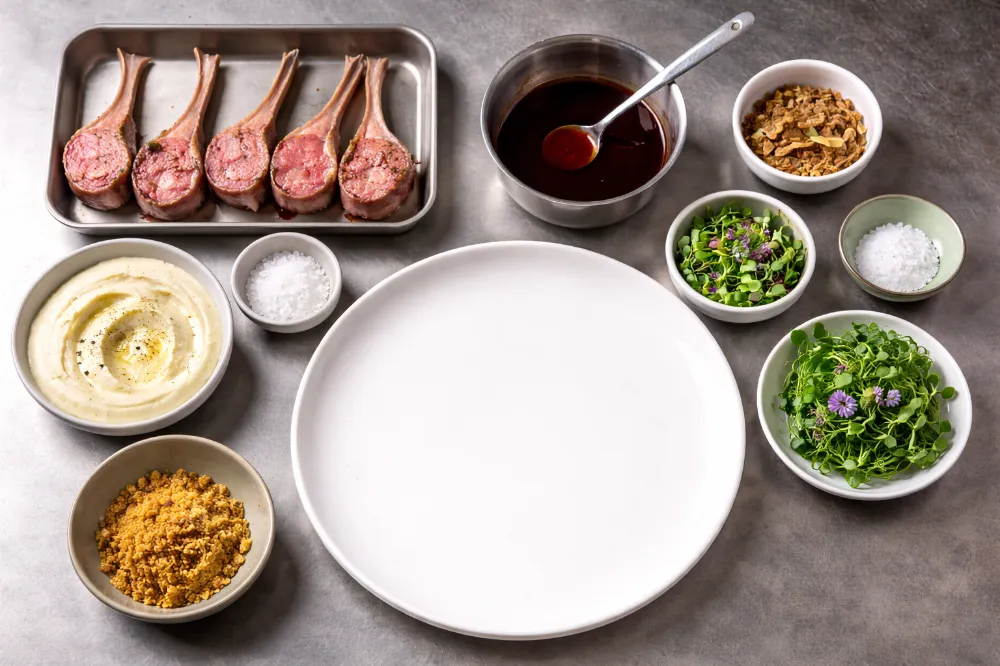
If you’ve ever wondered why lamb lollipops in restaurants look miles better than what you serve at home, it usually comes down to food plating ideas that chefs use daily.
Here are a few plating concepts that instantly elevate presentation:
- Bone alignment: Chefs align the bones so they point in roughly the same direction. It creates rhythm.
- Strategic spacing: Instead of clustering everything in the center, they spread elements so the eye travels.
- Base elements: A swoosh of purée or a bed of grains gives structure and prevents the protein from looking like it’s floating.
These ideas aren’t just aesthetic they help frame the lamb so you notice its crust, color, and texture first.
Trust me… a clean plate without overcrowding feels way more sophisticated than a plate bursting at the seams.
Negative Space: The Secret Ingredient Restaurants Use All the Time
At first, negative space sounds like a fancy design term you can ignore in your kitchen. But once you start paying attention, you’ll see why it’s a must for lamb lollipop plating. Negative space is simply the intentional empty area on a plate. When chefs leave space around an ingredient, it highlights that ingredient.
When I started using more empty space in my own plating, I noticed something interesting: my dishes didn’t feel less complete—they felt more confident. Negative space gives your lamb room to breathe and keeps the plate from feeling cluttered or chaotic. Remember: the plate doesn’t need to be full to feel satisfying. Sometimes what you don’t put on the plate matters more.
Sauce Reduction: Making Sauce Work With the Lamb, Not Against It
One of my biggest early mistakes was drowning lamb lollipops in sauce. I thought more sauce meant more flavor. Then I watched chefs do it just enough.
A well-executed sauce reduction is like a supporting actor. It enhances the lamb, draws the eye, and adds depth but it doesn’t steal the show.
Some chef-approved ways to plate sauce include:
- Sauce swipes: Use the back of a spoon to place smooth lines across the plate.
- Small pools: Let the lamb rest partly in a shallow pool so it doesn’t slide around.
- Deliberate dots or accents: Tiny dots placed around the plate add visual rhythm.
Chefs are careful with sauce because it’s easy to drown everything else out. When you keep it controlled, the lamb and your presentation wins.
Visual Balance: What Makes Your Plate Feel Right Before You Eat
Visual balance is one of those things that’s hard to explain, but easy to notice when it’s wrong. Like negative space, it’s something chefs use constantly even if they don’t talk about it.
When you’re plating lamb lollipops, think about how the elements relate to each other:
- Are dark colors (like a rich reduction) balanced with lighter ones (like herbs or a pale purée)?
- Is there symmetry without rigidity?
- Does the eye travel comfortably across the plate?
When you achieve visual balance, the whole dish starts to look intentional. I always check a plate from about 10 inches away before it leaves my kitchen if it doesn’t feel balanced at first glance, I tweak it.
Microgreens: More Than Just Pretty Decorations on the Plate
Okay, I’ll admit—I used to think microgreens were just garnish until I actually started using them intentionally. Now? They’re one of my favorite finishing touches.
Chefs treat microgreens as more than decoration. With lamb lollipops, these delicate greens serve several purposes:
- Freshness: They cut through the richness of the meat.
- Color contrast: A pop of green transforms an otherwise brown-heavy plate.
- Texture interest: Tiny greens add a delicate crunch without overwhelming.
The trick is to use microgreens sparingly. A little goes a long way. You want them to accent the lamb, not compete with it.
How Height and Structure Change the Way We See Lamb Lollipops
One plating trick that instantly makes a dish feel restaurant-level is height. But it’s not about stacking random things on top of each other. It’s subtle.
Chefs create height by:
- Leaning the lamb lollipops against one another
- Placing them on a swoosh of purée
- Using the bones as natural support
Even a slight lift adds shadows and depth that make your plate feel three-dimensional instead of flat. Next time you plate lamb, play with height. It’ll change the story your plate tells.
Why Chefs Tend Toward Odd Numbers When Plating Lamb Lollipops
Here’s a tip you’ll hear again and again: chefs love odd numbers. Three lamb lollipops typically look better than two or four.
Why?
Odd numbers:
- Feel more dynamic
- Avoid rigid symmetry
- Create visual movement
It’s not a strict rule just a visual pattern that our eyes tend to prefer. Try plating three first, and then four. You’ll see what I mean.
Seasonal Plating Touches: How Chefs Adjust Presentation Throughout the Year
One thing that surprised me when I started studying professional plating was how much seasonality influences presentation not just ingredients. In spring and summer, chefs often use lighter herbs, minimal sauces, and more negative space. Plates feel airy and fresh.
In fall and winter, sauce reductions deepen in color, garnishes feel warmer, and plates can carry more visual weight while still feeling elegant. Seasonal plating isn’t just about finding the right ingredients it’s about aligning the feeling of the plate with the mood of the season.
Texture Contrast: A Cheating Trick to Make Lamb Lollipops Exciting
Texture is one of those things diners feel before they consciously register it. Chefs know this, and they use it to make lamb lollipops more exciting.
Think about combining:
- A crisp sear with smooth purée
- Tender meat with crunchy garnishes
- Silky sauce with structured components
When you build texture into your plating, you engage multiple senses at once—making every bite feel thoughtful rather than flat.
The Final Touches: Why the Last 10 Seconds of Plating Matter Most
Chefs finish dishes in the final moments before service. And that’s because the last little tweaks often make the biggest difference.
Before the plate goes out, most chefs will:
- Wipe edges for a clean presentation
- Adjust the angle of bones
- Make sure greens aren’t wilting
- Ensure negative space feels intentional
This is where the difference between “good” and “restaurant-ready” really shows.
Final Thoughts on How Chefs Plate Lamb Lollipops
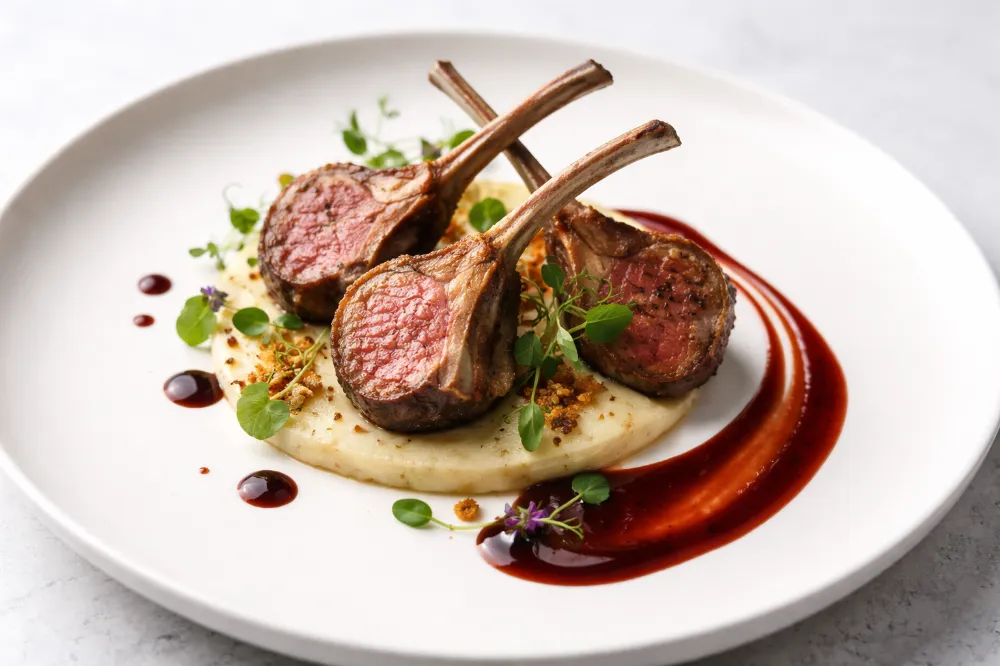
I love lamb lollipops because they’re simple yet demanding. They give you the chance to practice elements of plating that improve every dish you serve—not just lamb.
When you start thinking like a chef about plating:
- You cook with intent
- You plate with purpose
- You turn food into an experience
So next time you’re roasting, searing, or grilling lamb lollipops, spend an extra minute with your plate. A little thought goes a long way and suddenly your dinner looks like it came from a restaurant instead of your kitchen.
That is the magic of learning how chefs plate lamb lollipops and once you get it, you’ll start seeing every plate as a canvas.
FAQs
Lamb lollipops are naturally elegant, evenly portioned, and visually striking, making them ideal for refined presentation. Their exposed bone and compact size give chefs full control over balance and composition.
Negative space helps frame the lamb and prevents the plate from looking cluttered. It allows the protein to stand out and gives the dish a confident, intentional feel.
Chefs use sauce sparingly, often as a reduction applied in swipes, dots, or small pools. The goal is to enhance the lamb without covering its sear or texture.
Yes, microgreens add freshness, color contrast, and light texture to rich lamb. When used carefully, they elevate the plate without overwhelming it.
Odd numbers create visual movement and feel more natural to the eye. Chefs often choose three or five chops to avoid rigid symmetry.
Height is created by leaning chops together, resting them on purées, or using the bone as support. Even subtle elevation adds depth and a restaurant-quality look.
Absolutely. Focusing on clean plates, controlled sauce use, negative space, and visual balance can dramatically improve home presentation without special tools.