There’s something deeply satisfying about pulling a fresh bulb from the soil and knowing you grew it yourself. That’s exactly what growing garlic at home delivers—simple, reliable results with a big payoff in flavor. It’s one of the few crops that asks very little but gives a lot back.
I’ve always found garlic to be the quiet hero of the garden. It doesn’t demand constant attention. It doesn’t need fancy tools. Yet it transforms meals in a way few ingredients can. If you’re looking for a straightforward project that builds confidence fast, this is it.
This garlic growing guide will walk you through everything—from planting to harvesting to storing—so you can enjoy fresh garlic all year long. No fluff. Just practical steps that work.
And the best part? You don’t need a large garden. A small backyard, raised bed, or even a container can get the job done. Yes, growing garlic at home really is that accessible.
Why Growing Garlic at Home Is Worth It
Garlic from the store does the job. But homegrown garlic? That’s a completely different experience. The flavor is stronger, richer, and more complex. You’ll notice it immediately.
Here’s why more people are turning to growing garlic at home:
- Better taste – Fresh garlic has more bite and aroma
- Cost savings – One bulb can multiply into several
- Long storage life – Properly cured garlic lasts months
- Control over quality – No chemicals, no surprises
- Beginner-friendly – Minimal maintenance required
And once you grow it once, you’ll likely never stop. It becomes part of your yearly rhythm.
Understanding Garlic Varieties
Before planting, you need to choose the right type. Not all garlic behaves the same.
Hardneck Garlic
Hardneck varieties are known for bold flavor and cold tolerance. They also produce something called “scapes,” which are edible shoots.
- Best for colder climates
- Stronger, more complex flavor
- Shorter storage life
Softneck Garlic
Softneck garlic is what you usually see in grocery stores. It stores longer and grows well in warmer areas.
- Ideal for mild climates
- Longer shelf life
- Great for braiding
Choosing the Right Type
Your climate matters. If you’re in a cooler region, go hardneck. Warmer area? Softneck is your best bet.
When in doubt, try both. Many gardeners do. It’s a simple way to learn what works best for your space.
When to Plant Garlic
Timing is everything. Plant too early or too late, and your bulbs won’t reach their full potential.
For most gardeners, fall planting is the sweet spot. It gives garlic time to establish roots before winter, leading to bigger bulbs later.
Planting Timeline
| Season | Planting Time | Harvest Time |
| Fall | Sept–Nov | Late spring to early summer |
| Spring | Feb–Mar | Late summer |
Fall planting almost always wins. Bigger bulbs. Better flavor. Less stress.
If you’re serious about growing garlic at home, aim for fall whenever possible.
Preparing Your Garden or Containers
Garlic doesn’t ask for much, but it does have standards.
Choose the Right Spot
Sunlight is non-negotiable. Garlic needs at least 6–8 hours of direct sun daily.
Airflow also matters. Good circulation helps prevent disease.
Soil Preparation
Garlic hates soggy roots. Drainage is critical.
- Use loose, well-draining soil
- Aim for pH between 6.0 and 7.0
- Mix in compost before planting
Healthy soil equals healthy bulbs. It’s that simple.
Growing in Containers
No garden? No problem.
- Use pots at least 8–10 inches deep
- Ensure proper drainage holes
- Space cloves evenly
Container gardening works surprisingly well for growing garlic at home, especially in small spaces.
Step-by-Step Guide to Planting Garlic
This is where it all begins. And it’s easier than you think.
Step 1: Break Apart the Bulb
Separate the cloves gently. Keep the papery skin intact.
Choose the largest cloves. Bigger cloves produce bigger bulbs.
Step 2: Plant at the Right Depth
- Depth: 2–3 inches
- Spacing: 4–6 inches apart
Give each clove room to grow.
Step 3: Position Correctly
Pointy end up. Flat end down.
It sounds obvious, but it matters.
Step 4: Add Mulch
Cover the area with straw or dry leaves.
Mulch helps:
- Retain moisture
- Suppress weeds
- Regulate temperature
At this stage, your job is mostly done. Now the waiting begins.
Caring for Garlic Plants
Garlic is low-maintenance, but a little attention goes a long way.
Watering
Keep the soil evenly moist, especially during early growth.
But don’t overdo it. Too much water leads to rot.
Reduce watering as harvest approaches.
Fertilizing
Garlic loves nitrogen early on.
- Apply nitrogen-rich fertilizer in spring
- Stop feeding once bulbs start forming
Weed Control
Weeds compete for nutrients. Remove them regularly.
Garlic doesn’t like competition.
Removing Scapes (Hardneck Only)
Scapes appear in late spring. Cut them off.
Why? Because they redirect energy back into the bulb.
Bonus: Scapes are edible and delicious.
Common Problems and How to Avoid Them
Even easy crops can run into trouble.
Here are the most common issues in growing garlic at home:
- Overwatering – Leads to rot
- Poor soil drainage – Causes stunted growth
- Pests – Onion maggots and nematodes
- Fungal diseases – Thrive in damp conditions
Prevention Tips
- Rotate crops yearly
- Avoid overcrowding
- Use clean planting material
- Keep soil well-drained
Prevention is easier than fixing problems later.
How and When to Harvest Garlic
This is the moment you’ve been waiting for.
Signs Garlic Is Ready
Watch the leaves. When the bottom ones turn yellow and dry out, it’s time.
Usually, about half the leaves should still be green.
Harvesting Technique
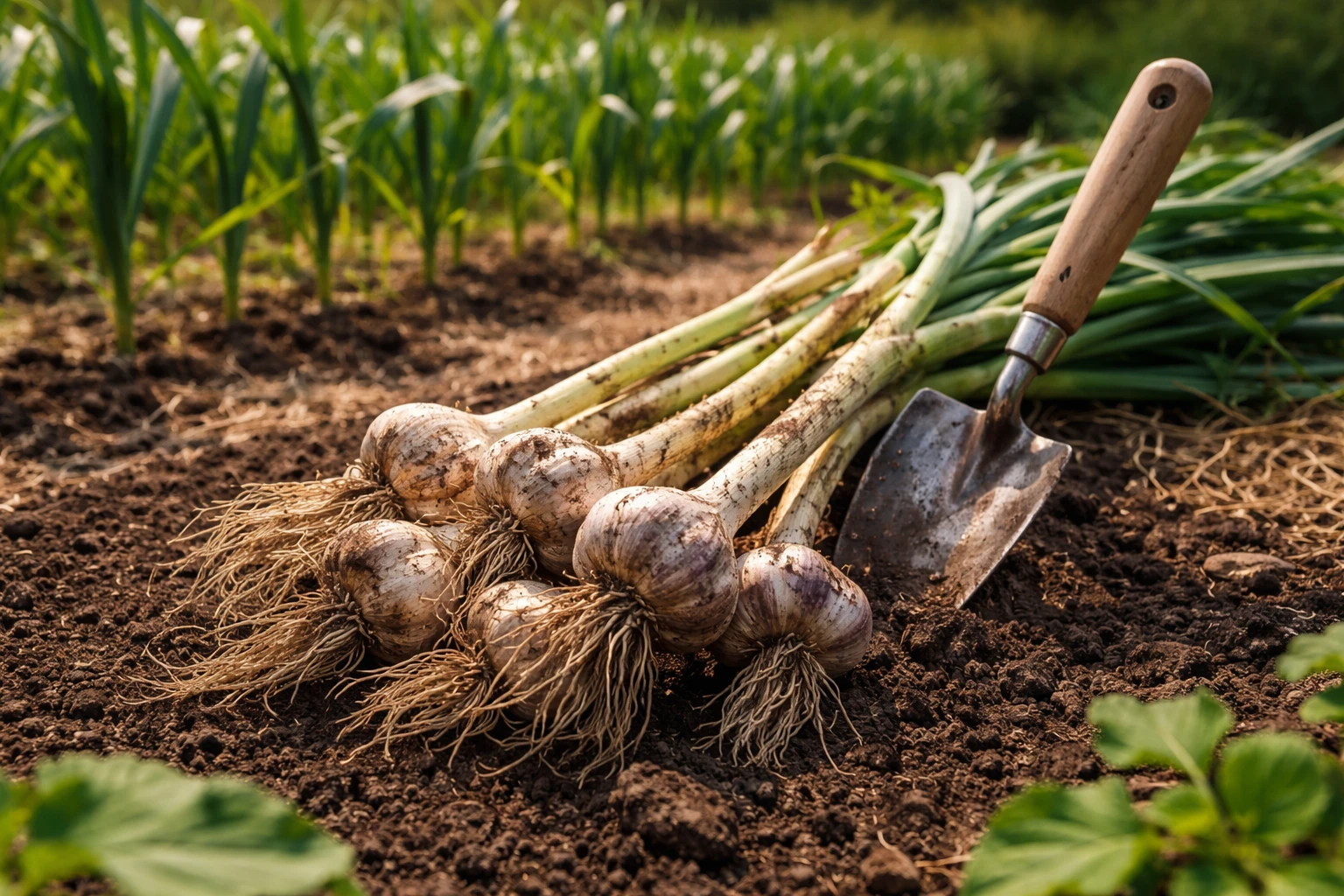
Don’t just pull. Loosen the soil first using a fork or shovel.
Then lift gently. Avoid damaging the bulbs.
Timing Matters
Harvest too early, and bulbs are small.
Wait too long, and they split open.
There’s a window. Hit it right.
Curing Garlic for Storage
Fresh garlic isn’t ready for storage right away. It needs to cure.
How to Cure Garlic
- Leave stalks attached
- Hang in a dry, ventilated space
- Avoid direct sunlight
Ideal Conditions
- Warm but not hot
- Good airflow
- Low humidity
Time Required
2–3 weeks is usually enough.
You’ll know it’s ready when the outer skins are dry and papery.
Storing Garlic for Year-Round Use
Now comes the reward—long-term storage.
Best Storage Conditions
- Cool
- Dry
- Dark
Avoid the refrigerator. It encourages sprouting.
Storage Methods
- Mesh bags
- Wooden crates
- Braided bundles (for softneck)
Shelf Life
| Type | Storage Duration |
| Hardneck | 3–6 months |
| Softneck | Up to 12 months |
With proper storage, growing garlic at home can supply your kitchen all year.
Tips for Replanting and Sustainability
One of the best parts of garlic? It keeps giving.
Save your best bulbs for next season. Replant them. Repeat.
Smart Practices
- Rotate planting areas each year
- Improve soil with compost
- Select the healthiest cloves
Over time, your garlic adapts to your environment. Yields improve. Flavor deepens.
Beginner Mistakes to Avoid
Let’s keep it real. Mistakes happen. But many are avoidable.
- Using grocery store garlic (may not grow well)
- Planting in poorly drained soil
- Ignoring spacing guidelines
- Overwatering
- Harvesting too early or too late
Avoid these, and you’re already ahead.
Conclusion
If you’re looking for a reliable, rewarding project, growing garlic at home is hard to beat. It’s simple. It’s practical. And it pays off in ways you’ll notice every time you cook.
Start small. One bed. A few containers. That’s enough.
Once you see those first green shoots push through the soil, you’ll understand why so many gardeners stick with garlic year after year. It’s not just about growing food. It’s about building a rhythm, a habit, a small win that repeats itself every season.
And before you know it, you won’t just be trying it—you’ll be mastering it.
FAQs
Garlic typically takes 8–9 months from planting to harvest, especially when planted in the fall.
You can, but it’s not recommended since store garlic may be treated or unsuitable for your climate.
Loose, well-draining soil rich in organic matter works best for healthy bulb development.
Water consistently to keep the soil moist, but reduce watering as the bulbs mature.
Yes, garlic grows best with at least 6–8 hours of direct sunlight daily.
Harvest when the lower leaves turn yellow while some upper leaves remain green.
Small bulbs can result from poor soil, overcrowding, or insufficient nutrients.
Cure it first, then store in a cool, dry, and well-ventilated space.
Yes, as long as the container is deep enough and has good drainage.
If growing hardneck garlic, removing scapes helps produce larger bulbs.