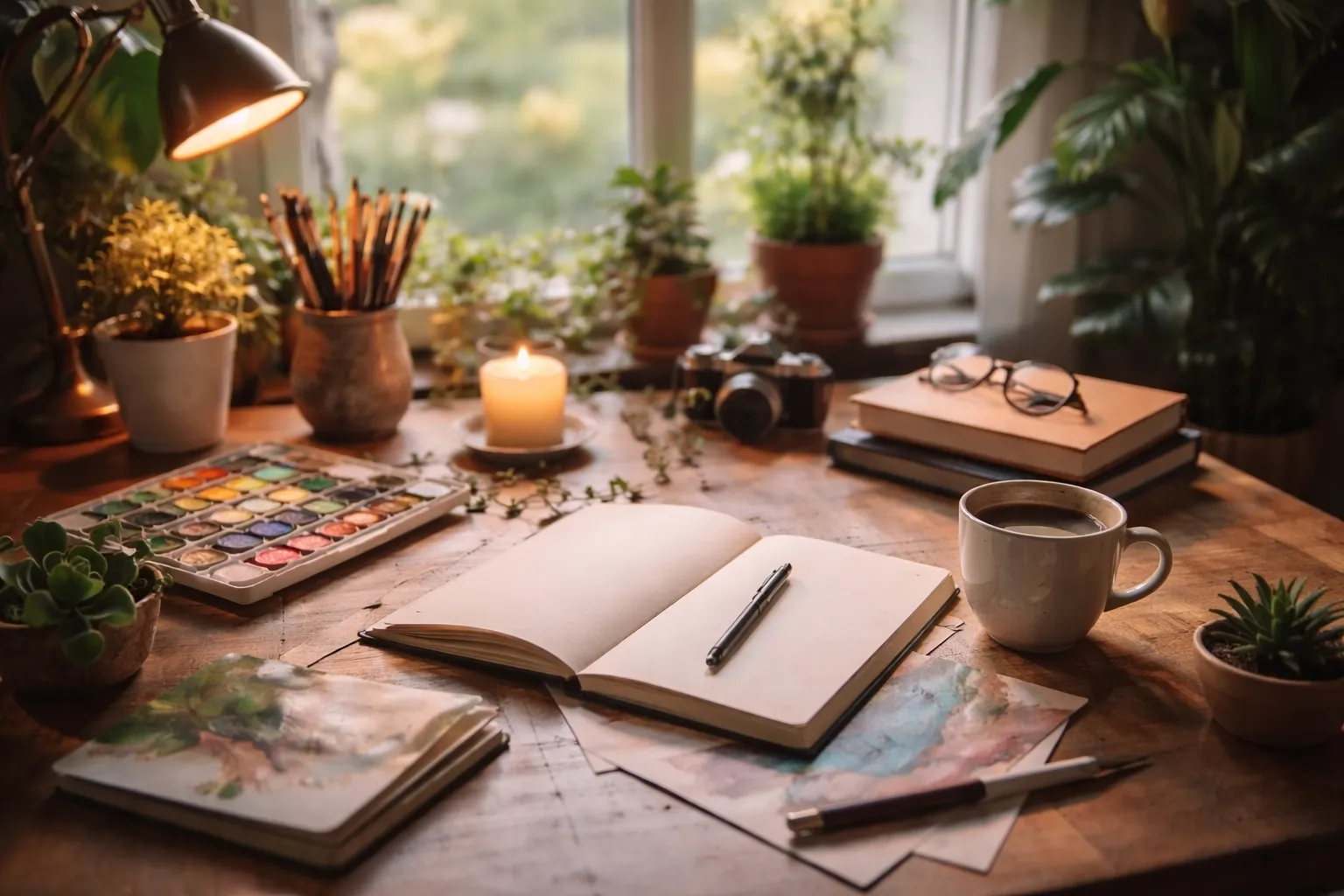
Creativity & Lifestyle are no longer separate ideas. They’re intertwined, feeding each other every single day. I’ve learned this the hard way—by trying to be creative in a life that left no space to think. It didn’t work. Creativity needs room. Lifestyle creates it.
We tend to treat creativity like a special event. Something we do after work. Or on weekends. Or when inspiration magically strikes. But real creativity shows up in quieter places. In how you structure your mornings. In how you respond to stress. And in how you choose what deserves your attention.
This is not about becoming an artist. It’s about becoming intentional.
Redefining Creativity in Modern Life
Let’s clear something up. Creativity is not limited to painting, writing, or design. It’s decision-making. It’s problem-solving. And it’s adapting when the obvious answer fails.
Creativity shows up when you redesign a workflow instead of complaining about it. When you reframe a challenge instead of avoiding it. When you experiment rather than repeat.
In the context of Creativity & Lifestyle, creativity becomes practical. Useful. Quietly powerful.
A creative lifestyle is not chaotic. It’s responsive. It allows you to think beyond default reactions and inherited routines. That’s where value lives.
How Lifestyle Shapes Creative Capacity
Your lifestyle either supports creative thinking—or slowly drains it.
Sleep-deprived minds don’t generate original ideas. Overbooked calendars don’t leave space for reflection. Constant digital noise suffocates subtle insights.
This doesn’t mean you need radical change. It means you need awareness.
Ask yourself:
- When do I feel most mentally sharp?
- When do ideas arrive naturally?
- What habits consistently exhaust me?
Creativity & Lifestyle work together here. Creative energy follows patterns. Once you notice them, you can design around them.
Building a Creativity-Friendly Daily Routine
Routine doesn’t kill creativity. Poorly designed routine does.
The goal isn’t rigidity. It’s rhythm.
A creative routine gives your brain predictability so it can take risks elsewhere. I rely on small anchors—simple habits that signal it’s time to think differently.
Here’s a practical breakdown:
| Daily Element | Creative Benefit |
| Morning quiet time | Clears mental clutter |
| Defined work blocks | Reduces decision fatigue |
| Midday movement | Restores mental flexibility |
| Evening reflection | Captures ideas before sleep |
Notice something? None of this is extreme. That’s the point.
Creativity & Lifestyle improve when your day stops fighting your brain.
Small Rituals That Create Momentum
Big breakthroughs rarely start big. They start with permission.
A notebook by the bed. A ten-minute walk without headphones. Writing one rough idea instead of waiting for a perfect one.
Try this:
- Start your day by writing three unfinished thoughts
- End your workday by noting one question worth exploring tomorrow
- Schedule “thinking time” like you would a meeting
These rituals don’t demand brilliance. They invite it.
Designing Physical Spaces That Support Creative Living
Your environment is speaking to you. Constantly.
Clutter tells your brain to stay alert. Poor lighting signals fatigue. Disorganized spaces create low-level stress you barely notice—but your mind does.
Creative spaces don’t need to be beautiful. They need to be intentional.
Focus on:
- Natural light where possible
- Clear surfaces for focused work
- One or two objects that spark curiosity, not distraction
Minimalism isn’t mandatory. Meaning is.
In a Creativity & Lifestyle framework, your space should reduce friction, not perform for visitors.
Creativity Through Mindful Living
Mindfulness doesn’t mean sitting cross-legged for an hour. It means noticing.
Creative insights often arrive when you’re paying attention to ordinary moments. While cooking. Walking. Listening.
When you rush everything, you miss patterns. When you slow down—even briefly—you start connecting dots.
Practical ways to practice mindful creativity:
- Pause before reacting in conversations
- Reflect on decisions instead of just outcomes
- Journal observations, not emotions, once a day
Creativity & Lifestyle thrive when you give your mind time to wander without pressure.
Applying Creativity to Work and Career
Creativity isn’t a “nice-to-have” at work anymore. It’s leverage.
Creative professionals adapt faster. Communicate clearer. Solve problems others don’t even notice yet.
Here’s where it shows up most clearly:
- Redesigning inefficient processes
- Framing ideas in ways stakeholders understand
- Navigating uncertainty without freezing
Creative thinking isn’t rebellion. It’s refinement.
Ways creativity improves professional life:
- Better decision-making under pressure
- Increased confidence when facing ambiguity
- Stronger leadership through perspective
- More sustainable productivity
A Creativity & Lifestyle mindset at work turns effort into impact.
Social Life, Culture, and Creative Influence
Who you spend time with shapes how you think. Quietly. Constantly.
Some conversations expand you. Others drain you. The difference matters.
Creative living doesn’t require isolation. It requires intention.
Ask yourself:
- Do my relationships encourage curiosity?
- Am I exposed to diverse perspectives?
- Do I consume content that challenges or numbs me?
Creativity & Lifestyle alignment often improves when you curate influence with care. Not harshly. Just honestly.
Overcoming Creative Blocks Through Lifestyle Adjustments
Creative blocks are rarely about talent. They’re about overload.
Stress. Fatigue. Too many inputs. Not enough recovery.
When creativity stalls, don’t force output. Adjust inputs.
Start here:
- Reduce commitments by 10%
- Protect one hour a week for uninterrupted thinking
- Improve sleep before chasing motivation
Creative flow returns when your lifestyle stops exhausting your attention.
Sustaining Creativity Over the Long Term
Creativity is not a sprint. It’s a relationship.
Some seasons will feel electric. Others slow. Both are normal.
Measure progress differently:
- Are you asking better questions?
- Are decisions more intentional?
- Do ideas feel less forced?
Creativity & Lifestyle evolve together. As your responsibilities shift, your creative practices should too.
Flexibility is a skill. Practice it.
Designing a Life That Makes Space for Creativity
Creativity doesn’t demand more time. It demands better use of it.
When your lifestyle supports thinking, creativity stops feeling fragile. It becomes reliable. Grounded. Useful.
This is the quiet promise of Creativity & Lifestyle done well. You don’t wait for inspiration. You build conditions where it shows up naturally.
Experiment. Adjust. Stay curious.
That’s not just creative living.
That’s a creative life.