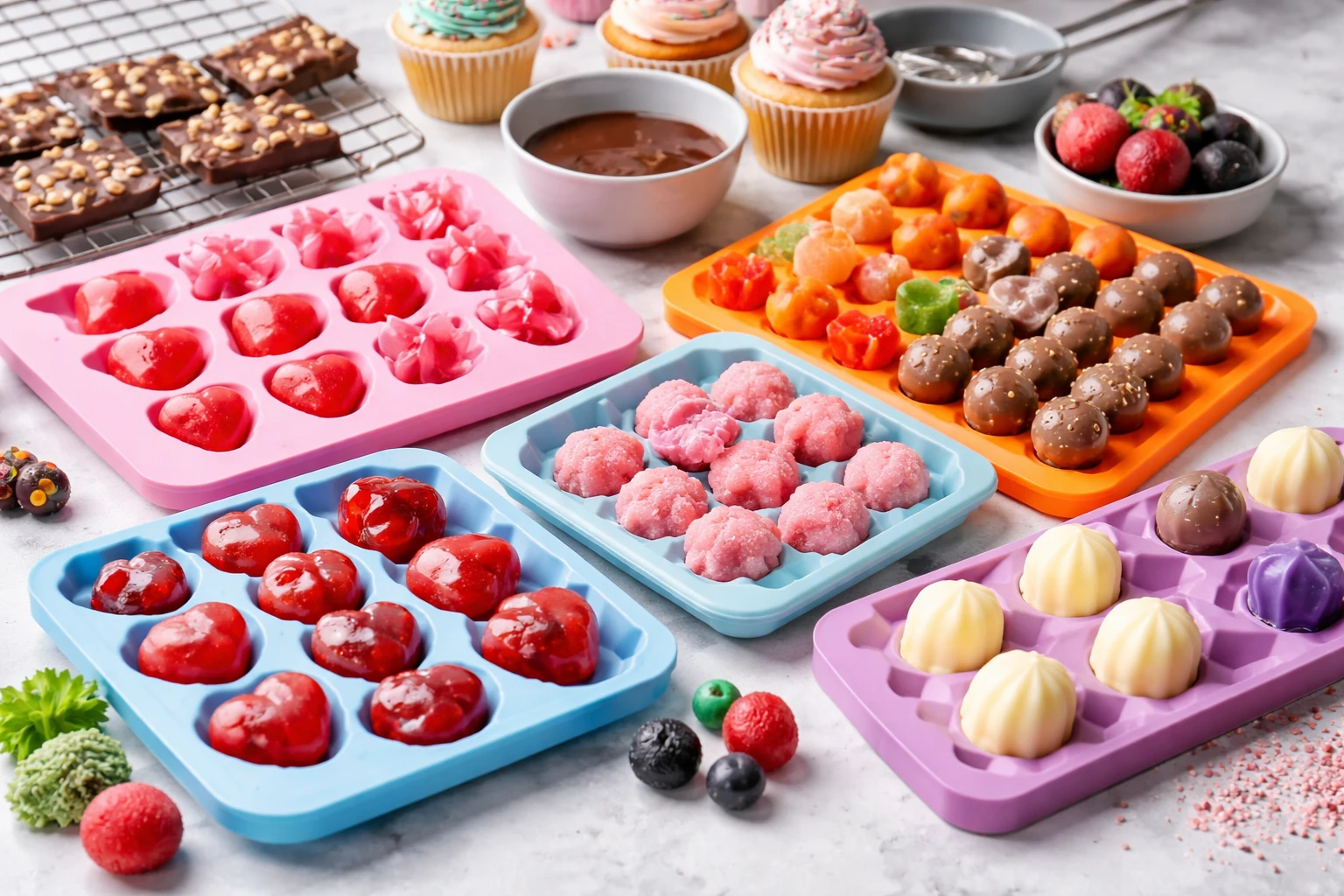
Food-grade silicone has become a popular choice for custom mold creation across many industries, from professional bakeries to small craft businesses. This material offers unique properties that make it stand out from traditional mold materials like metal or plastic. Understanding the specific benefits of food-grade silicone helps businesses and home cooks make informed decisions about their mold selection and invest in tools that deliver both safety and performance.
The material’s versatility extends across multiple applications, from chocolate and candy production to baked goods and frozen treats. Food-grade silicone provides solutions to common problems that arise with other mold materials, such as difficulty with release, limited temperature ranges, and concerns about chemical contamination. These advantages have made silicone molds a standard tool in modern food preparation and manufacturing environments.
1. Non-toxic and food-safe composition ensuring consumer safety
Food-grade silicone stands apart from regular materials because it contains no harmful chemicals that could transfer into food products. The FDA regulates these materials to verify they meet strict safety standards for direct food contact. Manufacturers test food-grade silicone to confirm it remains stable at various temperatures and does not release toxic substances.
Premium custom silicone molds provide a safe option for businesses that produce edible items or food products. The material resists bacterial growth and does not react with acidic or alkaline foods. This non-reactive quality prevents contamination and preserves the original flavor and quality of food items.
Food-grade certification requires materials to pass rigorous testing for non-toxicity and chemical stability. Silicone molds that carry this certification give businesses confidence that their products meet health and safety regulations. The composition includes only approved ingredients that pose no risk to consumers who eat or handle the final products.
2. High flexibility, allowing intricate and detailed mold designs
Food-grade silicone stands out for its remarkable flexibility, which makes it perfect for creating molds with complex shapes and fine details. The material bends and stretches easily, so manufacturers can produce designs that would be difficult or impossible with rigid materials like metal or hard plastic. This flexibility also means the finished products can be removed from the molds without damage, even if they have delicate features or unusual shapes.
The soft nature of silicone allows it to capture every small detail in the original pattern. Bakers and chocolatiers can create molds with elaborate decorations, sharp edges, and tiny textures that show up clearly in the final product. For example, a silicone mold can reproduce the veins on a leaf or the intricate patterns on decorative chocolates with accuracy.
This flexibility reduces the risk of breakage during both the production process and the removal of finished items. Products come out cleanly without sticking or tearing, which saves time and reduces waste in commercial food production.
3. Excellent heat resistance suitable for baking and candy making
Food-grade silicone stands up to extreme temperatures without losing its shape or function. Most food-grade silicone products can handle temperatures from about 400 to 450 degrees Fahrenheit, which covers nearly all standard recipes. This material stays flexible and intact whether placed in a hot oven or a cold freezer.
Bakers appreciate silicone molds because they don’t warp, melt, or become brittle under high heat. The material maintains its structure throughout repeated use at different temperatures. For candy makers, this heat resistance proves particularly useful since chocolate and sugar work often requires precise temperature control.
The non-stick surface of silicone means that finished products release easily from molds without extra grease or preparation. Clean-up becomes simpler because silicone resists sticky residues and washes quickly. These properties make food-grade silicone a practical choice for anyone who creates custom molds for baked goods, candies, or other temperature-sensitive food items.
4. Non-stick surface enabling easy demolding without damage
Food-grade silicone naturally provides a non-stick surface that allows baked goods and molded items to release cleanly from the mold. The material’s low surface tension prevents products from sticking to the mold walls, which means users can remove finished items without applying excessive force or risking damage to delicate details.
This non-stick quality works without the need for heavy greasing or lining in most cases. Products slide out smoothly while maintaining their original shape and intricate design features. The flexible nature of silicone allows users to gently pull the mold away from the product rather than forcing the product out of a rigid container.
Items with complex patterns or fine details benefit significantly from this property. Bakers can remove cakes, chocolates, and candies without tears or breaks in the surface. Crafters find that resin pieces and soap bars come out intact with all their small features preserved. The silicone surface stays smooth through repeated use, which maintains consistent release properties over time.
5. Durability withstanding repeated use and cleaning without degradation
Food-grade silicone stands up to the demands of frequent use in mold-making applications. The material resists cracking and warping even after hundreds of cycles, which makes it a practical choice for both home crafters and professional manufacturers. Unlike many alternatives, silicone maintains its structural integrity through repeated exposure to high and low temperatures.
The cleaning process poses no threat to silicone molds. Users can wash these molds with hot water and soap without fear of degradation or damage to the surface. The material does not absorb odors or stains from previous projects, so it stays fresh for the next use.
Food-grade silicone products last for years with proper care. The flexibility of the material prevents it from becoming brittle over time, and the non-porous surface resists the buildup of bacteria or residue. This longevity reduces the need for frequent replacements and provides consistent results across countless projects.
Conclusion
Food-grade silicone has proven itself as an exceptional material for custom mold creation across various industries. The combination of heat resistance, flexibility, non-stick properties, durability, and safety compliance makes it a practical choice for both professional and home use. Businesses and individuals who switch to silicone molds often notice improvements in product quality and production efficiency. As food safety standards continue to evolve, silicone remains a trusted solution that meets regulatory requirements while delivering consistent results.
FAQs
Food-grade silicone is a non-toxic material specifically designed for safe contact with food and approved by regulatory standards like the FDA.
Yes, it is safe for baking and cooking because it does not release harmful chemicals even at high temperatures.
Most food-grade silicone molds can withstand temperatures from freezing conditions up to around 400–450°F.
In most cases, no greasing is needed because silicone naturally has a non-stick surface.
Yes, their heat resistance allows them to perform well in both high-temperature ovens and cold freezers.
Yes, they are highly durable and can handle repeated use without cracking, warping, or degrading.
Silicone molds are easy to clean with soap and water and do not retain odors or stains.
Yes, their flexibility allows them to capture intricate patterns and fine details with high accuracy.
No, food-grade silicone is non-reactive and does not alter the taste or quality of food.
Yes, many businesses use them because they meet safety standards and improve efficiency in production.