Imagine your kitchen table last night: a seed-sorting station with envelopes, markers, and a runaway cucumber seed bouncing across the surface. By sunrise, it had transformed into a canning prep area with a pressure-canner manual, jar lifter, and lemon juice bottles. Tonight, it will probably become the unofficial drop spot for groceries you haven’t had time or space to unpack.
If you live the small-home, self-reliant lifestyle, you know the drill: every flat surface becomes part pantry, part workshop, and part mail counter. With 13.7 percent of U.S. households facing food insecurity in 2024, the drive to stockpile is logical, but the resulting clutter can be overwhelming. The answer isn’t a bigger house or a new outbuilding.
Real preparedness organization comes from clearer zones that tell every item exactly where it belongs. In the next few minutes, we will map your supplies, assign them a sensible home, and establish micro-habits that maintain the whole system on autopilot.
1. Map Your Supplies
Think of a “Supply Map” as a GPS for everything you own. Effective space planning for homesteaders starts with understanding the flow of goods, not just buying bins. Grab a sheet of notebook paper and work through these four bite-sized steps to regain control.
Step 1: Brain-Dump Your Inventory
List everything you currently stock for resilience: canned tomatoes, water filters, fencing staples, AAA batteries, and bartering extras. Don’t judge the list or worry about organization yet; just empty your brain onto the page.
Step 2: Tag by Frequency
Next to each item, add a letter code: D (daily), W (weekly), S (seasonal), or E (emergency). Flour might be D; a lambing kit could be S; solar-radio batteries are likely E. This distinction is crucial for small home self-sufficiency because it dictates accessibility.
Step 3: Group by Use-Case
Cluster similar tasks: canning, first-aid, animal care, power-outage, and winter chores. You will instantly see which categories eat the most real estate and where your current storage logic might be failing.
Step 4: Star Active-Project Items
Place a star next to anything tied to projects in motion. Seeds for next month’s succession planting or the half-knit wool socks you intend to finish when chores slow down. These are notorious “surface squatters” because they lack a temporary landing pad, often cluttering high-traffic areas.
Why start with mapping? The USDA estimates 30-40% of the food supply is wasted, often due to spoilage or neglect. Much of that waste stems from misplaced or forgotten stock. A quick map up-front prevents duplicate buys and wasted shelves.
2. Assign & Optimize Zones Around the Home

With your Supply Map in hand, the next step is giving every category a purpose-built landing pad. This prevents the “shoving it wherever it fits” mentality that leads to lost supplies.
Kitchen & Pantry Core
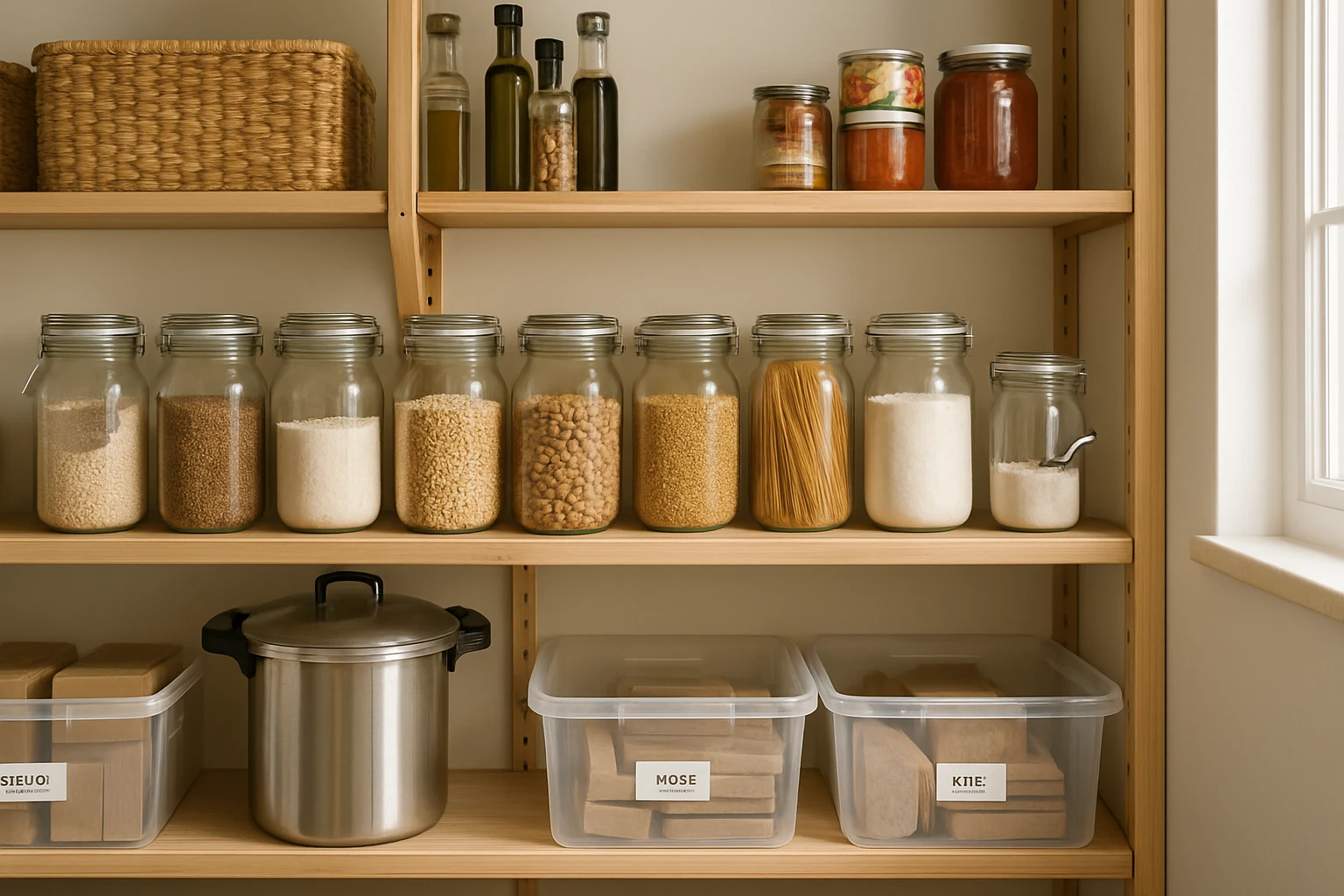
Daily staples like oats, spices, and cooking oil should go at eye level. Backstock, such as extra flour sacks or spare vinegar, sits best in labeled totes on the bottom shelf. Clear labels mean anyone in the household can unload groceries without playing Tetris.
As a bonus, keep water-bath and pressure canners within arm’s reach to encourage small, frequent preservation batches rather than chaotic marathon days.
Living-Room Reality Check
Nothing kills motivation faster than stacks of mason jars beside the couch. Shared spaces must reset fast after long days of garden work, homeschool lessons, or evening repairs.
One elegant fix is a storage-rich anchor piece such as a standard couch from Home Reserve, which features built-in compartments beneath every seat. You can slip vacuum-sealer rolls, extra blankets, or board games directly under the cushions, making the furniture itself the visual boundary between “relax” and “work” zones.
The Active-Projects Nook
Remember those starred items from your map? Park them on a rolling cart. When garden planning calls, wheel it to the table; when company arrives, roll it back to its corner. This ensures projects stay alive without overtaking your living room permanently.
Freezer and Basement Organization
Batch-cooked meals should slide into a designated “eat me first” basket in the freezer. Bulk-meat buys live in the lower drawers, while a dry-erase freezer map on the door tracks portions. Use seasonal color-coded bins to help you rotate foods first-in, first-out (FIFO).
Root-Cellar or Cool-Corner Hacks
If you have no cellar, slide crates of potatoes under the basement stairs or build sand-filled boxes for carrots against the north wall of an attached garage. The key is maintaining temperatures between 32-40°F (slightly warmer for potatoes at 40-50°F to prevent sweetening) and 90-95% humidity.
Ensure good ventilation to prevent mold while maintaining high moisture levels. Cheap wireless thermometers can prove if your chosen spot qualifies for long-term storage.
3. Maintain Without Thinking: 4 Micro-Habits
Systems only work if they require minimal effort to maintain. Implement these four micro-habits to keep your preparedness organization running smoothly.
- Micro-Habit #1: Rotate Backstock on Unload Day. When a grocery run or bulk pickup lands, move existing goods forward and park the new items behind. Label totes “OPEN NEXT” with painters’ tape so the process remains simple for everyone.
- Micro-Habit #2: Clear, Dated Labels. Whether you hand-write dates or use a QR-code pantry app, make sure every container shows what’s inside and when it expires. It is the cheapest insurance against waste.
- Micro-Habit #3: One Incoming Supplies Basket. Place a sturdy basket by the back door. Nothing goes further into the house until it’s labeled and assigned to a zone. This eliminates countertop clutter instantly.
- Micro-Habit #4: Five-Minute Weekly Inventory Glance. While Sunday coffee brews, open each zone, eyeball levels, and jot two or three notes on what to consume or buy. No spreadsheets are needed.
Build a Self-Sufficient Home with Smart Storage
Effective home storage isn’t about more space. It’s about clear systems. By mapping supplies, assigning dedicated zones, and following simple micro-habits, you can maintain an organized stockpile that supports everyday self-sufficiency. With these strategies, your home stays clutter-free, your essentials are always accessible, and small-home resilience becomes effortless.
FAQs
A Supply Map is a visual inventory of everything you own. It helps you see where items belong and track how often you use them to prevent waste and duplicates.
Assign zones based on how frequently you use items. Keep daily essentials within reach, seasonal or bulk items in cool corners or basements, and active projects on rolling carts for easy access.
Use simple habits to keep your system running smoothly. Rotate backstock, label containers clearly, place new items in an incoming basket, and check inventories weekly.
Yes, proper containers make non-food items easy to manage. Use labeled bins or photo albums to keep seeds, tools, and gear ready for use without creating clutter.