Garage doors have come a long way from the simple hinged panels of earlier decades. For homeowners and business owners in the Greater Toronto Area who are evaluating their options, roll up garage doors have moved from a primarily industrial application into mainstream residential and commercial use, and for good reasons.
Understanding how roll up doors differ from sectional garage doors, what advantages they offer in the Ontario climate, and what to consider before installation helps buyers make a well-informed choice rather than a default one.
Investing in quality roll up garage doors from a provider with installation experience in the GTA means getting a product that is designed for the specific demands of Canadian weather and built to perform over the long term.
How Roll Up Doors Differ from Sectional Doors
Most homeowners are most familiar with sectional garage doors, which open by traveling along a horizontal track attached to the ceiling. They consist of several hinged panels that pivot as they move along that track, requiring a certain amount of clear ceiling space behind the door opening to accommodate the door when it is fully open.
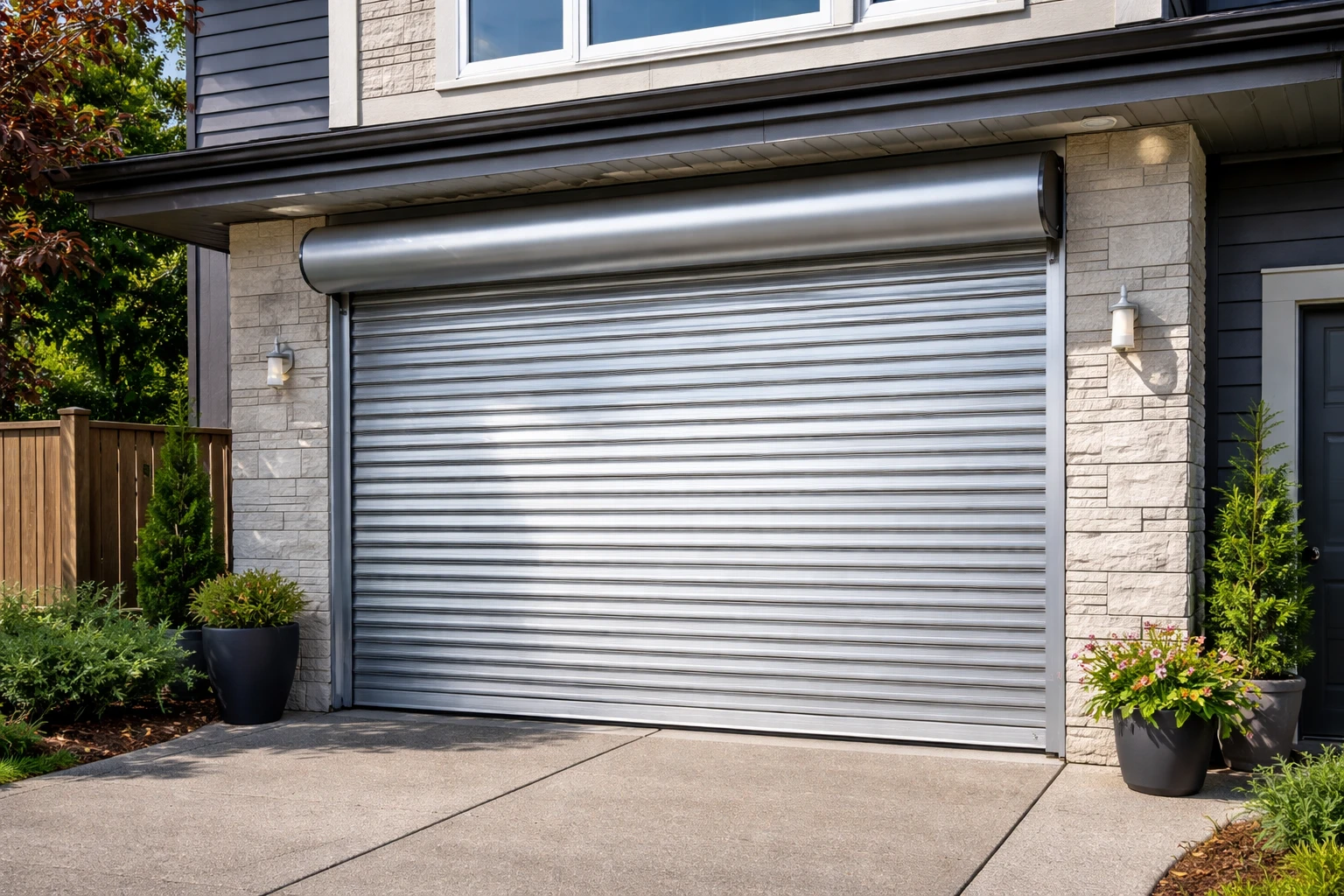
Roll up doors work differently. Rather than moving along a horizontal track, they are made of interlocking slats that coil around a drum mounted above the door opening. When open, the door takes up very little overhead space because it coils into a compact roll directly above the opening. This makes roll up doors particularly advantageous in garages with limited ceiling depth, spaces with ceiling-mounted equipment, or properties where maximizing vertical clearance inside the opening is a priority.
The mechanical simplicity of a roll up door also tends to translate into durability. With fewer moving parts than a sectional door and a design that has been refined across decades of industrial use, properly maintained roll up doors have excellent longevity.
Security and Weather Resistance
One of the most compelling arguments for roll up doors in residential and commercial applications is security. The interlocking aluminum or steel slat construction creates a surface with no visible grab points or access opportunities when the door is closed and locked. This is a meaningful difference from sectional doors, which have panel joins and hardware visible from the exterior.
Roll up doors made from reinforced aluminum also resist vandalism and forced entry more effectively than standard sectional doors. In a world where residential and commercial security is an ongoing concern, this is not a trivial consideration.
For Ontario properties, weather resistance is equally important. Roll up doors seal at the edges and at the base with minimal gaps, reducing drafts and weather infiltration. Insulated versions are available that add a layer of foam between the slats, providing meaningful thermal performance and making a garage space more comfortable as a workshop, studio, or secondary living area.
Uses Beyond the Traditional Garage
While the garage application is the most common residential use, roll up doors are increasingly being installed in other residential locations where controlled access, space efficiency, and security are priorities.
Laneway properties and carports are common applications in the GTA, where roll up doors allow homeowners to secure an otherwise exposed parking area. Backyard storage areas and sheds benefit from roll up doors because they open fully without requiring clear swing space, making access to larger equipment simple. Some homeowners install roll up doors as interior space dividers, creating a flexible area that can be open or closed depending on use.
Commercial applications extend from restaurant service counters and retail security shutters to workshop and warehouse access. The adaptability of roll up door systems across such a range of applications speaks to the fundamental practicality of their design.
Motorization and Smart Home Integration
Like sectional doors, roll up garage doors can be motorized with remote control operation. Modern installations can also integrate with home automation systems, allowing operation via smartphone, voice command, or programmed schedules.
One important advantage in the Ontario context is the availability of manual override mechanisms. In the event of a power outage, a manual crank allows the door to be operated without electricity. This is not a minor detail for anyone who has experienced an Ontario winter power outage.
When planning a motorized roll up door installation, it is worth discussing the specific motor specifications with your installer. High-cycle motors, designed for frequent daily operation, are worth the incremental cost for any door that will see regular use.
What to Ask Before Installation
Before committing to a roll up door installation, a few practical questions are worth resolving. What material are the slats made of, and what is the gauge of the aluminum or steel? Is insulation available for this model, and what R-value does it achieve? What is the warranty on both the door and the motor? Does the installation include professional measurement to ensure a precise fit within the existing opening?
A well-fitted roll up door performs reliably over many years. A poorly fitted one leaks drafts, operates unevenly, and requires more frequent adjustment. The precision of the installation is as important as the quality of the door itself.
FAQs
A roll up garage door is made of interlocking metal slats that coil into a compact roll above the door opening instead of sliding along ceiling tracks.
Yes, roll up garage doors are increasingly used in residential properties because they save space and offer strong security.
Because the door coils above the opening, it does not require long ceiling tracks, leaving more overhead room for storage or equipment.
Yes, many models include tight seals and optional insulation, which help reduce drafts and improve temperature control during cold Ontario winters.
Roll up doors can offer better security because their interlocking slats create a solid surface with fewer external access points.
Yes, most roll up garage doors can be equipped with electric motors and remote controls for convenient automatic operation.
Most motorized systems include a manual override or crank so the door can still be opened during power outages.
They are commonly used for carports, backyard storage areas, workshops, retail security shutters, and service counters.
Yes, insulated models include foam between the slats to improve thermal efficiency and make the space more comfortable.
You should ask about material quality, insulation options, warranty coverage, motor specifications, and whether professional measurements are included.