If you’re wondering how to keep livestock water from freezing, you’re not alone. Last winter, I spent more mornings than I’d like to admit wresting with stiff ice in my animals’ buckets. That frustration turned into a kind of obsession—but by the time I figured out what works, I felt ready to write my own winter survival guide for farms. And one thing I’ve learned? A smart mix of methods works infinitely better than just brute force.
Let me walk you through everything I’ve tried—some modern, some downright rustic—but all with the aim of keeping your herd hydrated and you sane.
Heated Water Buckets
Let’s start with my favorite upgrade: Heated Water Buckets. One stubbornly frozen bucket is all it takes to make your day miserable, and heated versions—especially flat-back designs—changed the game for me. I plug them into an outlet in the barn, and suddenly water stays liquid all day. No more lugging buckets inside or early-morning ice smashing.
Heated water buckets are a bit of an investment, but they make every winter less of a slog—and frankly, my goats appreciate the warm drink. If you have reliable electricity nearby, this tiny appliance saves hours of labor and a whole lot of teeth-chattering.
Frost-Free Hydrant
Pair a heated bucket with a frost-free hydrant, and you enter a whole new league. These hydrants are built so that when you turn the handle off, the remaining water drains below the frost line—no more frozen lines. For me, it meant ditching the old routine of hauling buckets all day.
Now, if a frost-free hydrant is installed by a barn wall, I just hook up a hose to fill waterers or buckets, let the heating do its magic, and keep moving. It’s a set-and-forget upgrade that turned winter’s dread into something downright manageable.
Insulated Bucket Holders
What if electricity isn’t an option? That’s where Insulated Bucket Holders become your best friend. Think of them as a cozy winter jacket for your waterers.
I’ve wrapped buckets in foam, nestled smaller buckets inside larger ones with straw packed around them, and even recycled old black buckets for their heat-absorbing properties. The result: several hours of unfrozen water, even when temps settled with teeth-chatter.
It’s not perfect—and I still check late-night temperatures—but insulated bucket holders turned freezing mornings from a panicfest into a minor inconvenience.
Livestock Water Buckets
When you hear “livestock water buckets,” you might picture the simplest, cheapest containers. But they deserve more credit! The type of bucket matters—material, color, size—it all affects how long water stays liquid.
Rubber buckets? Hands down best for winter. They slow freezing better than plastic or metal, and they’re tougher when accidentally kicked by goats. A bigger bucket also freezes more slowly, because larger volumes retain heat longer. Pro tip: choose black rubber if you can—it absorbs solar heat, too.
Frozen Water Trough
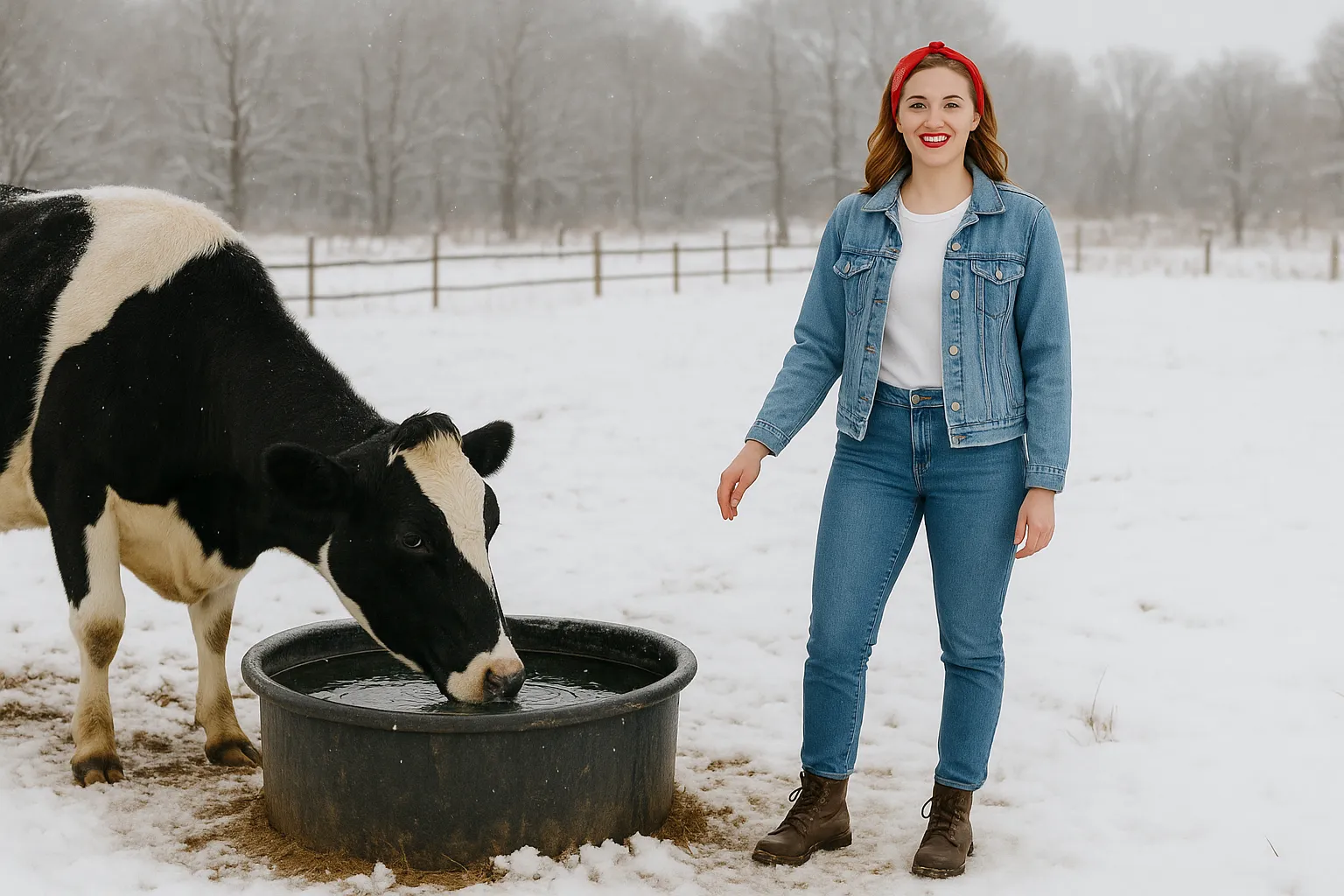
With bigger livestock (like cattle or horses), your challenge shifts from buckets to the dreaded Frozen Water Trough. Ever tried to hack through inch-thick ice with a hoe? Not fun.
I tackled this in two ways: first, I used submersible de-icers (like a mini-heater you drop into the trough). Second, I added solar covers made of plexiglass over half the trough. That greenhouse effect works wonders—even on grey, winter days.
When a floating ball—like a big rubber “cow ball”—is tossed in too, it helps create small waves, and those waves dramatically delay the ice.
Mixing and Matching Strategies
What I’ve learned is simple: there’s no single miracle fix. The best approach is layering strategies that fit your setup:
- Heat where you can—heated buckets, de-icers, frost-free hydrants.
- Insulate where you can’t—bucket jackets, solar shields, straw nests, even old tires as insulation.
- Use physics to help—larger volumes of water, sun exposure, moving water with floats.
- Experiment—compost heat, salt-water bottles, black buckets in sunny spots.
For barn chickens, a heated bowl might do the trick. For goats, an insulated bucket in a draft-free spot works wonders. For cattle, heaters or floating lids keep troughs functional. For remote pastures, dark tubs tucked into the sun, with straw or compost around them, can stretch hours before freezing.
Final Thoughts
Winter doesn’t have to mean water wrestling. By combining strategies that fit your operation—be it heated water buckets, a frost-free hydrant, insulated bucket holders, smart livestock water buckets, or dealing with a frozen water trough the right way—you turn winter from a slog into a chore that’s just… manageable.
Start early—set things up before the first hard freeze, test overnight, and tweak. You’ll end up with a system that keeps your animals hydrated, keeps you warm, and gives you more coffee-time and less ice-chipping.
FAQs
Heated water buckets are the simplest solution if you have electricity nearby. They keep water consistently thawed and save you from hauling and breaking ice daily.
Yes, a frost-free hydrant prevents pipes from freezing by draining water below the frost line. Pair it with heated buckets or troughs for an efficient winter setup.
They don’t prevent freezing forever, but they buy valuable time. By reducing heat loss, insulated bucket holders can keep water liquid for several hours longer in cold weather.
Try solar covers, floating balls, or surrounding the trough with insulating material. These methods slow ice formation and reduce the amount of ice you’ll need to break manually.
Rubber buckets are the most reliable in freezing temperatures. They resist cracking, retain heat better than plastic or metal, and last through tough winters.
Yes, compost naturally generates heat during decomposition. By surrounding buckets or troughs with compost, you can create a warm barrier that delays ice buildup.
Even with heated or insulated systems, you should check at least twice a day. Quick inspections ensure your animals always have safe access to unfrozen water.