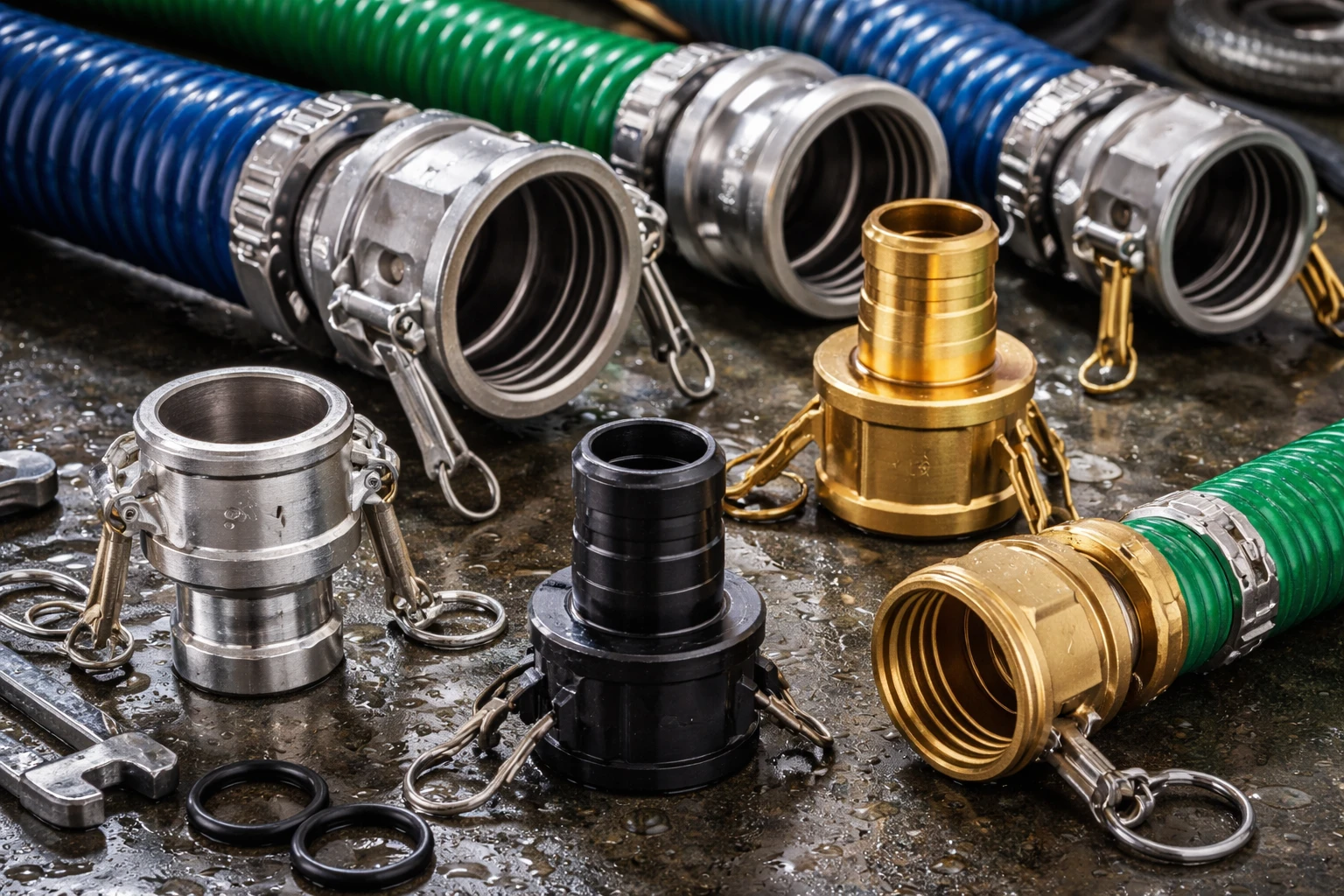
Camlock hose fittings connect hoses to pumps, pipes, and other equipment in water pumping systems. These quick-connect couplers allow operators to attach and detach hoses in seconds without tools or complicated procedures. However, not all camlock fittings work the same way, and the wrong choice can lead to leaks, pressure loss, or even system failure.
The right camlock fitting depends on the material it’s made from, the size needed for the system, and the pressure it must handle. Stainless steel fittings resist corrosion and work well for clean water applications, while aluminium options provide a lighter alternative for general use. Polypropylene and brass fittings serve specific purposes based on chemical compatibility and budget constraints. Each material performs differently under various conditions, so operators need to match the fitting to their exact requirements.
This guide covers the main factors that affect camlock selection for water pumping systems. Readers will learn how to identify the correct size, understand pressure ratings, and determine which material suits their application best. The article also addresses proper installation methods and safety considerations that protect both equipment and workers.
Key Considerations When Selecting Camlock Hose Fittings
The right camlock fittings depend on three main factors: compatibility between your hoses and pumps, the material that suits water pumping conditions, and the correct size and type for your flow requirements.
Assessing Hose and Pump Compatibility
The camlock fitting must match both the hose diameter and the pump outlet size to create a secure connection. Measure the inner diameter of your hose before you select any fittings. A mismatch between these components leads to leaks, reduced flow rates, and potential system failure.
Most water pumps feature standard outlet sizes that correspond to common hose dimensions. Check the pump specifications to identify the outlet thread type or camlock size. The fitting should slide onto the hose without force yet remain tight enough to prevent slippage under pressure.
Consider the connection type you need for your setup. Type A adapters connect male camlock ends to female threads on pumps. Type E adapters work for hose-to-hose connections. And type F adapters attach to male pipe threads.
The pressure rating of your camlock fittings must exceed the maximum output of your pump. Standard heavy-duty camlock hose fittings in AU or in New Zealand, and the US can handle pressures up to 250 PSI for water applications. However, some high-capacity pumps generate higher pressures that require specialised fittings. It’s important to always check the specifications of both the pump and fittings to ensure they are compatible, as using improperly rated fittings can lead to leaks or equipment damage.
Understanding Camlock Materials for Water Pumping
Aluminium camlock fittings provide the best value for clean water transfer applications. They resist corrosion better than steel and weigh less, which makes them easier to handle during frequent connections and disconnections. The material remains affordable compared to other options.
Stainless steel fittings suit applications where the water contains chemicals or the fittings face harsh environmental conditions. This material costs more but lasts longer in corrosive settings. Stainless steel also maintains its strength at higher temperatures.
Polypropylene provides a lightweight, affordable option for low-pressure water pumping. These fittings resist many chemicals and work well in agricultural settings. However, they lack the durability of metal options and wear faster with repeated use.
Brass fittings combine corrosion resistance with good strength, but add weight to your setup. The material works well for potable water systems because it does not leach harmful substances. Avoid brass if you pump water with high acidity or alkalinity.
Determining the Appropriate Camlock Size and Type
Camlock fittings range from 1/2 inch to 6 inches in diameter. The most common sizes for water pumping systems are 1.5 inches and 2 inches. Select a size that matches your hose diameter exactly to maintain proper flow rates and prevent connection failures.
Larger fittings allow higher flow rates but require more powerful pumps to maintain adequate pressure. A 2-inch fitting can transfer approximately 200 litres per minute, while a 3-inch fitting handles around 450 litres per minute under similar conditions.
The six main camlock types serve different connection purposes.
- Type A adapters fit a male camlock to a female pipe thread.
- Type B couplers connect a female camlock to a male pipe thread.
- Type C adapters attach a female camlock to a hose barb.
- Type D couplers link a female coupler to a female pipe thread.
- Type E adapters join hose barbs.
- Type F adapters connect a male camlock to a male pipe thread.
Match the camlock type to your specific setup requirements. For example, you need Type E adapters to connect two hoses directly. Type A and B adapters work best to attach hoses to pump inlets and outlets.
Installation, Maintenance, and Safety for Camlock Connections
Proper setup and care of camlock fittings protect water pumping systems from leaks and failures. Regular attention to these connections keeps operations safe and extends equipment life.
Installing Camlock Fittings for Secure Water Transfer
The installation process requires careful attention to achieve a leak-free seal. First, operators must inspect both the male adapter and female coupler for any damage, debris, or worn gaskets before connection. Clean surfaces prevent contamination and allow proper seating.
To connect the fittings, users should insert the male adapter fully into the female coupler until it seats completely. Next, they press down the coupler arms and lock them into place around the adapter’s grooves. The arms must snap securely without force.
Key Installation Steps:
- Verify the correct fitting size matches the hose diameter
- Check that the gasket sits flat in its groove
- Align fittings straight to avoid cross-threading
- Test the connection by pulling firmly on both sides
- Confirm all arms lock completely
The connection should feel solid with no gaps between components. A properly installed camlock requires no tools and takes only seconds to complete. However, users must avoid forcing connections that don’t align easily, as this indicates mismatched sizes or damaged components.
Maintaining Fitting Integrity and Preventing Leaks
Regular inspection keeps camlock connections in good condition. Operators should examine gaskets for cracks, hardness, or deformation every few months. Damaged gaskets need immediate replacement to prevent leaks.
Dirt and chemical residue reduce seal effectiveness over time. Users must clean fittings with appropriate solvents after each use in water pumping applications. Stainless steel and brass fittings tolerate most standard cleaners, but users should verify compatibility with their specific materials.
Storage practices matter for longevity. Fittings should stay in dry locations away from direct sunlight and extreme temperatures. Dust caps protect threads and internal surfaces during storage periods.
Lubrication helps maintain the smooth operation of cam arms. A thin layer of compatible grease on the cam mechanism prevents seizure and makes connections easier. However, users must avoid over-application, which attracts contaminants.
Evaluating Safety Precautions and Best Practices
Safety starts with proper fitting selection for the intended service. Material compatibility between the fitting, gasket, and pumped fluid prevents chemical reactions that weaken connections. Operators must verify that pressure ratings exceed system requirements with an adequate safety margin.
Correct size selection reduces risk significantly. Oversized or undersized fittings create weak points in the system. Users should match coupling dimensions precisely to hose specifications.
Basic Safety Practices:
- Release system pressure before disconnecting fittings
- Wear appropriate protective equipment during connection changes
- Secure hoses to prevent whipping if a connection fails
- Train all personnel on proper connection procedures
- Mark the maximum working pressure clearly on the equipment
Temperature limits must be considered in pump applications. Each material type has specific temperature ranges, and exceeding these limits causes gasket failure or fitting damage. Users must monitor fluid temperature and select materials accordingly.
Regular testing identifies potential problems early. Operators should conduct pressure tests on new installations and check connections for seepage during operation. Any moisture around a connection indicates the need for immediate inspection and repair.
Conclusion
The right camlock hose fittings make all the difference in water pumping system performance and safety. Material selection, size compatibility, and pressure ratings must match the specific application requirements. By carefully evaluating these factors, users can prevent leaks, reduce maintenance costs, and extend system lifespan. Taking time to assess system needs leads to better results and fewer problems down the line.