I’ve cooked lamb a lot of different ways over the years, but lamb lollipops are the cut I keep coming back to. They’re elegant without being fussy, quick to cook, and incredibly rewarding when seasoned properly. The best seasoning combinations for lamb lollipops don’t rely on complexity or trendy blends. They rely on understanding lamb itself—its fat, its flavor, and how seasoning interacts with both. That’s what this post is about: real-world lamb seasoning that actually works, whether you’re cooking for guests or just making dinner on a weeknight.
I’ve read all the popular lamb articles. Some are great, some are overcomplicated, and many repeat the same ideas without explaining why they work. This is my personal, hands-on take refreshed, simplified, and built for people who want lamb to taste like lamb, just better.
Lamb Chops
Before seasoning anything, it helps to understand the cut. Lamb lollipops are lamb chops taken from the rib section and frenched so the bone is clean. That rib meat is naturally tender, well-marbled, and fast-cooking. Because lamb chops already have built-in richness, seasoning should support that fat, not bury it.
This is why lamb doesn’t respond well to sugary rubs or heavy marinades. You’re not trying to tenderize tough meat. You’re enhancing something that’s already good.
Lamb Lollipops
Lamb lollipops are all about balance. They cook quickly, which means seasoning has a narrow window to do its job. Too much salt too early can draw out moisture. Too many spices can turn muddy once heat hits.
When I season lamb lollipops, I think in layers:
- Base seasoning before cooking
- Flavor development during heat
- Brightness or fat at the finish
Keeping those stages separate makes the final result feel intentional instead of chaotic.
Lamb Spices
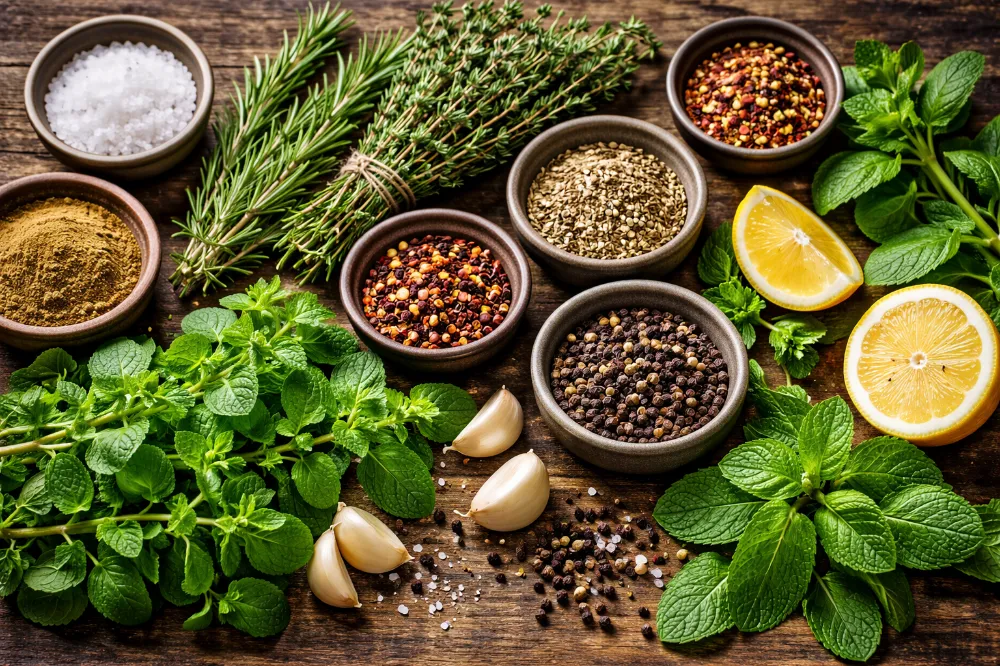
Not every spice belongs on lamb. Over time, I’ve narrowed lamb spices down to a short, reliable list that enhances instead of competes.
Spices that consistently work:
- Black pepper
- Cumin
- Coriander
- Paprika (mild, not sweet)
These spices bring warmth and depth without overpowering lamb’s natural flavor. Anything beyond this list needs a light hand.
Lamb Rub
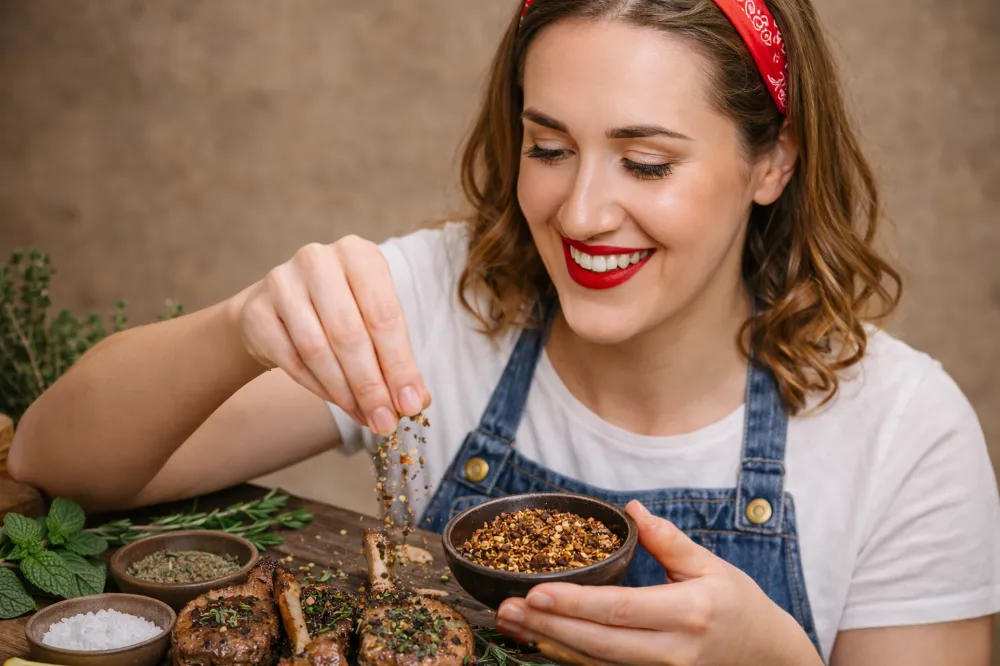
A lamb rub doesn’t need sugar, smoke flavor, or ten ingredients. In fact, lamb rubs work best when they’re restrained.
My baseline lamb rub usually includes:
- Salt
- Black pepper
- One herb or spice
That’s it. Lamb fat carries flavor incredibly well. Overloading a rub just masks that advantage.
Seasoning Lamb
Seasoning lamb is more about timing than quantity. Lamb lollipops don’t need hours in the fridge soaking up flavor. They need clean surfaces, even seasoning, and high heat.
I usually season lamb:
- 20–45 minutes before cooking
- At room temperature
- With dry surfaces for better browning
This approach gives you a crust without drying the meat out.
Dry Rub
A dry rub for lamb lollipops should disappear into the meat as it cooks, not sit on top like a crusty coating.
Good dry rub characteristics:
- Fine texture
- Low moisture
- No sugar
- Minimal ingredients
Dry rubs shine on grilled lamb and hot cast-iron sears where moisture is the enemy of browning.
Rosemary Lamb
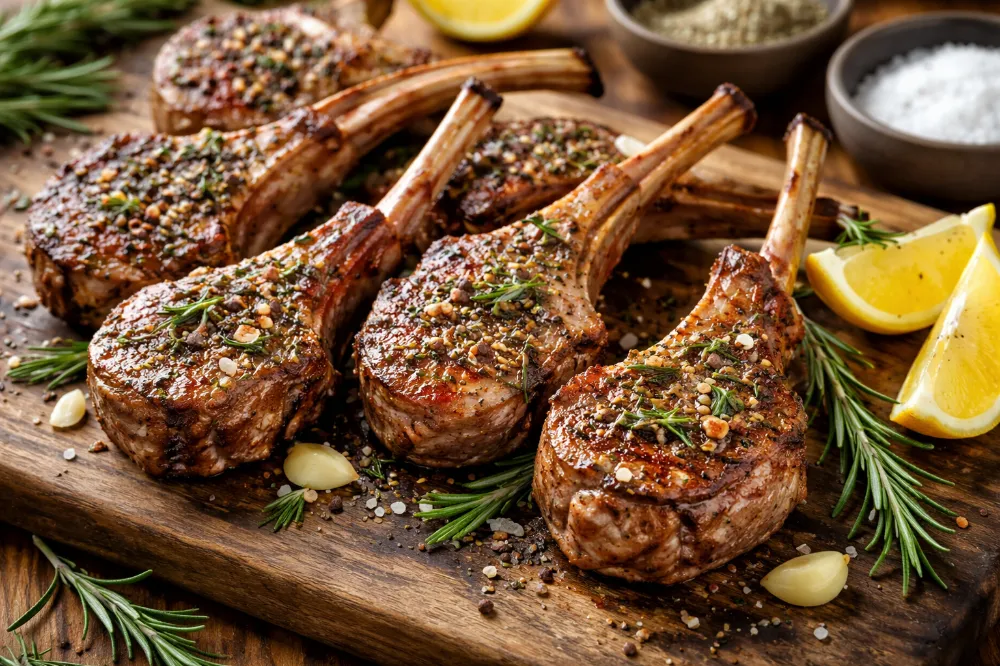
Rosemary lamb is classic because it works. Rosemary’s piney, slightly bitter notes match lamb’s richness almost perfectly.
I prefer fresh rosemary, finely chopped, combined with:
- Garlic
- Salt
- Black pepper
- Olive oil
This combination is simple, recognizable, and hard to mess up. It’s my default when cooking for people who “don’t usually like lamb.”
Cumin Lamb
Cumin lamb doesn’t get enough attention outside Middle Eastern cooking, but it should. Cumin brings warmth without heat and adds depth that makes lamb taste fuller.
Used sparingly, cumin:
- Enhances savory notes
- Plays well with garlic
- Works beautifully on grilled lamb
Too much cumin can dominate, so I treat it like a background note, not the main event.
Grilled Lamb
Grilled lamb is where seasoning choices really matter. High heat exposes every mistake.
For grilled lamb lollipops, I focus on:
- Salt-forward seasoning
- Dry herbs over fresh (they burn slower)
- Minimal oil
I season closer to cooking time and let the grill do the work. If the seasoning is right, you won’t need sauce.
Lemon Herb
Lemon herb seasoning works best when lemon is used correctly. Lemon zest adds aroma without damaging texture. Lemon juice belongs at the end.
A good lemon herb blend includes:
- Lemon zest
- Oregano or thyme
- Garlic
- Olive oil
This style of seasoning brightens lamb without masking it and is perfect when serving with vegetables or yogurt-based sauces.
Seasoning Meat
Seasoning meat isn’t about covering every inch with flavor. It’s about even distribution and restraint.
With lamb, I always:
- Pat the meat dry
- Season lightly but evenly
- Avoid stacking flavors
You can always add more after cooking. You can’t take it away.
Umami
Umami is the quiet secret behind great lamb seasoning. You don’t need soy sauce or fish sauce to get it, but small additions help.
Subtle umami boosters for lamb:
- Dijon mustard
- Anchovy paste (tiny amount)
- Butter basting
These deepen flavor without making lamb taste “different.”
Fat Rendering
Fat rendering is where lamb flavor really develops. Seasoning that interferes with rendering like heavy sugar or wet marinades kills texture.
To support proper fat rendering:
- Use dry seasoning
- Cook hot and fast
- Rest the meat after cooking
Rendered fat equals juiciness, not greasiness.
Lamb Chop Seasoning
Lamb chop seasoning should adapt to thickness and cooking method. Thicker chops can handle slightly bolder seasoning. Lollipops need cleaner flavors.
My go-to lamb chop seasoning:
- Salt
- Pepper
- One herb or spice
Anything more is optional, not required.
Seasoning For Lamb Chops
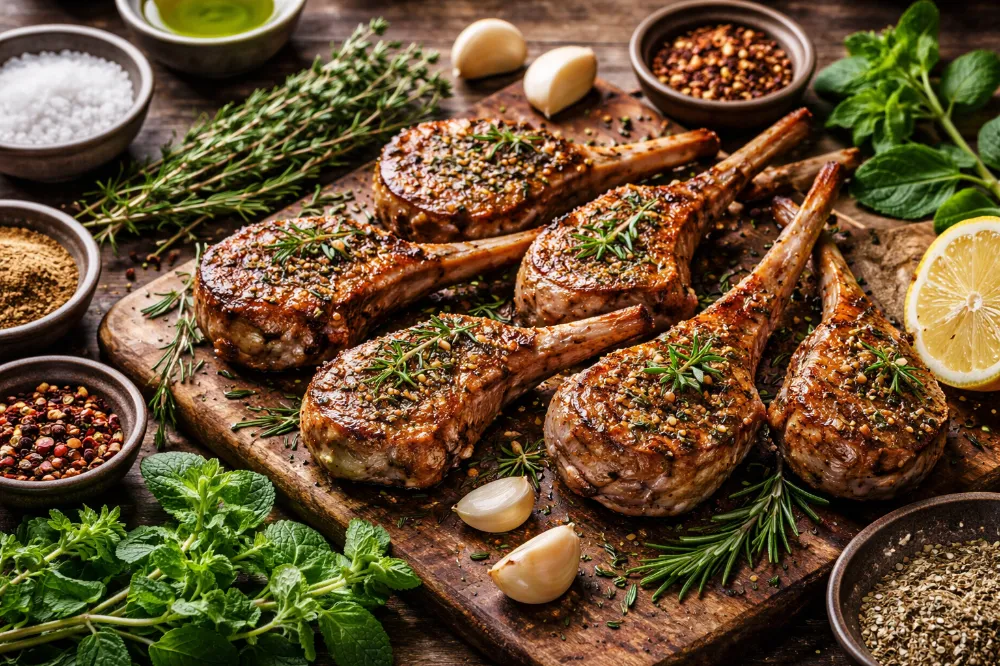
Seasoning for lamb chops works best when it respects the cut. Rib chops don’t need tenderizing. Shoulder chops might.
For rib chops and lollipops:
- Short seasoning time
- Dry rubs
- Minimal acid
This keeps the texture intact and the flavor focused.
How To Season Lamb
People often ask how to season lamb “properly.” My answer is always the same: less than you think.
Proper lamb seasoning means:
- Letting lamb lead
- Supporting with herbs and spice
- Finishing with freshness
When lamb tastes clean and rich instead of busy, you did it right.
Seasoning Meat (Again, On Purpose)
I’m repeating this because it matters. Seasoning meat well isn’t about recipes. It’s about awareness.
Taste your seasoning before it hits the lamb. Think about heat. Think about fat. That mindset alone puts you ahead of most recipes online.
Final Thoughts
If you want to compete with the best lamb articles out there, the answer isn’t more ingredients. It’s better judgment. The best seasoning combinations for lamb lollipops come from understanding how lamb behaves under heat, how fat carries flavor, and how restraint creates clarity.
Lamb seasoning should feel confident, not crowded. Whether you’re cooking lamb chops on the grill or pan-searing lamb lollipops in a cast-iron skillet, trust the meat. Season with intention. Finish clean.
That’s how lamb becomes unforgettable.
FAQs
The best seasoning combinations for lamb lollipops use simple herbs and warm spices like rosemary, garlic, cumin, salt, and black pepper to enhance the meat without overpowering it.
Use a light, even coating of seasoning. Lamb has a strong natural flavor, so too much seasoning can mask the meat instead of enhancing it.
Yes, a dry rub usually works better for lamb lollipops. It helps create a good crust while allowing proper fat rendering during cooking.
Rosemary, thyme, oregano, and mint pair exceptionally well with lamb seasoning. These herbs complement lamb’s richness without competing with its flavor.
Season lamb lollipops about 20 to 45 minutes before cooking. This allows the seasoning to penetrate slightly without drawing out too much moisture.
Avoid overly sweet, smoky, or heavily spicy blends. These can overpower lamb’s natural taste and burn easily during high-heat cooking.
Cook lamb lollipops hot and fast, then let them rest for a few minutes. Resting allows juices to redistribute and keeps the meat tender.