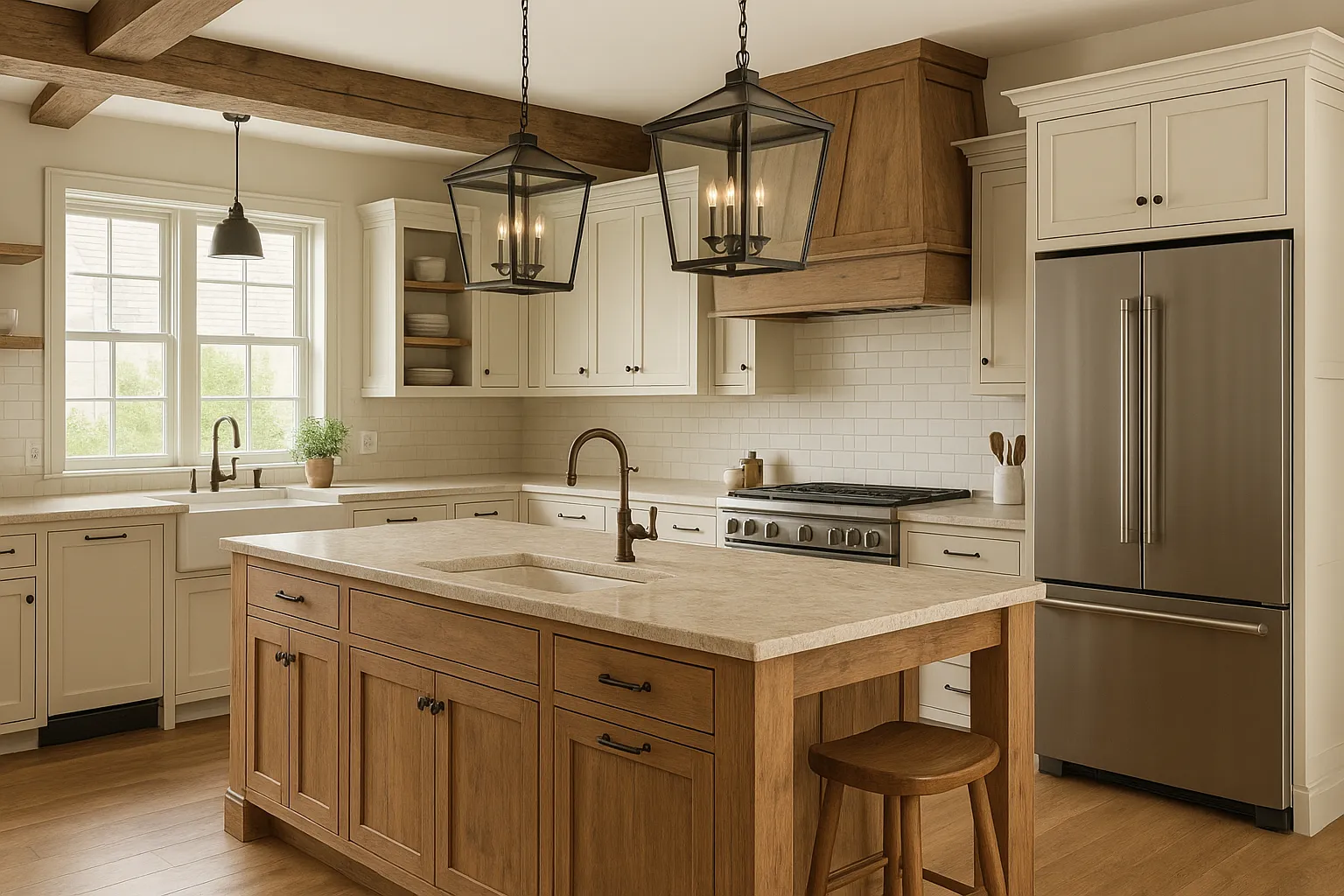
There’s something magnetic about a farm-style kitchen. It feels grounded. Warm. Human. It’s the kind of space where you can breathe easier, move slower, and let the day settle. Yet when 5-star interior designers step into the farmhouse world, something magical happens. The look becomes elevated. Intentional. Tailored. It’s still cozy, yes—but suddenly sophisticated enough to anchor a high-end home.
Today, we’re diving deep into what makes a designer-level farmhouse kitchen work. And more importantly, how you can create this look yourself with both confidence and clarity. This isn’t about copying Pinterest boards. This is about understanding the design principles top-tier interior designers use when crafting farm-style kitchens that feel both luxurious and authentic.
Let’s get into it.
What Makes a Farm-Style Kitchen Timeless?
Farm-style kitchens have never really gone out of style, and the reason is surprisingly simple: they speak to human instincts. We want warmth. We want familiarity. And we want spaces that feel lived-in—not staged.
Farmhouse design taps into that. It pairs utility with storytelling. It’s honest. Every material looks like it belongs. Every finish seems chosen for comfort, not trends. And yet, when high-end designers reinvent the style, the result becomes impeccably refined.
A timeless farmhouse kitchen almost always includes:
- Practical layouts
- Natural textures
- Warm color palettes
- Functional simplicity
- Subtle charm instead of themed décor
People love these kitchens because they feel like home—even if you’re standing in a $2.5M house that has never seen an actual farm.
How 5-Star Designers Reinterpret Rustic Style
Top interior designers treat farmhouse kitchens the way a great tailor treats a classic suit. They preserve the silhouette, but the details? They refine them to perfection.
Luxury designers typically rely on:
- Craftsmanship over shortcuts
- Authentic materials that age gracefully
- Scaled proportions that feel balanced
- A curated palette rather than trendy color splashes
And they do something else extremely well: they avoid clichés. No random barn signs. No mass-produced “Farm Fresh Eggs” artwork. And no fake-distressed cabinets that chip the first time you wipe them down.
Instead, they design with intention.
They use reclaimed wood beams because the grain adds dimension—not because it’s trendy. They pair marble with metal accents because the contrast feels timeless—not because a blog said to mix materials. Every decision is rooted in purpose.
And that’s exactly the approach you’ll learn to replicate in this article.
Signature Elements of a Luxury Farm-Style Kitchen
Let’s break down the features that give designer-level farmhouse kitchens their depth and character.
1. Natural Materials with Elevated Finishes
Farmhouse design thrives on authenticity. But high-end designers elevate those materials instead of leaving them raw or overly rustic.
Examples that work beautifully:
- Reclaimed oak beams with a matte clear coat
- Lightly brushed marble instead of heavily veined slabs
- Wide-plank wood floors in warm neutral stains
- Soapstone counters with softened edges
Designers aim for calm textural moments—not heavy-handed rusticity. The result is a kitchen that feels warm but tailored.
2. Cabinetry That Tells a Story
Shaker cabinets are a farmhouse favorite, but luxury designers rarely go with the basic version. They refine the details.
Designer-approved cabinet upgrades:
- Inset shaker doors
- Welded metal accent shelves
- Soft-close and hidden hinges
- Handcrafted hardware with patina finishes
- Mixed cabinet finishes: one color for uppers, another for the island
When done right, the cabinetry becomes one of the room’s strongest visual anchors.
3. Farmhouse Sinks, Elevated
The classic apron-front sink is practically a symbol of farmhouse kitchens. But designers reimagine it with more luxurious material choices.
Popular high-end sink variations:
| Material | Why Designers Love It |
| Fireclay | Durable, timeless, easy to maintain |
| Stone (marble, soapstone) | Adds dramatic character |
| Stainless with brushed finish | Blends rustic and modern |
| Hammered copper | Warm, rich patina over time |
The result is a familiar feature made strikingly elegant.
4. Appliances That Disappear Into the Background
In a luxury farmhouse kitchen, appliances aren’t meant to be the stars. Designers hide them in plain sight.
You’ll see:
- Panel-ready refrigerators
- Under-counter microwaves
- Concealed range hoods
- Flush induction cooktops
- Seamless dishwasher panels
The point? Let the textures and materials shine instead.
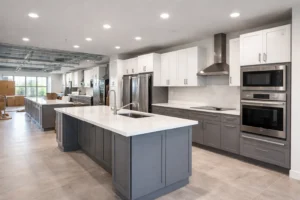
5. Inviting Kitchen Islands Designed for Gathering
The kitchen island is the heartbeat of any farmhouse kitchen. Designers take that idea and give it structure, elegance, and functional muscle.
Expect:
- Furniture-style island bases
- Thick-edge stone tops
- Subtle corbels
- Integrated storage
- Seating for groups
- Waterfall edges (when appropriate)
Luxury designers consistently strike a balance between rustic warmth and sculptural presence.
Designer-Inspired Color Palettes
Color might seem simple, but in a farmhouse kitchen, it’s everything. Designers use color to create mood, depth, and a sense of calm.
1. Classic Farmhouse Neutrals
These keep the space grounded and open.
- Soft white
- Cream
- Mushroom beige
- Warm gray
- Linen tones
Designers avoid stark whites because they feel cold. Instead, they choose colors that feel like they were pulled from natural light.
2. Nature-Inspired Earthy Tones
When designers want more personality, they go for earth tones rooted in nature.
Expect:
- Olive
- Sage
- Clay
- Dusty blue
- Wheat
- Muted terracotta
These tones add warmth while still maintaining elegance.
3. Dramatic Darks for Contrast
Used sparingly, dark tones add weight and modernity.
- Charcoal
- Matte black
- Deep navy
- Espresso brown
Luxury designers like contrast because it prevents the kitchen from looking too “cute.”
Lighting Choices That Define the Space
Lighting is where designers separate amateurs from experts. A farm-style kitchen with poor lighting looks flat, no matter how beautiful the materials are.
1. Oversized Pendants
Designers love large-scale pendants because they create a focal point without overpowering the room. Think:
- Seeded glass
- Antiqued brass
- Wrought iron
- Matte black metal
The rule of thumb: go one size larger than you think. Oversized looks intentional.
2. Layered Lighting Approach
The pros always use three types:
- Ambient: overall illumination
- Task: specific work areas
- Accent: visual interest and depth
This prevents shadows, glare, and flatness.
3. Natural Light as a Feature
Luxury farmhouse kitchens often include:
- Large, unhindered windows
- Minimal window coverings
- Light filtered through linen or sheer shades
- Views of trees, gardens, or courtyards
Natural light is considered part of the design—not an afterthought.
Textures and Finishes That Boost Luxury
Texture is where farmhouse design truly shines. Without it, the space feels too modern. With too much, the kitchen becomes rustic overload. Designers master the balance.
1. Mixed Metals
The stainless-everywhere look is gone. Designers mix metals to create subtle visual variation.
Balanced metal pairings:
- Brass + black
- Iron + brushed nickel
- Bronze + stainless
- Chrome + copper (rare but interesting)
2. Layered Surface Textures
Your surfaces should speak different “languages” but belong to the same family.
- Rough wood + smooth stone
- Linen curtains + metal hardware
- Woven baskets + marble shelving
- Matte paint + glossy tile
When done correctly, everything feels cohesive but dimensional.
3. Artisan-Made Accessories
Luxury farmhouse kitchens feel curated, not store-bought.
Think:
- Hand-thrown pottery
- Woven trays
- Herb bundles
- Aged cutting boards
- Real cookware that actually gets used
Good designers avoid mass-produced “farm décor” at all costs.
Luxury Farmhouse Layout Principles
Great layout isn’t glamorous. But it’s what makes a kitchen actually work.
1. Open Flow Without Losing Coziness
Designers keep the layout open but intentional.
They use:
- Soft transitions
- Defined zones
- Visual anchors like beams or islands
- Warm materials
The space remains breathable but never empty.
2. Updated Work Zones
Forget the traditional work triangle. Designers think in zones:
- Prep zone
- Cooking zone
- Baking zone
- Cleaning zone
- Storage zone
This layout increases efficiency, especially in larger kitchens.
3. Smart Rustic Storage
Designers know storage can either elevate or cheapen the entire look.
High-end solutions include:
- Built-in pantry walls
- Sliding barn-style pantry doors
- Cabinetry-inspired storage like tall hutches
- Spice drawers
- Integrated trash pullouts
Function supports the aesthetic—not the other way around.
Modern Convenience Hidden in Rustic Charm
You don’t need to choose between charm and convenience. Designers simply hide the modern parts.
Examples:
- Charging drawers
- Touchless faucets
- Smart ovens disguised behind paneling
- Under-cabinet lighting with dimmers
- Soft-close everything
Farmhouse style doesn’t mean old-fashioned.
Designer Styling Secrets
Styling can make or break a farm-style kitchen. Here’s how designers keep the look effortless—not cluttered.
1. The “Collected Over Time” Look
Instead of buying matching sets, build a mix:
- Vintage pitchers
- Old-world bowls
- Copper cookware
- Salt-glazed crockery
It gives the space soul without feeling staged.
2. Minimalist but Meaningful Countertops
Designers avoid crowding counters. Instead, they use:
- One sculptural vase
- One wooden board
- One pottery bowl
- One useful item like a mortar and pestle
Purposeful. Simple. Elevated.
3. Layered Open Shelving
This is where restraint matters.
A designer shelf usually includes:
- One stack of plates
- One sculptural item
- One natural element
- One antique piece
That’s it. No clutter. Just intention.
Real-World Designer Examples (Conceptual)
Here are four style directions designers often draw from:
1. Rustic European Farmhouse
- Soft putty-colored cabinets
- Aged brass hardware
- Stone sink
- Exposed beams
- Hand-painted tile backsplash
2. Coastal Farmhouse
- White oak cabinetry
- Polished nickel hardware
- Blue-gray island
- Breezy linen curtains
- Light stone counters
3. Modern Black-and-White Farmhouse
- Matte black accents
- Crisp white cabinets
- Minimalist metal lighting
- Warm wood floors
- Architectural range hood
4. Mountain Lodge Farmhouse
- Deep walnut cabinetry
- Stone accents
- Hammered metal sinks
- Oversized metal pendants
- Warm orange and saddle tones
Each interpretation respects farmhouse roots while elevating them with designer-level detail.
Budget-Friendly Ways to Make Your Kitchen Look Designer-Level
You don’t need a six-figure remodel. You need thoughtful upgrades.
Smart budget-friendly swaps:
| High-End Feature | Affordable Alternative |
| Marble countertops | Quartz with marble pattern |
| Custom vent hood | Wood-clad hood DIY kit |
| Reclaimed beams | Faux beams with real wood veneer |
| Custom cabinets | Repaint + new hardware |
| Designer pendants | Oversized budget-friendly replicas |
Small Upgrades With Big Impact
- Replace small knobs with larger pulls
- Install warm under-cabinet lighting
- Add a butcher-block insert to your island
- Repaint cabinets in a muted earthy tone
- Swap standard bar stools for woven or wood options
The goal is not to mimic luxury—it’s to borrow its principles.
Common Mistakes and How Designers Avoid Them
Many farmhouse kitchens fall flat because of a few predictable missteps.
1. Overusing Distressed Finishes
Too much makes the kitchen look artificial. Designers use real patina—not fake aging.
2. Mixing Too Many Wood Tones
Stick to two. Three at most. Otherwise the room loses cohesion.
3. Cluttered Shelving
If you can’t style shelves with restraint, close the cabinets. Truly.
4. Poor Lighting Layers
A single ceiling light will not cut it. Add pendants, sconces, and under-cabinet lighting.
5. Using Trendy Farmhouse Décor
Skip the “Live Laugh Love” signs. Always.
Final Thoughts
A farm-style kitchen designed by a top-tier interior designer doesn’t shout. It whispers. It tells a story through materials, textures, and proportion. It’s warm, calm, sophisticated, and deeply functional.
Luxury farmhouse design isn’t about replicating old barns. It’s about capturing the feeling those spaces give us—comfort, connection, and a slower pace—while elevating it with craftsmanship and intention.
If you build your kitchen with those principles in mind, you’ll end up with something timeless. Something inviting. Something elegant.
And something that feels like home.
FAQs
A luxury farmhouse kitchen blends rustic warmth with refined materials, clean lines, and designer-level craftsmanship. It feels both comfortable and elevated.
Yes — they remain popular because they offer timeless comfort and a human-centered design approach that never feels dated.
Soft neutrals, earthy greens, warm grays, and muted blues create a calm, high-end farmhouse aesthetic that pairs well with natural materials.
They use quality materials, oversized lighting, mixed metals, and tailored cabinetry details that give a rustic style a polished finish.
Absolutely — use light colors, simple cabinetry, open shelves, and warm textures to create a spacious, inviting feel.
Swap dated hardware for patina-finished pulls, add warm lighting, or incorporate natural wood elements like cutting boards or open shelving.
They use curated, intentional styling on open shelves and keep counters minimal, letting key materials and textures speak for themselves.