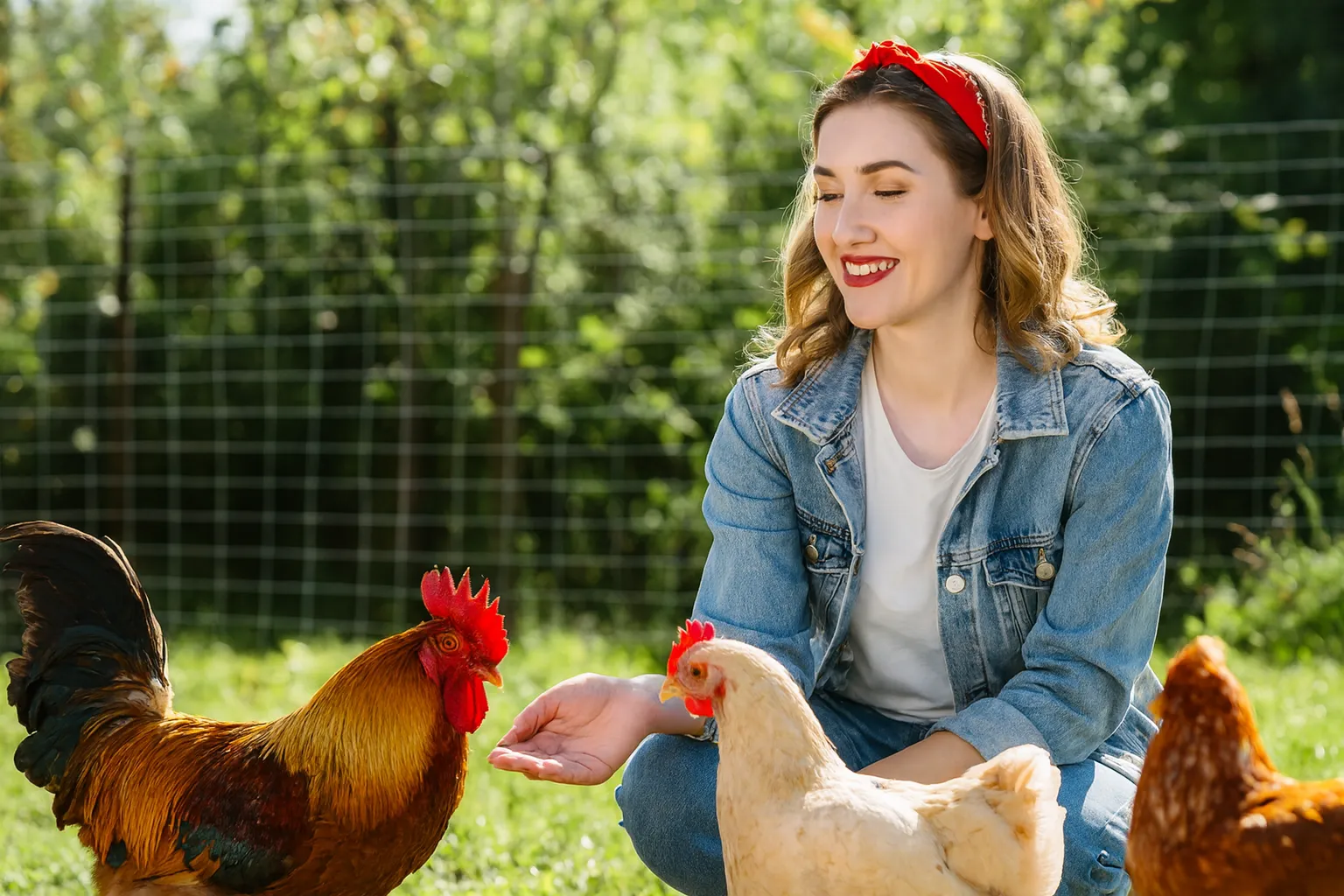
When I first started raising chickens, I thought I had it all figured out. Buy some chicks, feed them well, and enjoy a basket of fresh eggs every morning. Simple, right? Well, not exactly. Like many new chicken keepers, I quickly learned that sometimes those fluffy little “pullets” from the feed store grow up into something quite different. That’s how I got my first crash course in rooster vs hen, and let me tell you, it was an eye-opener.
It turns out spotting the difference between a rooster and a hen isn’t always as easy as it seems. Those little chicks don’t come with name tags, and before long, you might hear a surprise crow coming from the coop. In this post, I want to share my experiences with roosters—both the challenges and the unexpected benefits—and hopefully give you a few ideas if you’re staring down your own feathered surprise.
Aggressive Rooster: When the Coop Turns into a Battlefield
Ah yes, the aggressive rooster—the one who makes you dread going into the chicken run. I’ve had a few, and if you’ve raised birds long enough, you probably have too. They start out fine, but then one day they decide you’re the enemy. Suddenly, gathering eggs feels like running through a gauntlet.
The first time it happened to me, I couldn’t believe how bold my rooster got. He would charge, wings flapping, spurs ready, as if I was a hawk swooping in for his hens. At first, I laughed it off, but after a few scratches and some shredded pants, I realized I had a problem.
Here’s the thing: not every rooster is aggressive, but some just can’t help it. They’re wired to defend their flock. If you find yourself with one of these tough guys, you have choices—train him with calm consistency, keep a barrier handy, or decide whether his aggression is too much for your setup. For me, I gave a couple of them second chances, but I’ve also had to let go of a few that just wouldn’t quit.
Easter Egger Rooster: The Surprise Showstopper
Not all roosters are troublemakers. In fact, some are downright stunning. My favorite of all time was an Easter Egger rooster. If you’ve never seen one, imagine a bird dressed in every color of the rainbow, with a beard and muffs that make him look like he’s ready for a fancy dinner party.
My Easter Egger strutted around the yard like he owned the place, but unlike some of the more hot-headed roosters I’ve had, he was gentle with the hens and respectful of me. The best part? His daughters laid those famous blue-green eggs that made my egg basket look like an Easter display year-round.
Of course, not all Easter Egger roosters are perfect angels, but if you happen to get one, consider yourself lucky. They add both beauty and function to a flock.
How to Get Rid of a Rooster Without Feeling Guilty
Now, let’s talk about the tough part: how to get rid of a rooster. It’s not the most fun topic, but it’s one that nearly every chicken keeper faces at some point. You start with six “hens,” and by summer, two of them are crowing before sunrise. What do you do?
Here are the routes I’ve taken over the years:
- Rehoming: Ask around locally, check with farm friends, or post in online chicken groups. Sometimes you’ll find someone who needs a new rooster for their flock.
- Selling or giving away: Feed stores and farm swap pages often have people looking for breeding roosters.
- Processing for meat: This is the old-fashioned way, and while it’s not for everyone, roosters make excellent broth and flavorful soup.
- Contacting sanctuaries: Some rescues take in unwanted roosters, though spots are limited.
What you should never do is dump a rooster in the wild. They’re domestic birds and won’t survive long against predators. It’s better to make a plan you feel good about, even if it’s not easy.
What to Do With a Rooster If You Keep Him
Of course, not all roosters have to go. I’ve learned that sometimes, keeping a rooster brings unexpected benefits. So, if you’re wondering what to do with a rooster when he shows up in your flock, here are some ideas:
- Let him protect the hens: A good rooster is like a bodyguard. He’ll warn of hawks, chase away cats, and keep the girls on alert.
- Enjoy the flock dynamics: Roosters bring order. The hens look to him for leadership, and he keeps peace among them.
- Try hatching chicks: If you’ve ever wanted baby chicks, you’ll need a rooster. It’s as simple as that.
- Use him for broth: When he gets older, don’t underestimate the flavor of rooster meat for soups and stews.
I’ve had roosters that drove me crazy, and I’ve had roosters that I wouldn’t trade for anything. The key is figuring out which category yours falls into.
Rooster Protecting Hens: The Hero of the Flock
One of my most memorable experiences was watching a rooster protecting hens from a hawk. I looked out into the yard one afternoon and saw my rooster standing tall, wings outstretched, while the hens ran for cover. He let out a warning call, and when that hawk swooped, he went straight at it. The hawk eventually gave up, and the hens were safe.
That moment changed the way I thought about roosters. Sure, they can be noisy and sometimes mean, but when they do their job well, they’re incredible protectors. A rooster like that earns his keep a hundred times over.
Finding Balance Between Rooster vs Hen
At the end of the day, raising chickens is always a balancing act. Too many roosters, and your hens will be stressed. No rooster at all, and your flock might feel more vulnerable. One rooster for every 8–10 hens is usually just about right.
So if you find yourself caught in the rooster vs hen dilemma, take heart. It’s not just you—every chicken keeper wrestles with it sooner or later. Some roosters are troublemakers, some are gorgeous companions, and some are downright heroes.
The trick is figuring out what role they’ll play in your flock and making choices that fit your farm, your family, and your comfort level.
Final Thoughts
Raising chickens isn’t just about eggs—it’s about the stories you collect along the way. From the aggressive rooster who kept me on my toes, to the stunning Easter Egger rooster who filled my basket with blue-green treasures, to the day I had to figure out how to get rid of a rooster I couldn’t keep—it’s all part of the journey.
If you’ve ever wondered what to do with a rooster, or been amazed at a rooster protecting hens, you know exactly what I mean. Each rooster has his own personality, and every flock keeper has to decide what works best.
In the end, the rooster vs hen debate isn’t really about winners or losers—it’s about finding balance. And when you do, your flock will thank you for it.
FAQ’s
Roosters are male chickens and usually have larger combs, longer tail feathers, and they crow. Hens are females and lay eggs, with generally smaller and rounder features.
No, hens lay eggs without a rooster. However, those eggs won’t be fertile unless a rooster is present.
Stay calm and avoid chasing or hitting him, which can make things worse. Sometimes rehoming or separating him is the best option if aggression continues.
Easter Egger roosters often have colorful, unique plumage and can pass down the blue or green egg-laying gene. They’re also known for their fluffy muffs and beards.
Rehome through local networks, farm groups, or sanctuaries. If that’s not possible, processing for meat is a traditional and practical choice.
He can protect your flock, establish order, or help if you want to hatch chicks. Older roosters can also be used for rich soup or broth.
Yes, many roosters sound alarms and even confront predators like hawks or cats. While they can’t stop every threat, they often give hens time to escape.