Why paying attention to your dryer matters
Clermont dryer repair often becomes a priority only when the machine stops working. Most people don’t think about their dryer until it starts overheating, shaking, or refusing to dry anything at all. I learned this the hard way when my own dryer in a Clermont rental unit suddenly shut off mid-cycle after months of unusual rattling noises. At first, I assumed it was just old age catching up, but the technician explained that the motor had been strained for weeks because lint buildup reduced airflow. That small issue eventually spiraled into a major repair. If I had scheduled maintenance earlier, I could have avoided that surprise expense entirely. Here’s a quick resource if you ever need help—Clermont dryer repair—but let’s dive deeper into how timely care saves money long-term.
How small dryer issues turn into bigger headaches
A dryer rarely fails without sending warning signs. One common example is clothes taking longer to dry. Most people think it’s because the load was too big, but slow drying usually points to restricted ventilation or a failing heating element. When I managed a small rental building a few years ago, one tenant complained that her dryer needed two cycles for everything. She ignored the problem for months. By the time I checked it, the vent line was so clogged that the machine overheated repeatedly. The thermal fuse eventually blew, and replacing it cost more than keeping the vent clean would have. These small oversights become expensive fast.
The overlooked cost of wasted energy
A dryer that struggles to push out heat or rotate smoothly uses more electricity. That means your utility bill quietly increases long before the machine shows visible damage. During a mild Florida summer, I remember questioning why my energy bill jumped nearly $40 in one month. The culprit wasn’t the AC—it was the dryer cycling twice as long because the blower wheel was wobbling. Fixing it took less than an hour, and the next bill went back to normal. A machine in proper condition works efficiently, using less energy and reducing unnecessary wear.
Signs your dryer is begging for attention
Most breakdowns start with subtle symptoms. Here are the most common:
- Clothes still damp after a full cycle
- Burning smell coming from the drum
- Loud thumping or scraping noise
- Dryer heating up too quickly
- Excessive lint around the door or on clothes
Each symptom has its own backstory. For example, a scraping sound often comes from a worn drum glide. I once had a dryer that scraped so loudly it sounded like metal grinding on metal. By the time I opened it, the drum had already carved a groove into the frame, doubling the repair cost. Catching these noises early prevents situations like that.
Energy-efficient dryers still need maintenance
Newer dryers promise efficiency, but they still depend on clean vents, functioning sensors, and healthy drum components. A friend of mine in Clermont bought a high-efficiency dryer thinking it would cut energy use in half. It did for the first few months—until moisture sensors started failing because detergent residue coated them. Instead of detecting dryness, the sensors assumed the load was still wet. Every cycle ran too long, wasting energy. Once the sensors were cleaned and recalibrated, the dryer returned to its intended efficiency. Even premium machines are only as good as the maintenance behind them.
Why airflow matters more than people think
Dryers need consistent airflow to regulate temperature. Without it, parts overheat and circuits shut down. One homeowner told me his dryer turned off randomly every 10 minutes. He assumed the motor was dying. When I checked the back, the vent line was crushed behind the machine. Warm air had nowhere to go, so the safety thermostat kept triggering. Simply adjusting the vent and clearing the lint solved the issue. Airflow problems are inexpensive to fix but can cause expensive failures when ignored.
When repairs beat replacement
Most people assume that when a dryer gets older, replacement is the smarter choice. That’s not always true. Dryers are built to run for years with routine care. I once considered replacing a 12-year-old dryer that struggled to heat. A repair technician recommended replacing a $28 thermostat instead. That single fix restored full performance. A repair cost a fraction of buying a new model and extended the dryer’s life by several years. Knowing when to repair saves money and reduces unnecessary waste.
Preventive maintenance that actually works
Dryer care isn’t complicated. Small habits make a huge difference. Cleaning the lint trap after every load prevents air blockage. Vacuuming behind the dryer reduces dust buildup. Inspecting the vent every few months ensures steady airflow. Rotating the drum by hand occasionally reveals early resistance or unusual sounds. These steps take minutes and can prevent costly failures. In busy households, scheduling a yearly checkup keeps everything running smoothly.
What happens during a professional service call
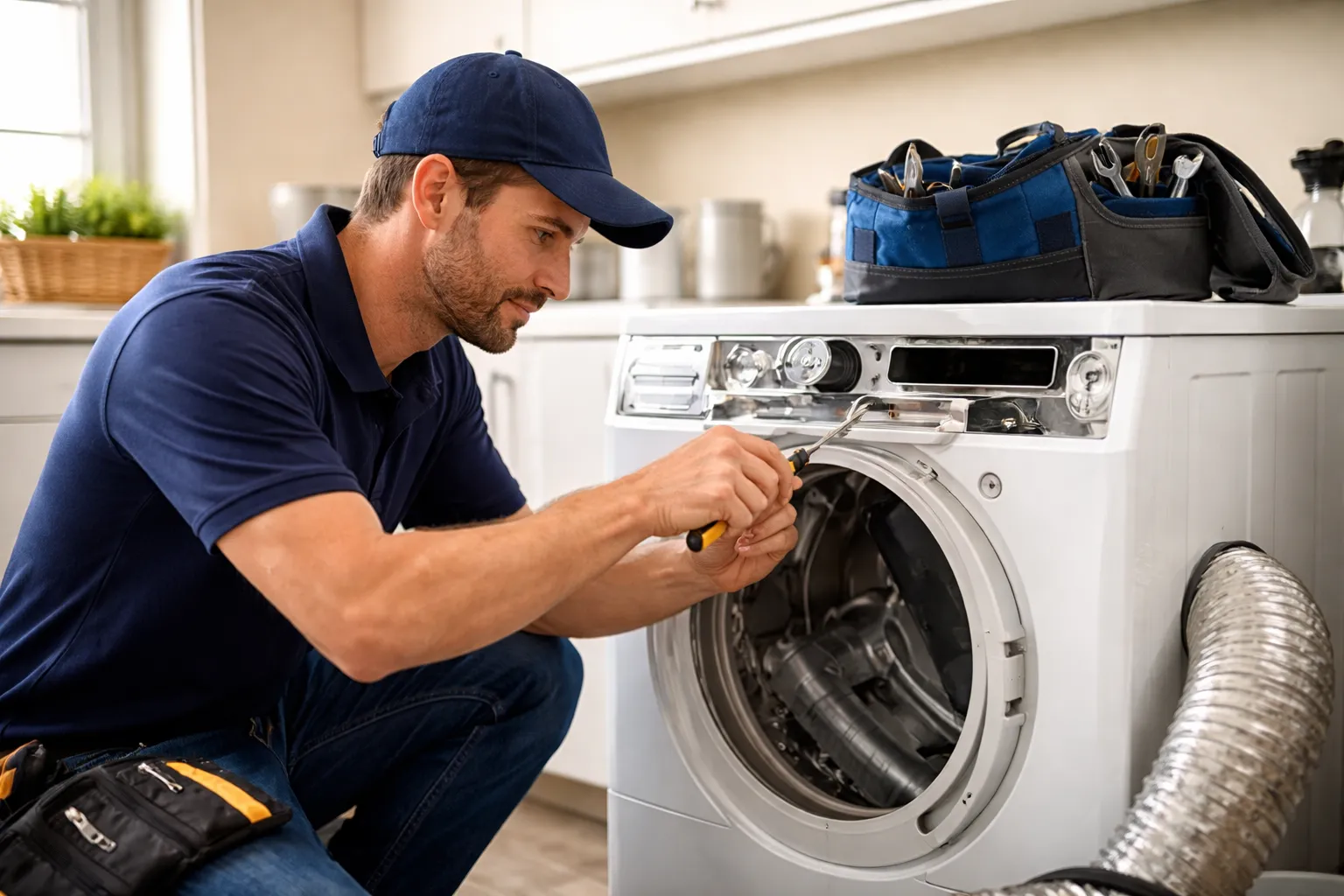
Most people don’t know what technicians check during an appointment. A standard inspection includes testing the heating element, looking at thermostats, checking the belt, inspecting drum rollers, clearing the vent line, and verifying electrical connections. In my experience, the most valuable part is catching wear before it becomes a breakdown. Technicians often spot early signs that homeowners miss: tiny cracks in belts, wobbling pulleys, sensors that respond too slowly, or vents starting to compress. These details determine whether your dryer wastes energy or runs efficiently.
Real stories: quick fixes that saved major repairs
A neighbor once called me because his dryer made a loud banging sound. He worried the drum was broken. When we opened the front panel, we found a pen stuck in the drum baffle. The fix took five minutes. Another friend complained that her dryer smelled like burning. A quick inspection revealed lint stuck near the heating element. Cleaning it stopped the smell and eliminated a fire hazard. Small problems often look worse than they are, and fast intervention keeps households safe.
Why local service makes everything easier
A technician familiar with the area understands common issues caused by humidity, seasonal use, and the age of local homes. Homes in Clermont often have laundry areas in warm garages or tight utility closets, which amplify heat and restrict ventilation. A local expert knows to check these areas first. They also travel faster, offer quicker follow-ups, and understand regional building standards. Choosing someone nearby ensures problems get solved efficiently without long wait times.
Final thoughts: What homeowners can learn
Dryers aren’t complicated, but they need attention. Simple habits prevent overheating, wasted energy, and unexpected failures. Real-life experience shows that most major repairs start with small symptoms that homeowners overlook. Listening to your dryer, checking airflow, and scheduling periodic maintenance keeps it running efficiently. With the right care, a dryer lasts longer, uses less electricity, and avoids sudden breakdowns.
FAQs
As parts wear down or airflow becomes restricted, the dryer runs longer to do the same job, increasing electricity use.
Timely repairs fix small issues like airflow problems or worn components before they strain the motor or heating system.
Lint buildup in the vent or inside the dryer restricts airflow, causing heat to build up faster than it can escape.
Slow drying usually points to clogged vents, weak heating elements, or failing moisture sensors.
Yes, unusual noises often signal worn drum parts that can damage the frame if ignored.
Absolutely—clean vents, working sensors, and healthy drum components are still required for efficiency.
Most households benefit from vent inspections every few months and full cleanings at least once a year.
In many cases, replacing a small part costs far less than buying a new dryer and can extend its life for years.
Technicians inspect heating components, belts, sensors, vents, and electrical connections to spot early wear.
Local professionals understand area-specific issues like humidity and tight laundry spaces, leading to faster, more accurate fixes.