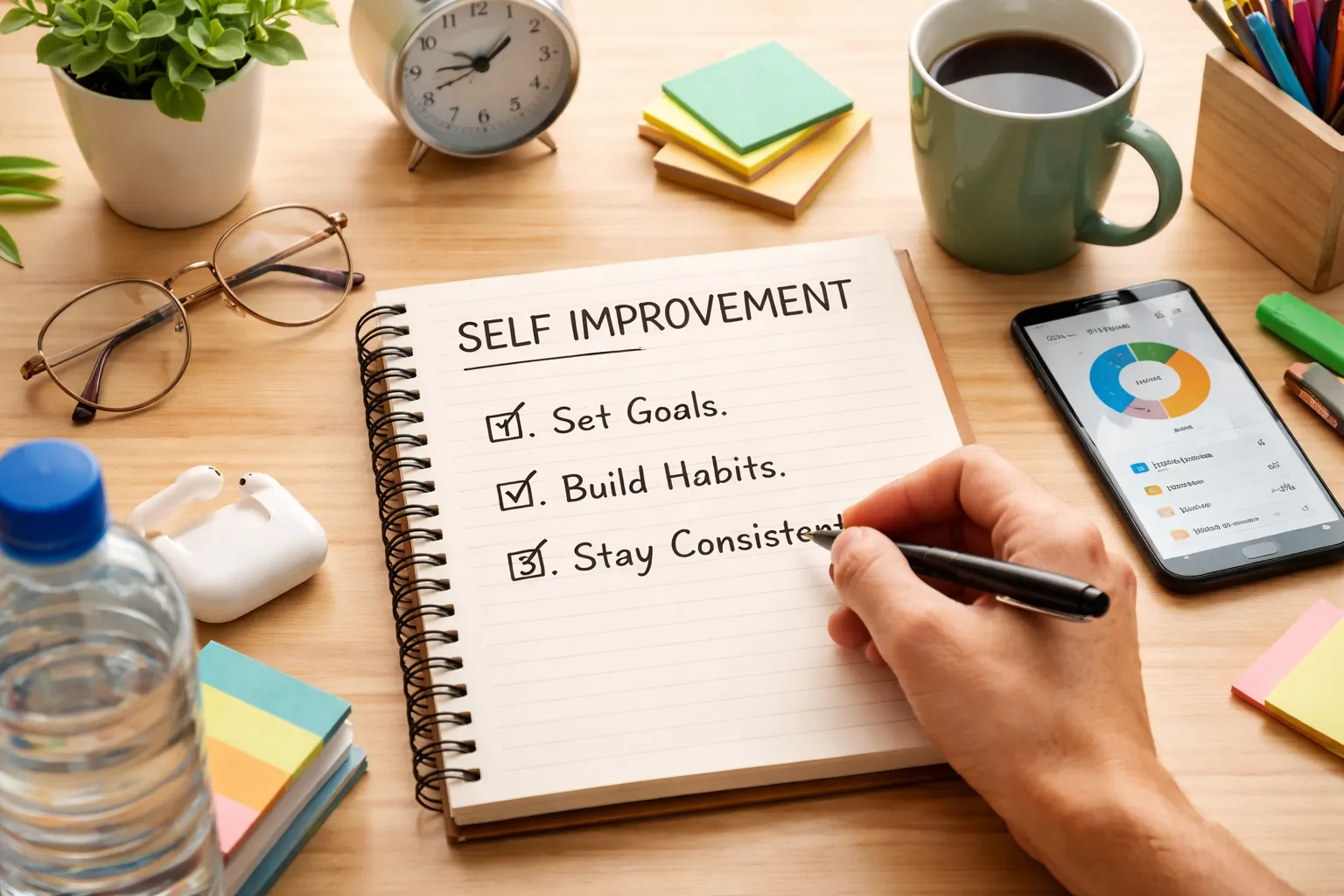
Self-improvement isn’t about becoming a new person overnight. It’s about becoming a more capable version of the person you already are. The most effective Self-Improvement Tips don’t rely on hype, extreme routines, or unrealistic promises. They focus on clarity, consistency, and small actions that stack up over time. I’ve learned—sometimes the hard way—that growth happens when intention meets structure. Not motivation. Not willpower. Structure.
Let’s talk about how to build that structure in a way that fits real life. Busy days. Competing priorities. Limited energy. The goal isn’t perfection. It’s progress you can sustain.
Self-Awareness Comes First (Whether You Like It or Not)
Every meaningful change starts with awareness. Not the fluffy kind. The honest kind.
You can’t improve what you don’t see. And most people rush straight to action without understanding their patterns. That’s how burnout happens.
Start by noticing:
- When you feel most focused
- When your energy dips
- Which habits help you move forward
- Which habits quietly hold you back
I recommend a short daily check-in. Five minutes. No more.
Ask yourself:
- What worked today?
- What didn’t?
- Why?
That’s it.
This simple reflection builds awareness fast. It also creates data. And data beats guesswork every time.
One of the most overlooked Self-Improvement Tips is this: observe yourself like a neutral third party. Drop the judgment. Keep the curiosity.
Set Goals That Pull You Forward, Not Stress You Out
Goals should create direction, not pressure.
Vague goals feel inspiring at first. Then they fade. “Be better.” “Get healthier.” “Be more productive.” None of those tell your brain what to do next.
Strong goals are specific and actionable.
Here’s a practical framework that works without turning life into a spreadsheet:
| Element | Example |
| Clear outcome | Improve focus at work |
| Action step | Block two 60-minute focus sessions per day |
| Time frame | Test for 14 days |
| Measurement | Track completed sessions |
Notice something important. The goal isn’t “be focused.” It’s “complete two focus blocks.”
This approach removes emotional weight and replaces it with behavior. That’s how progress sticks.
Effective Self-Improvement Tips always translate intention into action.
Habits Matter More Than Motivation (Every Time)
Motivation is unreliable. Habits show up even when motivation doesn’t.
If you want real change, focus on systems instead of feelings.
Start with one habit. Just one.
Good starter habits:
- Planning tomorrow before ending today
- Moving your body for 10 minutes
- Reading 5 pages instead of scrolling
- Writing a short daily reflection
The secret is friction. Reduce it.
Make good habits easier and bad habits harder. Put your journal on your desk. Put your phone in another room. Prep your workout clothes the night before.
Here’s a simple habit audit you can use:
Keep
- Habits that energize you
- Habits aligned with long-term goals
Modify
- Habits that work sometimes
- Habits that need better timing
Remove
- Habits that drain energy
- Habits that don’t align with who you want to become
This is one of those Self-Improvement Tips that sounds simple but creates massive change when applied consistently.
Mental and Emotional Health Are Not Optional
You can’t optimize your way around emotional health. Trust me. I’ve tried.
Stress, overwhelm, and emotional fatigue quietly sabotage progress. Not dramatically. Gradually.
Start by building emotional regulation into your routine.
Practical strategies:
- Schedule thinking time instead of letting thoughts spill everywhere
- Name emotions instead of suppressing them
- Create transition rituals between work and personal time
One powerful technique is the “pause and label” method.
When something triggers you:
- Pause for five seconds
- Name the emotion (“I feel frustrated”)
- Choose the response
This tiny pause creates space. Space creates control.
The best Self-Improvement Tips don’t ignore emotions. They integrate them.
Physical Health Fuels Everything Else
You don’t need an extreme routine. You need consistency.
Energy is the foundation of growth. Without it, everything feels harder than it needs to be.
Focus on the basics:
- Sleep that’s predictable, not perfect
- Movement that’s enjoyable
- Nutrition that’s sustainable
Instead of chasing intensity, aim for rhythm.
Here’s a realistic weekly baseline:
- 7–8 hours of sleep most nights
- 3–5 short movement sessions
- Regular meals with protein and fiber
No extremes. No guilt.
When physical health improves, focus sharpens. Mood stabilizes. Discipline feels lighter. That’s why physical care shows up in every serious list of Self-Improvement Tips.
Communication Skills Multiply Growth
Growth doesn’t happen in isolation. It happens through interaction.
Strong communication improves relationships, work outcomes, and self-respect.
Key areas to develop:
- Clear expectations
- Active listening
- Boundaries
Active listening alone can change everything.
Instead of planning your response, listen to understand. Reflect back what you hear. Ask one clarifying question before reacting.
Boundaries matter just as much.
Practice saying:
- “I can’t commit to that right now.”
- “I need time to think.”
- “That doesn’t work for me.”
Healthy boundaries reduce resentment. Reduced resentment increases energy. And energy fuels improvement.
This is one of the most practical Self-Improvement Tips for professionals navigating complex environments.
Learn Continuously, But Apply Relentlessly
Learning feels productive. Applying feels uncomfortable.
Guess which one creates results?
Choose skills that align with where you’re going. Not what’s trending. Not what looks impressive.
Ask:
- Will this skill reduce friction in my life?
- Will it compound over time?
- Can I practice it weekly?
Then limit your inputs.
Instead of consuming five resources, pick one. Apply one idea immediately. Test it for a week.
Knowledge without application becomes mental clutter.
Effective Self-Improvement Tips always emphasize action over accumulation.
Manage Time Like a System, Not a Feeling
Time management isn’t about doing more. It’s about deciding better.
Start by identifying where time actually goes. Not where you think it goes.
For three days, track:
- Work time
- Distraction time
- Recovery time
Patterns will appear fast.
Then design your days around energy, not hours.
High-energy tasks early. Low-energy tasks later. Recovery intentionally scheduled.
A simple prioritization filter:
- What moves the needle?
- What can wait?
- What can be removed?
This reduces decision fatigue. Less fatigue means more consistency.
This is one of those Self-Improvement Tips that quietly improves everything else.
Consistency Beats Intensity (Yes, Again)
Big pushes feel productive. Small daily actions build identities.
Consistency comes from removing barriers, not adding pressure.
Helpful tools:
- Visual progress tracking
- Light accountability
- Built-in rewards
Reframe failure as feedback. Missed a day? Adjust. Didn’t work? Refine.
Progress is not linear. It’s responsive.
The people who grow the most aren’t the most disciplined. They’re the most adaptable.
That mindset shift alone is one of the most powerful Self-Improvement Tips you can adopt.
Making Self-Improvement a Long-Term Practice
Self-improvement is not a phase. It’s a relationship with yourself.
Some seasons are about growth. Others are about maintenance. Both matter.
Revisit your goals quarterly. Review your habits monthly. Reflect weekly.
And most importantly, start small.
Choose one change. One habit. One improvement.
Momentum builds quietly. Then suddenly.
That’s the beauty of well-applied Self-Improvement Tips. They don’t change your life in a day. They change how you live every day after.