The Design And Business Lifestyle isn’t about looking busy or chasing trends. It’s about how you think, how you work, and how you shape your environment to support better decisions. From the desk you sit at to the systems you rely on, design quietly influences business outcomes every single day. I’ve learned this the hard way. When your space and habits are misaligned, productivity leaks out in small but costly ways.
This lifestyle blends intention with execution. It’s where aesthetics meet performance. And when done right, it changes how you show up professionally.
Let’s break down what this actually looks like in practice.
Why Design Is a Business Tool, Not a Luxury
Design often gets misclassified as decoration. That’s a mistake.
In business, design is function first. Visual clarity improves decision-making. Thoughtful layouts reduce friction. Consistent branding builds trust without saying a word.
When you adopt a Design And Business Lifestyle, you start asking different questions:
- Does this setup help me focus?
- Does this process feel intuitive?
- Does my workspace reflect the value I deliver?
If the answer is no, performance suffers.
Design decisions that impact business outcomes:
- Workspace layout affects concentration and energy
- Visual organization reduces cognitive load
- Brand consistency improves client confidence
- User-centered thinking increases efficiency
Good design doesn’t shout. It supports.
The Business Mindset Behind the Design And Business Lifestyle
This lifestyle starts internally, not with furniture or logos.
People who live a Design And Business Lifestyle tend to:
- Think in systems, not tasks
- Optimize flow instead of reacting to chaos
- Build environments that reinforce discipline
They design their days the same way they design a product or service. With intention.
Core mindset principles:
- Clarity over complexity: fewer tools, better use
- Consistency over intensity: sustainable routines win
- Function before form: beauty follows usefulness
This mindset turns daily decisions into quiet competitive advantages.
Designing Your Workspace for Business Performance
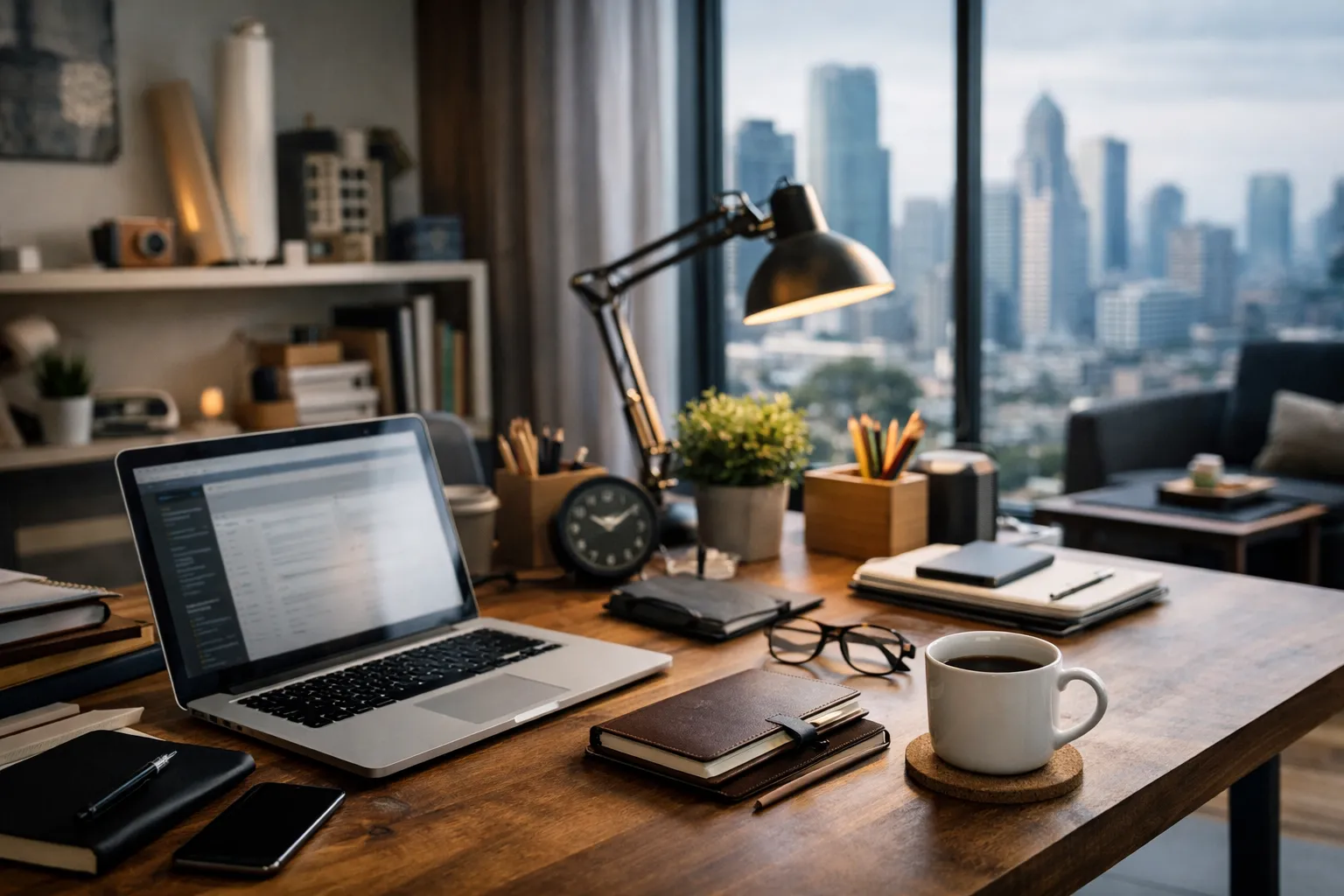
Your workspace is not neutral. It either helps or hinders you.
I’ve worked in cluttered environments and clean ones. The difference is real. Focus lasts longer. Stress drops faster. Decisions feel lighter.
Elements of a performance-driven workspace
| Element | Why It Matters | Practical Tip |
| Desk layout | Reduces visual noise | Keep only daily-use items visible |
| Lighting | Affects energy levels | Use warm ambient + focused task light |
| Seating | Impacts posture and stamina | Invest in ergonomics before aesthetics |
| Storage | Prevents distraction | Hide rarely used items |
| Color palette | Influences mood | Neutral base with one accent color |
A Design And Business Lifestyle doesn’t demand perfection. It demands intention.
Time Design: Structuring Your Day Like a Product
Time is your most expensive resource. Treat it like one.
Design-minded professionals don’t just schedule tasks. They design flow.
How to design your business day
- Group similar tasks to reduce context switching
- Create fixed start and shutdown rituals
- Protect deep work blocks like client meetings
- Leave white space for thinking
Here’s a simple daily structure many professionals swear by:
| Time Block | Focus |
| Morning | Strategy, planning, creative work |
| Midday | Meetings, collaboration |
| Afternoon | Execution, follow-ups |
| End of day | Review and reset |
This rhythm supports the Design And Business Lifestyle by aligning energy with intention.
Branding as a Lifestyle Choice
Branding isn’t a logo. It’s behavior – shaped either by hand or through an AI logo and it should reflect how you actually work, communicate, and deliver value.
Your emails, proposals, website, and even your calendar habits tell a story. Design-aware professionals ensure that story is consistent.
Lifestyle-driven branding shows up as:
- Clean, readable communication
- Predictable client experience
- Thoughtful visual presentation
- Reliable tone and structure
Ask yourself:
- Does my brand feel intentional or rushed?
- Does it reflect how I actually work?
Living a Design And Business Lifestyle means your brand mirrors your values, not just your visuals.
Systems Over Hustle: Designing How Work Gets Done
Hustle fades. Systems scale.
People serious about a Design And Business Lifestyle design workflows that reduce effort over time.
Systems worth designing early:
- Client onboarding process
- File naming and storage rules
- Task management structure
- Communication boundaries
Simple systems beat complex ones every time.
Example: A clean weekly workflow
- Monday: planning and prioritization
- Tuesday–Thursday: execution and meetings
- Friday: review, documentation, cleanup
Designing your workflow once saves you from redesigning it every week.
Digital Design: Cleaning Up the Invisible Mess
Clutter isn’t just physical. Digital chaos drains focus too.
Inbox overload, messy folders, scattered tools. They all add friction.
A Design And Business Lifestyle extends to screens.
Digital design habits that pay off:
- One task manager, not five
- Clear folder hierarchy
- Inbox rules and filters
- File naming conventions
Here’s a simple digital structure that works:
| Area | Rule |
| Zero inbox at end of day | |
| Files | Project-based folders |
| Tools | One primary tool per function |
| Notes | Centralized and searchable |
Designing your digital environment protects mental bandwidth.
Decision Design: Reducing Daily Fatigue
Every decision costs energy. Design reduces the number of decisions you have to make.
That’s why uniforms, templates, and routines work.
Ways to design decisions out of your day:
- Standard meeting agendas
- Reusable proposal templates
- Fixed morning routines
- Predefined pricing structures
This is a core benefit of the Design And Business Lifestyle. Less decision fatigue. More creative energy where it matters.
Lifestyle Design Beyond the Office
This lifestyle doesn’t stop at work.
How you eat, move, rest, and disconnect affects how you perform professionally.
Design-aware professionals:
- Schedule recovery, not just work
- Create boundaries between work and life
- Design evenings to support mornings
Small lifestyle design choices with big impact:
- Consistent sleep schedule
- Designated work-free zones at home
- Pre-planned meals during busy weeks
- Weekly personal review sessions
Business performance improves when life design supports it.
Leadership Through Design Thinking
If you lead others, design matters even more.
Teams reflect the systems you create.
A Design And Business Lifestyle in leadership looks like:
- Clear expectations
- Simple processes
- Thoughtful communication
- Respect for focus time
Designing how your team works reduces burnout and improves outcomes.
Common Mistakes That Undermine the Design And Business Lifestyle
Even well-intentioned professionals fall into traps.
Watch out for:
- Over-designing instead of executing
- Copying aesthetics without function
- Adding tools instead of removing friction
- Confusing busy layouts with productivity
Design should serve business goals. Not distract from them.
How to Start Living the Design And Business Lifestyle Today
You don’t need a full reset. Start small.
One-week reset plan:
- Day 1: Clean your desk and digital workspace
- Day 2: Redesign your daily schedule
- Day 3: Simplify tools and workflows
- Day 4: Create one reusable template
- Day 5: Review what feels lighter
Momentum builds fast when friction disappears.
Final Thoughts: Design Is How You Show Respect for Your Work
The Design And Business Lifestyle isn’t about perfection. It’s about respect. Respect for your time. Your energy. Your clients. Yourself.
When you design how you work and live, you stop reacting and start leading. Decisions feel calmer. Work feels intentional. Life feels aligned.
And that’s the real power of design. It doesn’t just make things look better. It makes everything work better.